
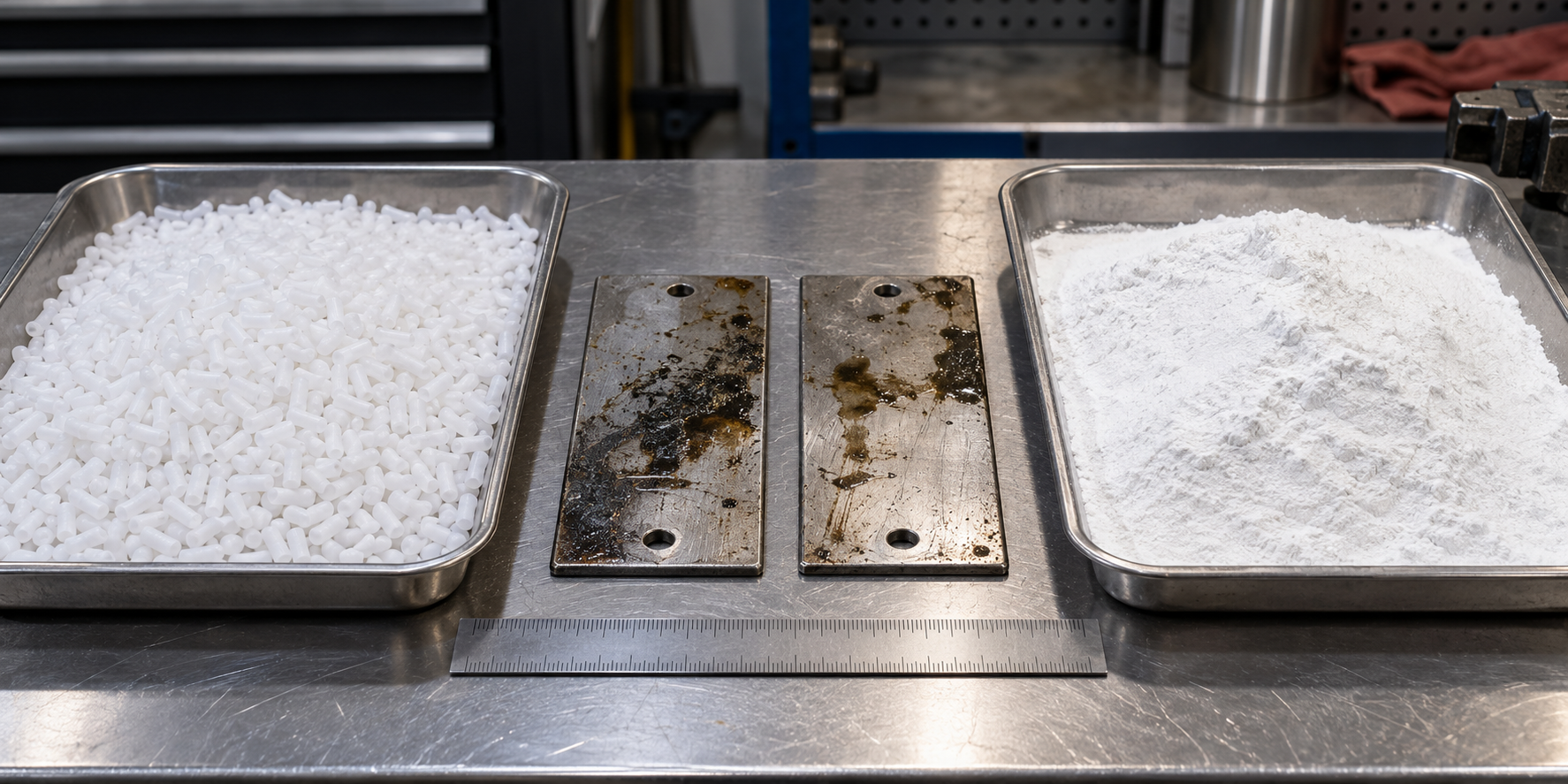
If your team is comparing dry ice blasting with soda blasting, begin with the finish you need and the waste you can collect. Both methods use compressed media to remove unwanted material, but the media behave differently after impact. Choose dry ice when avoiding added solid blast media is a priority and you can control carbon-dioxide exposure; consider soda when its mild abrasive action fits the coating-removal task and you have a plan for spent powder. Neither choice removes the need to capture the material stripped from the workpiece.
That is the short answer to “dry ice blasting vs soda blasting: which is better?” The useful answer comes from a small, documented trial on the actual substrate, coating, and surrounding equipment. The comparison below is for industrial maintenance and surface preparation, not a promise that either process is safe for every finish.
What changes at the work surface?
Dry ice blasting accelerates solid carbon-dioxide pellets through a nozzle. At the work surface, the pellets transfer impact and cooling effects, then sublimate into gas. The OSHA technical manual identifies the absence of spent blast medium as a key advantage. That does not mean the job leaves no waste: loosened paint, grease, dust, and other contamination still need collection and appropriate handling.
Soda blasting propels sodium bicarbonate particles with compressed air or water. The media supplier ARMEX explains its sodium-bicarbonate blasting process as a soft crystal that fractures on impact. Unlike dry ice, spent soda remains at the site, mixed with whatever the process removes. A wet soda process also creates a liquid stream. The extent of cleanup depends on the method, containment, and coating; do not assume the spent material is harmless because the unused media is familiar baking soda.
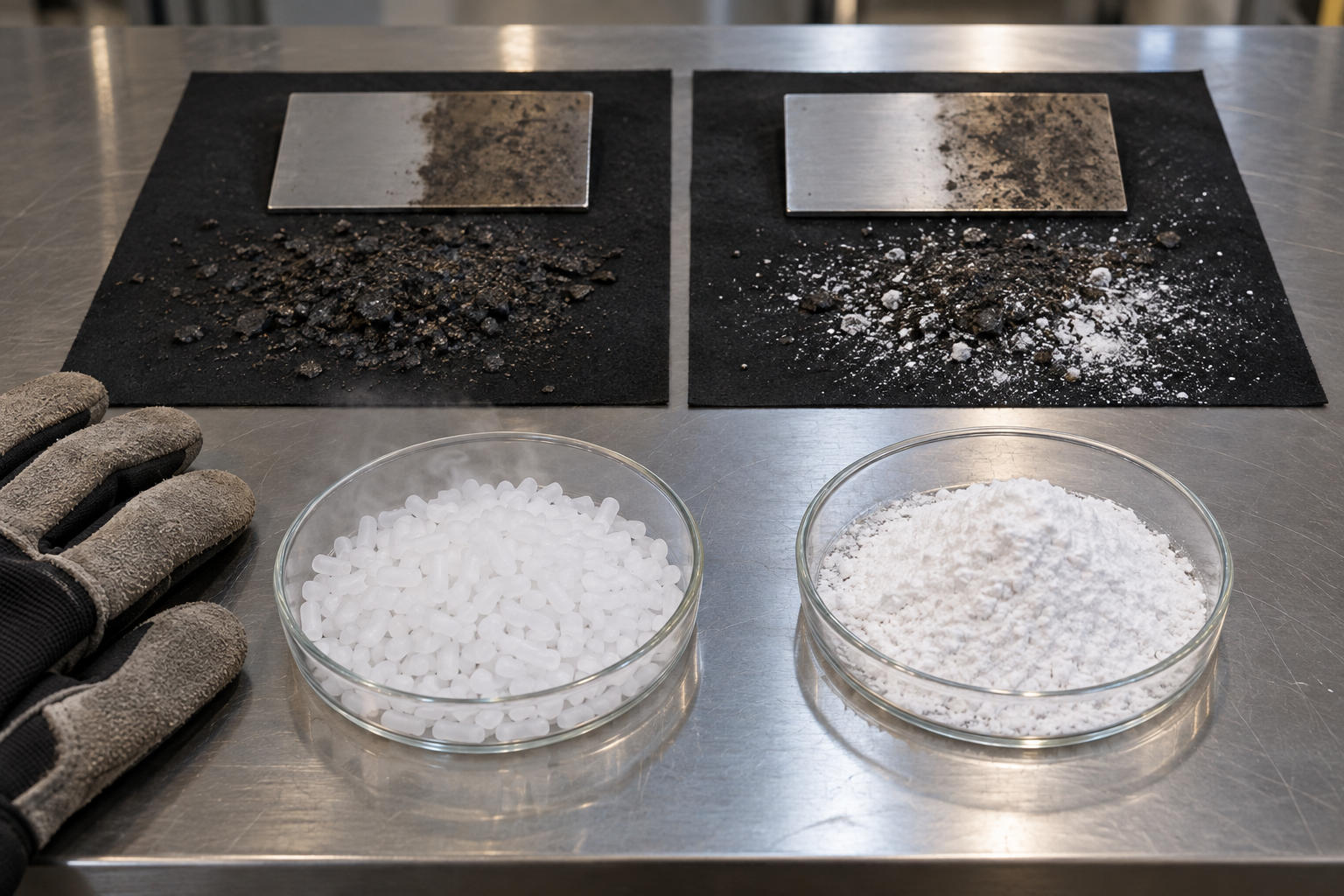
For a buyer, the difference is practical: dry ice reduces the quantity of added blast medium to recover, while soda may provide a useful mild mechanical action but requires media recovery. If a specification calls for an abrasive profile, neither process should be assumed to create the required profile without measurement. If the workpiece is delicate, run a trial rather than relying on a general claim that a process cannot damage it.
Compare the job, not just the media
| Decision point | Dry ice blasting | Soda blasting | What to verify on site |
|---|---|---|---|
| Blast-media residue | Pellets turn into CO2 gas; removed contamination remains | Spent sodium bicarbonate remains with removed contamination | Capture route and waste classification |
| Moisture | Media adds no water | Can be run dry or wet, depending on system | Moisture limits of equipment and finish |
| Air and exposure | Compressed-air demand plus CO2 ventilation assessment | Compressed-air demand plus dust or mist controls | Actual air supply, ventilation, and exposure controls |
| Surface result | Depends on pellet size, pressure, nozzle, distance, and coating | Depends on grade, pressure, nozzle, wet/dry method, and coating | Small trial on representative material |
| Work around sensitive parts | No solid media left by the blast itself | Powder can enter openings or crevices | Masking, isolation, and post-clean inspection |
The table is a planning aid, not a performance ranking. No universal cleaning-speed, cost, or damage claim is defensible without a representative trial. Our guide to dry ice cleaning machine costs separates machine, air, media, labor, and downtime factors. Add containment and cleanup labor when comparing a complete job.
Where dry ice may have the edge
Dry ice can be attractive around machinery where operators want to avoid introducing a powder that must later be removed from guards, channels, or nearby production areas. The pellets sublimate; the removed contamination does not. Plan extraction, vacuuming, or collection for that contamination before starting. A coating with hazardous constituents calls for a waste and exposure assessment regardless of the chosen media.
The process also avoids adding water. That may help where a wet cleanup would complicate drying or restart, but it does not make blasting live electrical equipment automatically acceptable. Apply the facility’s isolation and electrical-safety procedures. Our dry ice cleaning machine safety guide covers the equipment work zone and operator controls.
The tradeoff is carbon dioxide. Solid CO2 becomes gas during use and storage. The NIOSH carbon-dioxide hazard reference lists exposure limits and symptoms including headache, dizziness, and breathing difficulty. Assess ventilation and, where the risk assessment calls for it, monitor CO2—especially in pits, enclosed rooms, and other spaces with limited air exchange. Also account for cold-contact hazards when handling pellets. A dry process is not a low-control process.
Where soda may be the better fit
Soda blasting is worth testing when a mild abrasive action is wanted for a coating or soil and the team can contain and remove the spent medium. Depending on the equipment, it can be applied dry or with water. For some parts, a planned rinse may be acceptable; for others, any added moisture or powder retention may rule it out. The surface finish after cleaning must be checked against the next step, such as inspection, coating, or reassembly.
Do not let the word “soda” substitute for exposure control. The material being removed may generate dust or contain metals, pigments, or other hazards. OSHA’s abrasive-blasting guidance lists both dry ice pellets and baking soda among alternative methods, while also discussing enclosure, ventilation, and respiratory protection for blasting work. The applicable controls depend on the work environment and contaminant. The OSHA ventilation standard for abrasive blasting gives specific requirements in its jurisdiction.
Spent soda and dislodged contamination should be collected and evaluated together. An uncoated test coupon and an old painted assembly can produce very different waste streams. Do not wash residue into drains without checking site rules and waste requirements. In the United States, the EPA’s abrasive-blast containment example illustrates why capture and segregation matter; other locations require their own regulatory review.
A five-step trial that makes the choice defensible
- Define acceptance criteria. Record the substrate, coating or soil, critical tolerances, required finish, and what “clean enough” means. Photograph an untreated reference area.
- Identify what can move. Locate seals, bearings, open ports, sensors, drains, and adjacent equipment. Decide what to isolate, mask, or remove before either process.
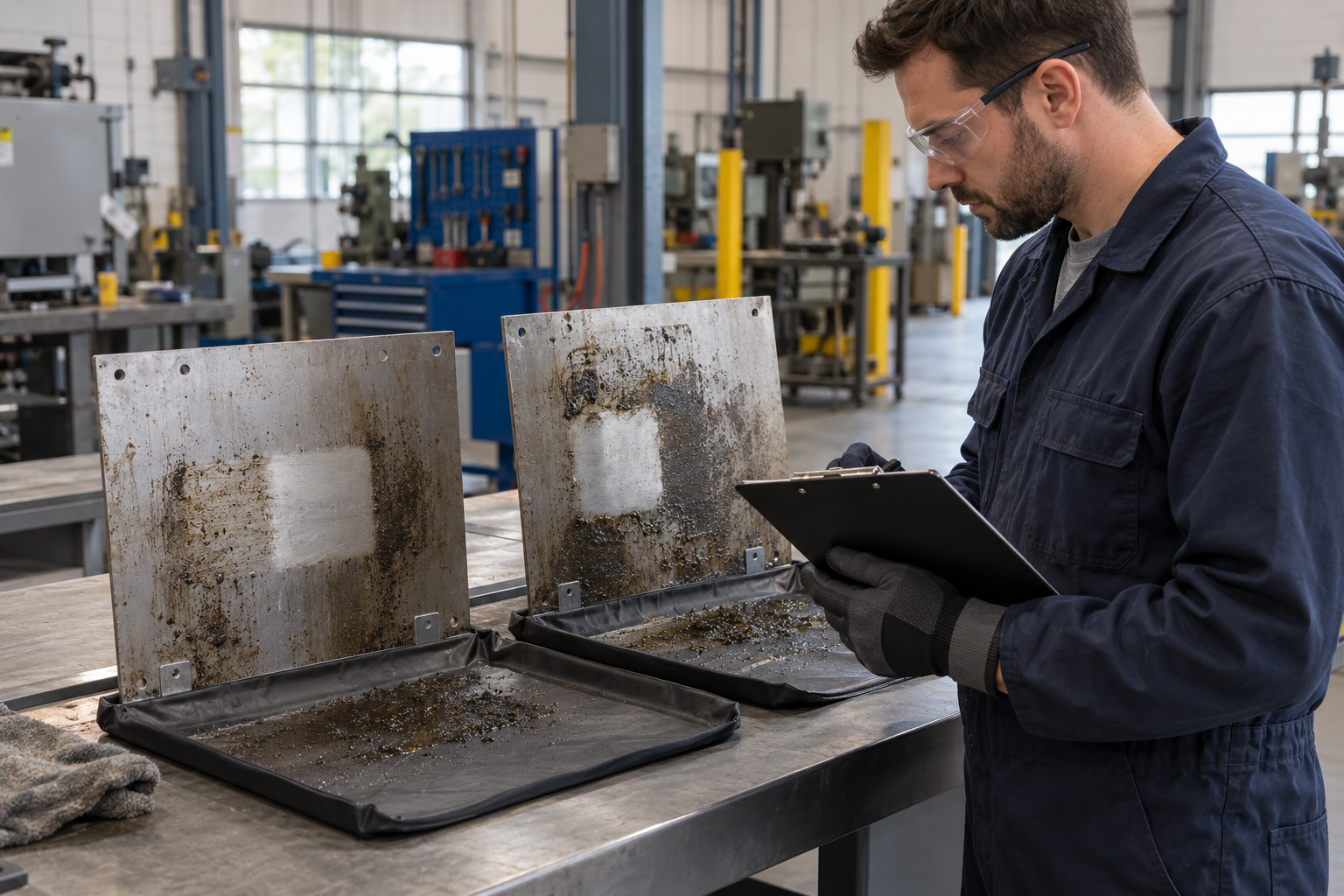
- Prepare equivalent test patches. Use representative parts and similar starting contamination. Document media grade, nozzle, distance, pressure, exposure time, and operator method. Do not compare one optimized setup against one poorly adjusted setup.
- Measure the whole task. Record cleaning result, any finish change, setup time, media used, airborne or gas controls, containment, cleanup, and inspection after the test. If a coating is hazardous, involve the site’s EHS team before trial work.
- Choose the process that meets the specification. Keep photos and settings with the work order. If neither test meets the finish and safety requirements, change the method rather than forcing a choice between these two.
The DryIceSys machine page lists current equipment information for a dry ice trial. Confirm pellet size, air supply, nozzle, and working conditions for the specific model and job. Our site-readiness checklist helps prepare that trial without skipping isolation, access, and residue collection.
Frequently asked questions
Does dry ice blasting leave no waste?
The dry ice medium sublimates and does not leave spent pellets. Paint, grease, carbon, dust, or other material removed from the surface still exists and may need containment and regulated disposal. “No secondary blast-media waste” is a narrower and more accurate statement than “no waste.”
Is soda blasting always gentler?
No universal ranking applies. Results depend on the surface, media grade, settings, nozzle, and operator technique. Soda is often described as a soft abrasive, but a soft media can still change a sensitive finish or leave material in openings. Test and inspect the actual substrate.
Which method is cheaper?
Compare the full job: air, media, setup, access, operator time, containment, cleanup, inspection, and downtime. Dry ice adds pellet procurement and CO2 controls; soda adds spent-media recovery and possibly drying or rinsing. A short controlled trial usually gives a better estimate than a per-hour machine comparison.
Can either process be used indoors?
Possibly, if the site-specific risk assessment and controls support it. Dry ice requires attention to CO2 accumulation; soda requires attention to dust or mist and spent media. The removed coating can create additional hazards in either case. Assess ventilation, containment, access, and monitoring before work begins.
Sources and scope
The process distinction and safety discussion draw on OSHA’s technical manual, abrasive-blasting guidance, and ventilation standard, the NIOSH carbon-dioxide reference, and the ARMEX media explanation. US regulatory sources describe US requirements or guidance; check the rules that govern your facility. Supplier descriptions explain a product mechanism, while the proposed trial determines suitability for your own substrate and contaminant.