
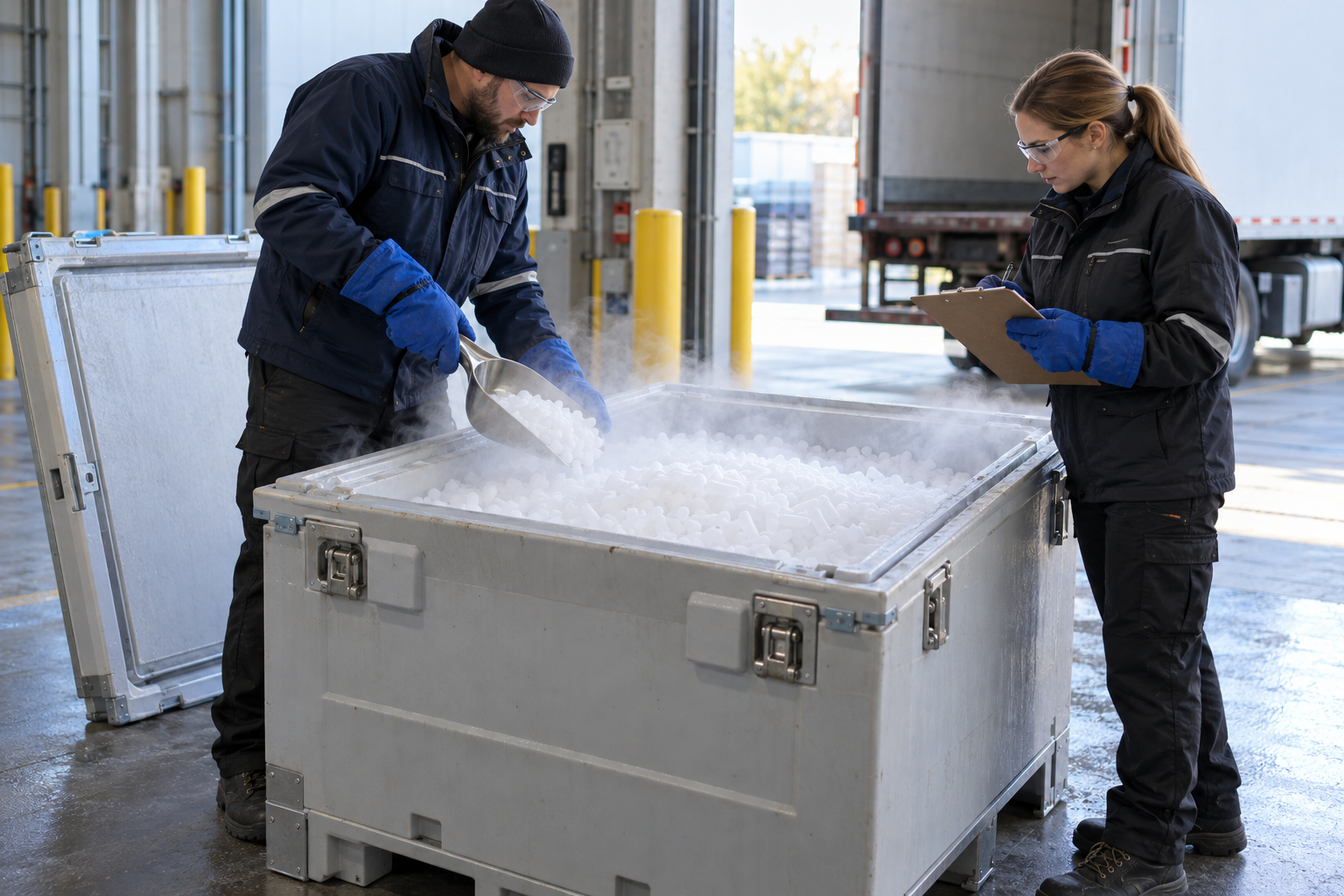
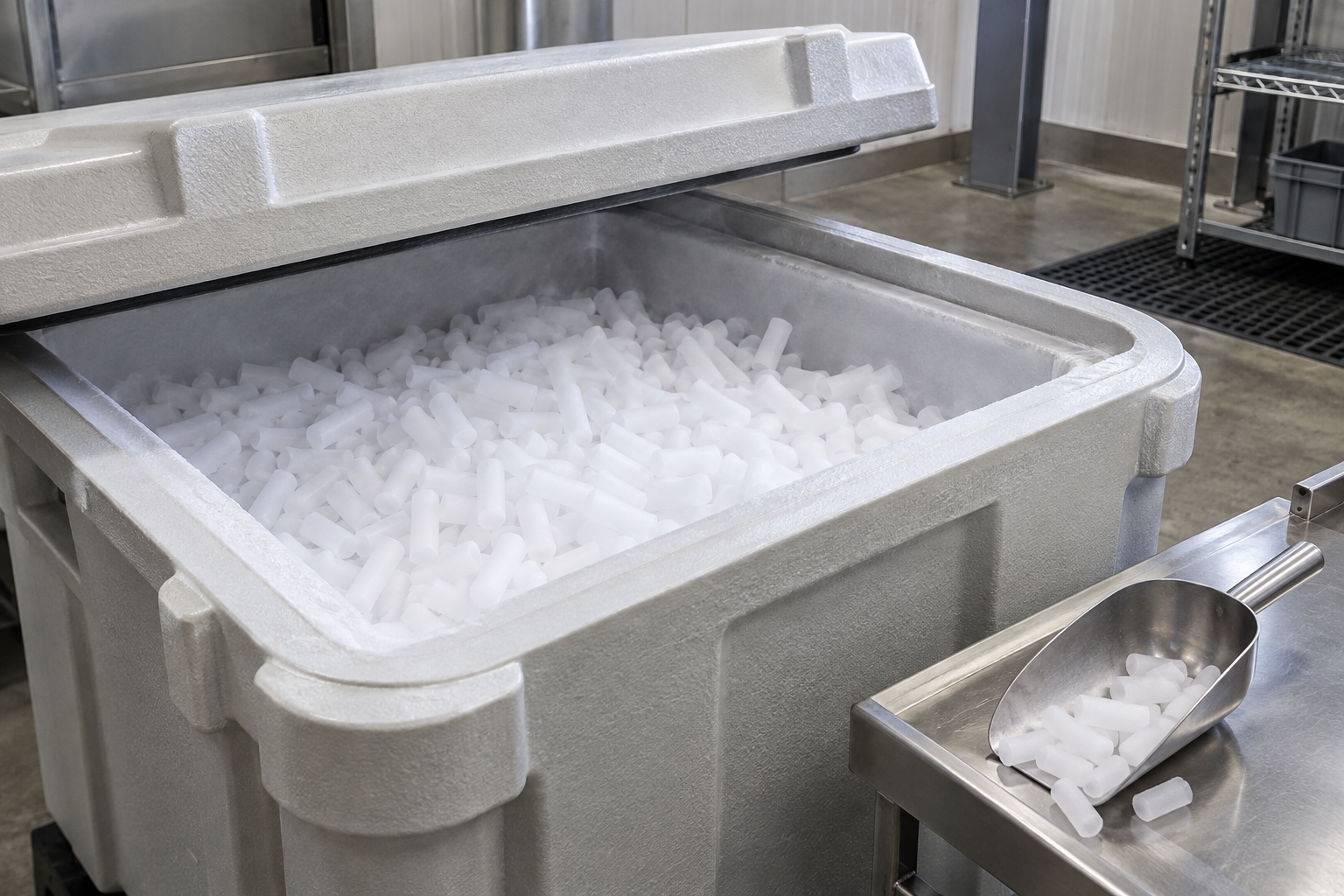
Store dry ice blasting pellets in a purpose-built insulated container that can release carbon-dioxide gas, keep the storage area ventilated, and stage media only after checking pellet size, condition, and the job’s expected use. This is a receiving and handling decision as much as a cleaning-machine decision: pellets disappear by sublimation, while an unsuitable container or room can create a pressure or exposure hazard.
This guide is for industrial dry ice blasting teams receiving solid carbon-dioxide pellets for a planned job. Container design, transport, exposure controls, and waste handling must follow the supplier’s instructions and the rules that apply at the site. It does not authorize entry into a confined space or opening a container in an unassessed atmosphere.
Why storage affects the blasting job
Dry ice passes directly from solid to carbon-dioxide gas under ordinary conditions. The mass available at the nozzle therefore depends on delivery timing, container insulation, how often the container is opened, and the time spent staging pellets. Linde’s dry-ice handling guidance describes a broad daily sublimation range that depends on temperature and transport-vessel insulation. That range is not a reliable allowance for every site. Weigh or otherwise verify the usable media actually received, and use local observations to plan future deliveries.
Pellet quality matters separately from total mass. Record pellet size and inspect for excessive fines, caking, foreign material, or obvious deterioration. A hopper with 20 L capacity does not tell a buyer how many kilograms of usable pellets are on hand. The DryIceSys 20 L machine page specifies pellets no larger than 3 mm for that model; another machine may have a different limit. The pellet-size guide explains why the machine, feed path, nozzle, and target surface all matter.
Use the right container, not an airtight box
An insulated container slows heat transfer, but dry ice continues to release gas. A sealed vessel can pressurize as the pellets warm. Lawrence Berkeley National Laboratory’s dry-ice safety guidance warns that even a lid that seems loosely fitted can be unsafe if the container is not designed to relieve pressure. Linde also says dry ice containers must be able to “breathe.”
Choose a container intended for dry ice, follow its supplier’s loading and venting instructions, and keep lids, seals, and pressure-relief features in their designed condition. Do not improvise a gasket, clamp a lid shut, or substitute an ordinary sealed cooler. Keep the container upright, protected from impact, and accessible without leaning into a deep chest. The safest opening method depends on the container and the atmosphere around it.
Assess the storage and receiving atmosphere
Carbon dioxide is colorless and odorless. The NIOSH carbon-dioxide entry identifies inhalation, asphyxiation, and cold-contact hazards and lists occupational exposure limits. A lack of visible vapor or smell does not establish a safe atmosphere. Linde’s guidance cautions against unventilated small rooms and lower-level spaces because released gas can accumulate there.
Select a storage and transfer location with ventilation assessed for the expected dry ice quantity and occupancy. Consider low points, pits, adjacent rooms, vehicle cargo compartments, and the path a worker takes to retrieve pellets. Use carbon-dioxide monitoring and mechanical ventilation where the site assessment calls for them; neither a monitor nor an open door replaces a complete exposure-control plan. Restrict access to trained staff and define what happens if ventilation fails or an alarm activates.
Transport is part of this assessment. Keep dry ice separated from the driver and follow the supplier’s vehicle and unloading instructions. Do not leave a loaded vehicle unattended in an enclosed bay and assume it will be safe to enter later. The receiving team should know who is responsible for opening the cargo area and assessing the atmosphere before unloading.
Receive, inspect, and stage pellets without skin contact
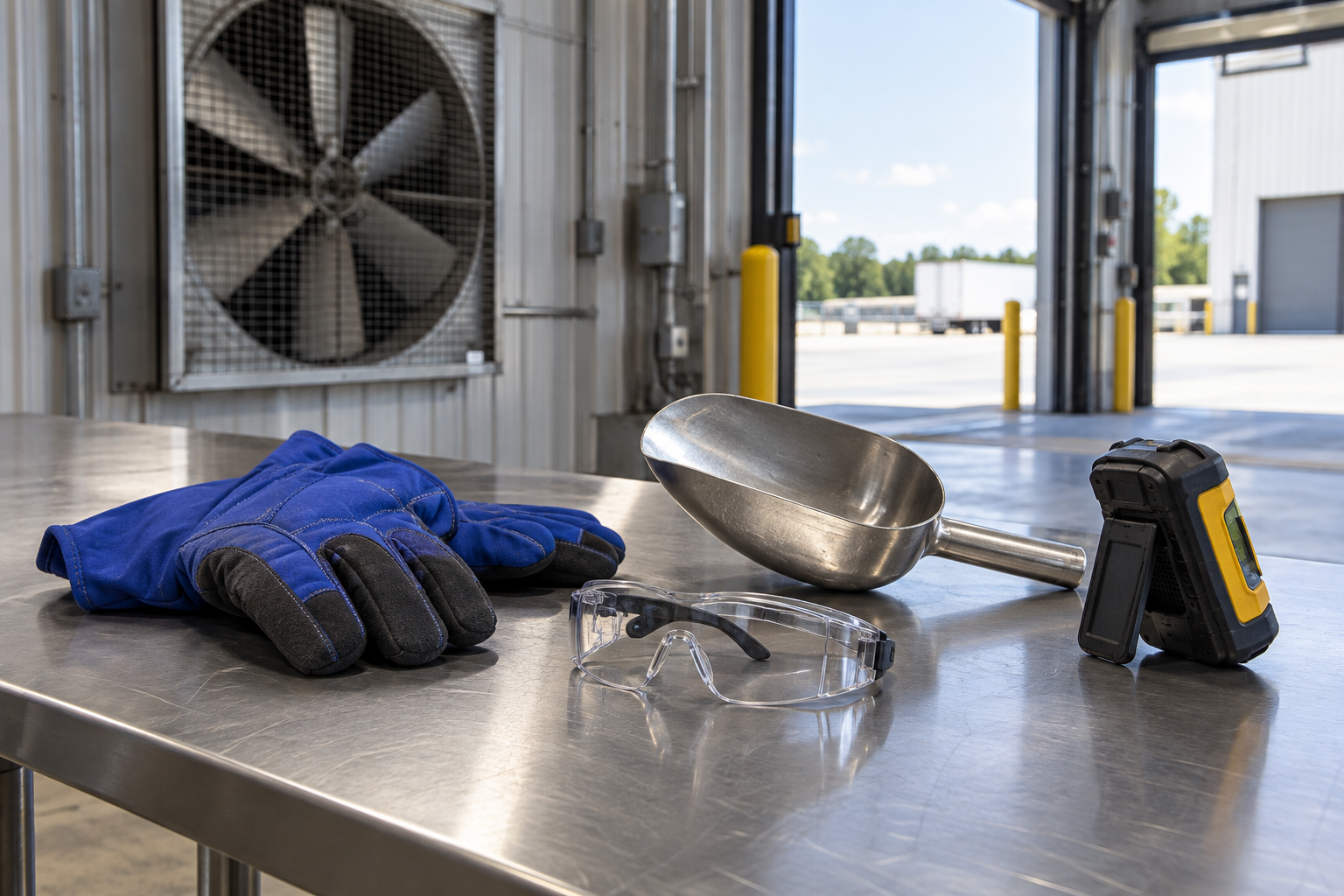
Dry ice is cold enough to cause frostbite on direct contact. Linde’s safety guidance calls for specially insulated gloves and suitable eye or face protection when handling it. Berkeley Lab recommends a scoop or tongs where possible and notes that no glove protects against contact indefinitely.
At receipt, compare the delivered container and media with the order and machine requirements. Record the delivery time, quantity, pellet diameter, visible condition, container condition, and any exposure-control check required by the site. Keep the lid open only as long as the handling procedure requires, without sealing it afterward. Use a clean scoop and transfer a manageable amount to the approved staging vessel or directly to the machine hopper. Never reach deeply into a bin or handle pellets with bare hands.
Estimate supply from the actual duty cycle
A purchasing estimate should start with trigger-on cleaning time, not an entire shift’s clock time. Multiply the measured dry ice feed rate from a representative trial by expected trigger-on minutes, then add an allowance for loading, transport, and sublimation based on the supplier’s container and the site’s observed losses. Record the assumption so the next order can be corrected with actual data.
For example, a nominal feed figure in a machine brochure is a starting point, not a guaranteed site consumption rate. Nozzle choice, settings, duty cycle, and handling change the total. The DryIceSys dry ice consumption guide separates trigger-on use from total job planning. If a long shutdown or remote location makes replenishment difficult, run a trial and plan a sensible delivery window before committing the crew.
The crew should also decide what to do with remaining media. Follow the supplier’s storage and disposal instructions; do not dump pellets into drains, closed bins, occupied rooms, or a vehicle cabin. Unused dry ice still releases carbon dioxide until it is gone.
A practical go/no-go handover
Before the cleaning crew loads pellets, the receiving lead can hand over a short record:
| Decision | Record |
|---|---|
| Media fit | Pellet diameter, condition, and machine limit |
| Available quantity | Delivered and usable mass, plus estimated trigger-on demand |
| Container | Purpose-built insulation and working gas-release design |
| Atmosphere | Storage and transfer ventilation assessment, monitoring and access plan |
| Handling | Trained handlers, scoop, cold-protective gloves, eye or face protection |
| Timing | Delivery, planned start, replenishment, and remaining-media plan |
If any decision is unknown, postpone loading until it is resolved. This media handover sits alongside the broader dry ice blasting site-readiness checklist, which also covers isolation, air supply, and residue collection. The machine safety guide covers the operator’s work zone.
FAQ
Can ordinary cooler boxes store blasting pellets?
Do not assume so. The container must be suitable for dry ice and able to release gas safely. A sealed or improvised cooler can become a pressure hazard.
How long will pellets remain usable?
There is no universal shelf life. Sublimation varies with insulation, temperature, handling, and time. Verify the delivered quantity and condition, then measure losses in the actual workflow.
Is visible cold vapor a reliable carbon-dioxide warning?
No. Carbon dioxide is colorless and odorless, and visible vapor depends on ambient moisture and temperature. Use a site-specific exposure assessment and controls.
Can the same pellets be used in any dry ice cleaning machine?
No. Check diameter and media condition against the selected machine’s feed system and nozzle. The DryIceSys 20 L model’s stated maximum diameter is 3 mm; other equipment may differ.