
Dry ice cleaning applications
Twelve industrial cleaning scenarios. One application-first decision process.
The same 12 application areas shown on the DryIceSys homepage are organized here as a practical selection map. Each scenario identifies common cleaning targets; final suitability still depends on the contaminant, substrate, compressed-air supply and site controls.
Application catalogue
Match the process to the cleaning task.
These are application categories, not performance guarantees or customer cases. Use them to identify the closest operating context, then verify the actual surface and contaminant before selecting equipment.
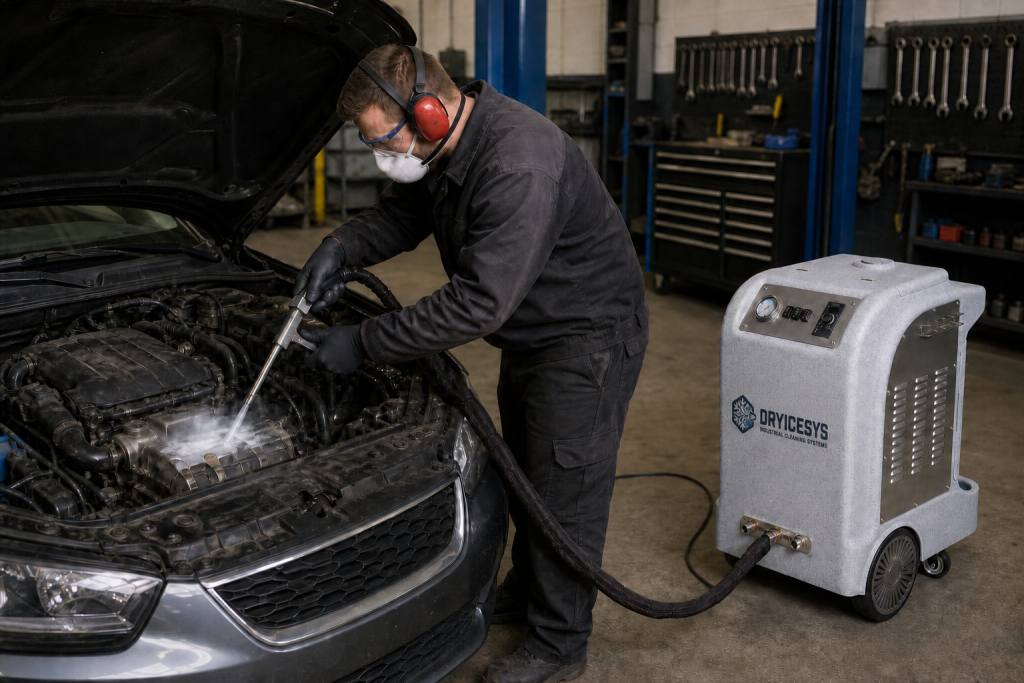
Engine and Chassis Cleaning
Remove carbon, oil and underbody residue without water around sensitive wiring and electrical assemblies.
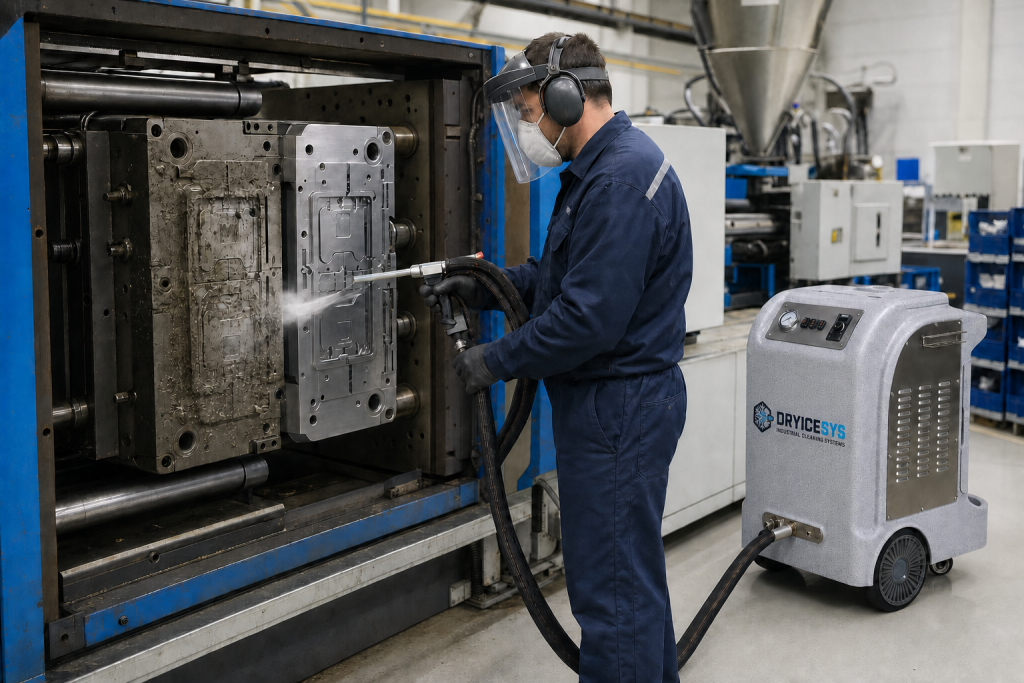
Hot Mold Cleaning
Clean injection, tire and casting molds while preserving precision surfaces and production temperature.
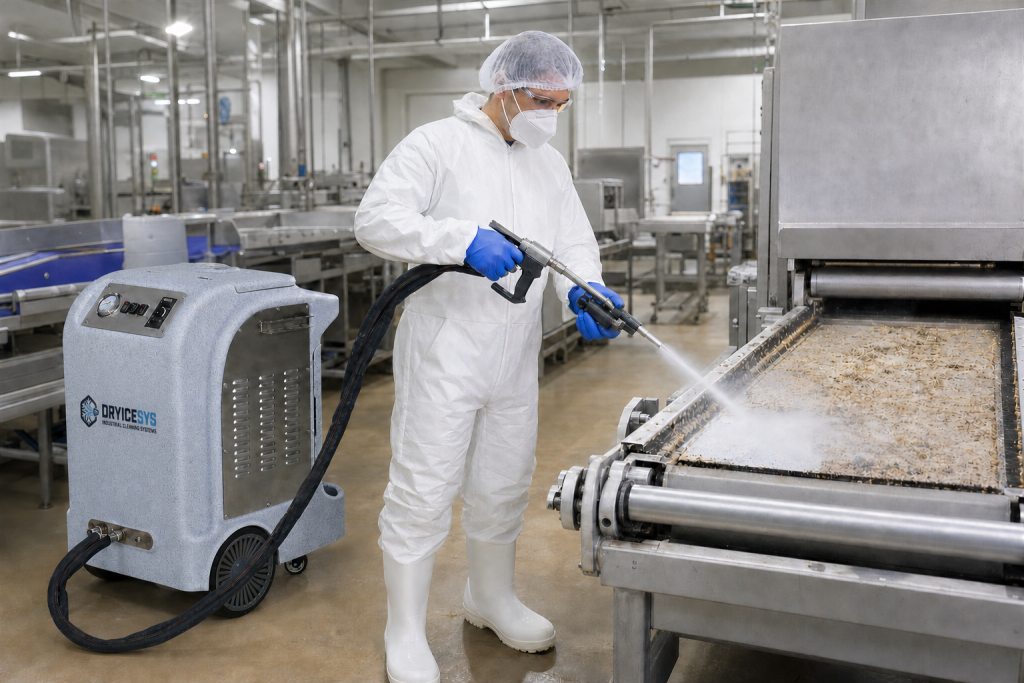
Production Line Hygiene
A water-free method for ovens, conveyors, filling equipment and food-contact production tooling.
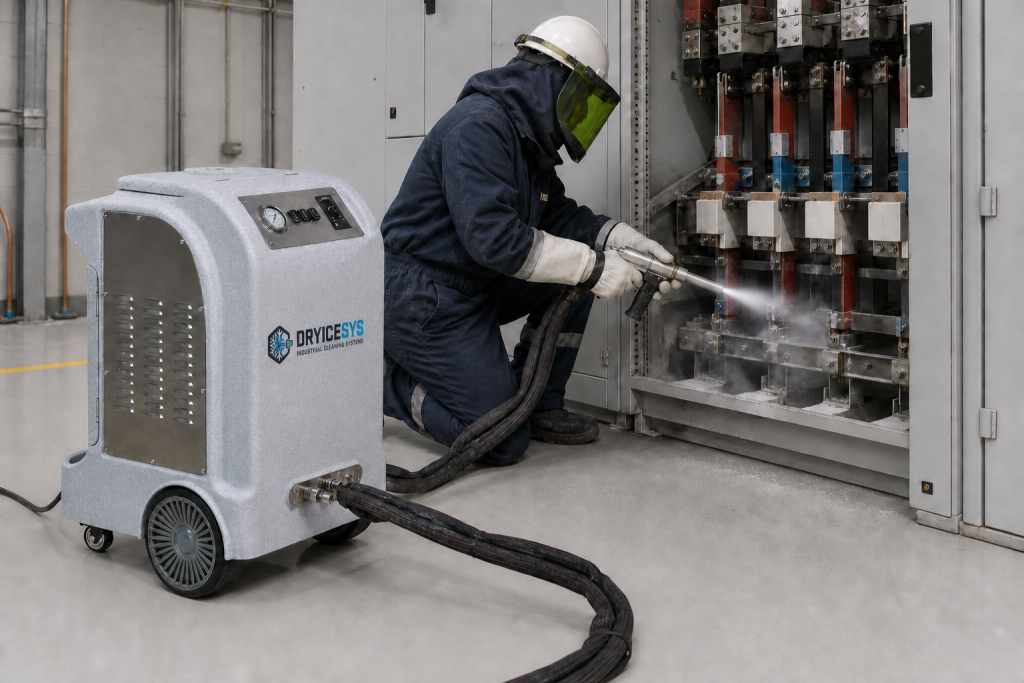
Electrical Equipment Care
A water-free option for generators, control cabinets and moisture-sensitive equipment under approved isolation procedures.
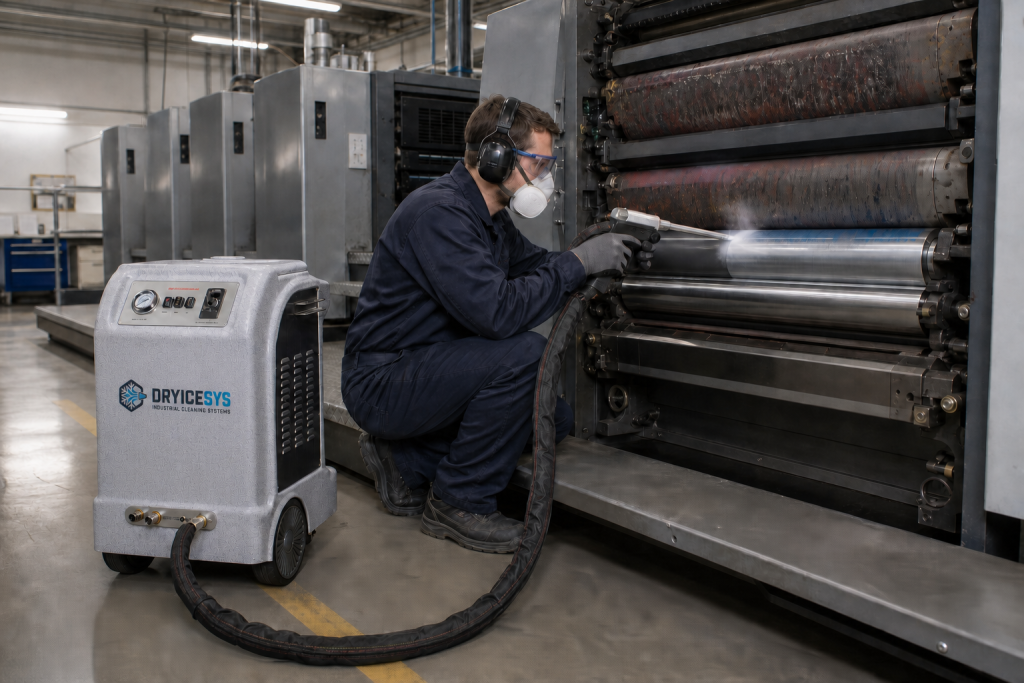
Ink and Roller Cleaning
Remove hardened ink, paper dust and adhesive residue from rollers, trays and gear assemblies.
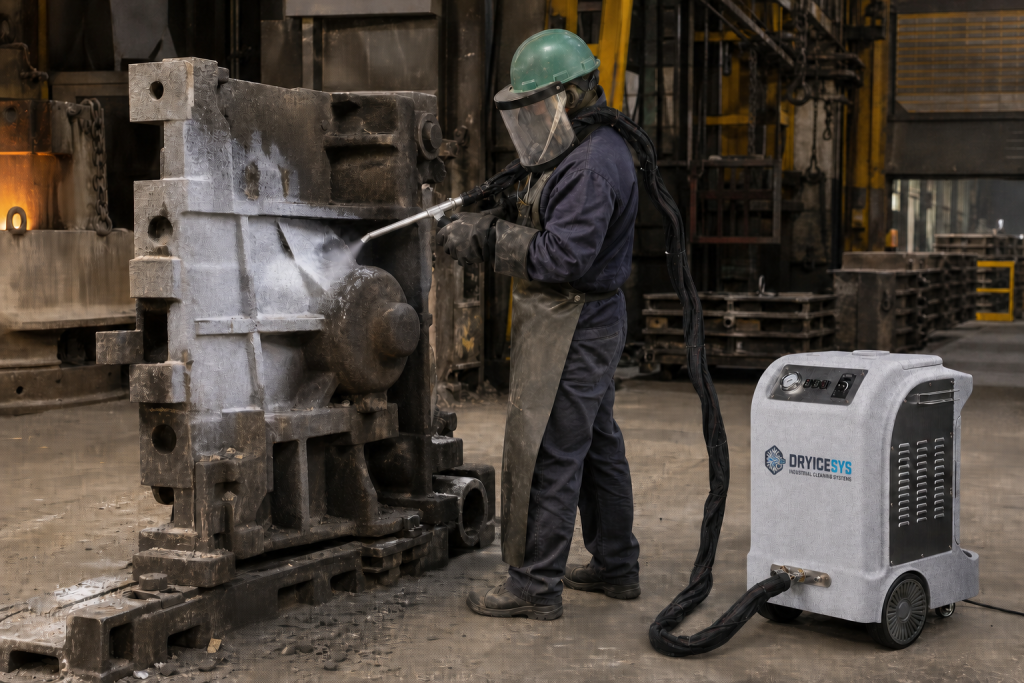
Casting Tool Maintenance
Remove release agents, burned-on sand and carbon buildup while maintaining mold dimensions and surface tolerances.
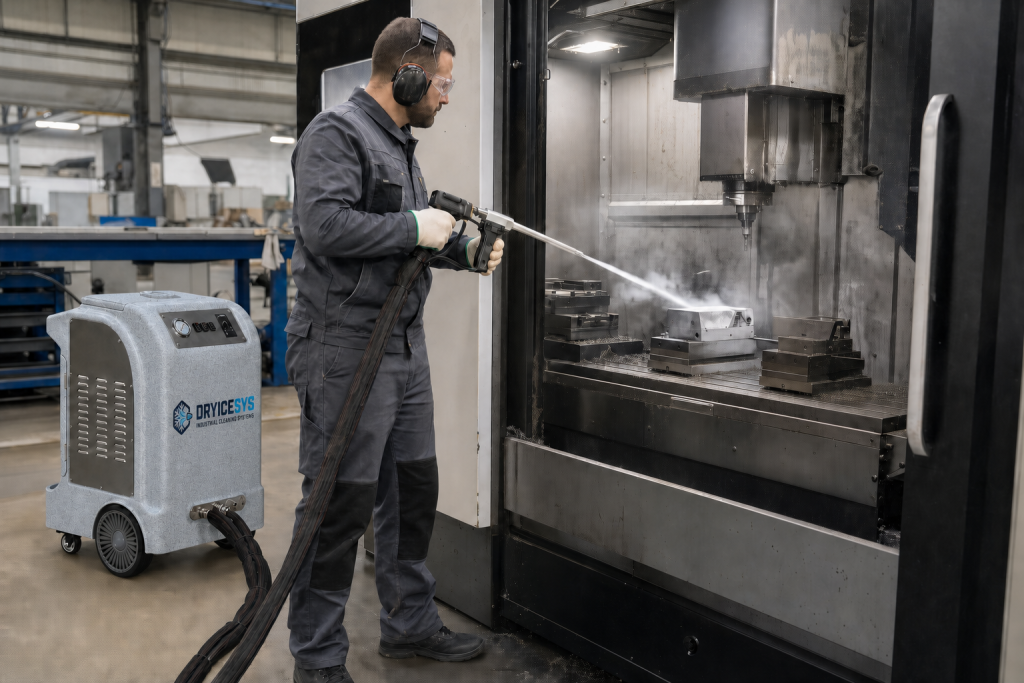
Metal and Machinery Cleaning
Remove grease, chips and process residue from CNC equipment, fixtures, conveyors and production tooling.
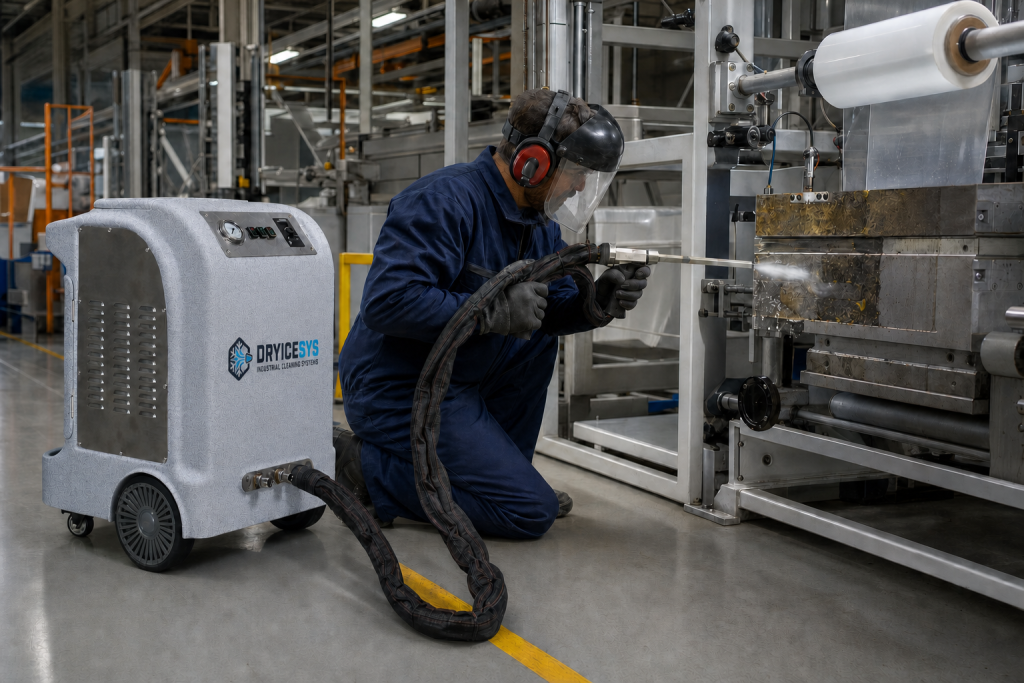
Plastics and Packaging Lines
Remove polymer, adhesive and label residue from extrusion dies, sealing jaws and packaging equipment.
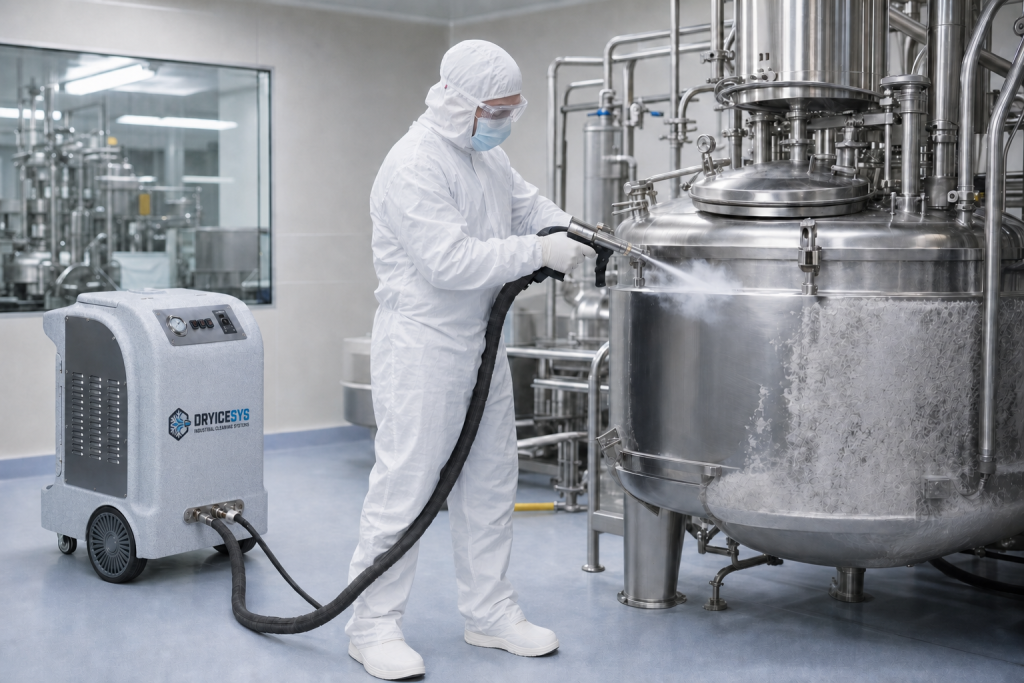
Hygienic Production Cleaning
Target product buildup on filling, mixing and conveying equipment during controlled maintenance.
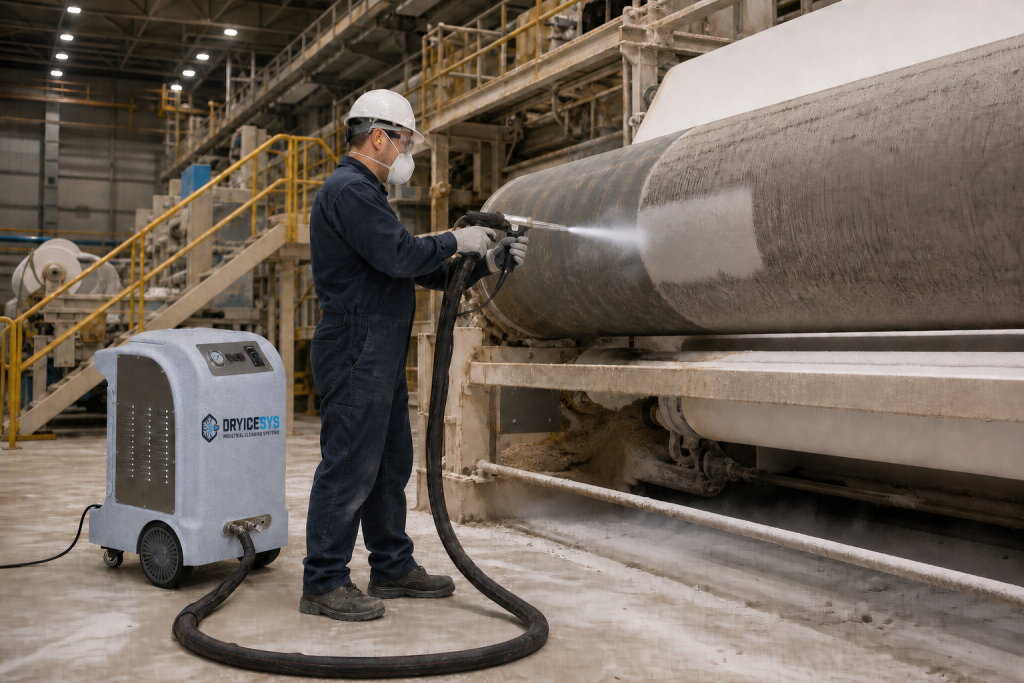
Paper Machine Cleaning
Remove paper dust, pitch, adhesive and fiber buildup from rollers, dryers and production equipment.
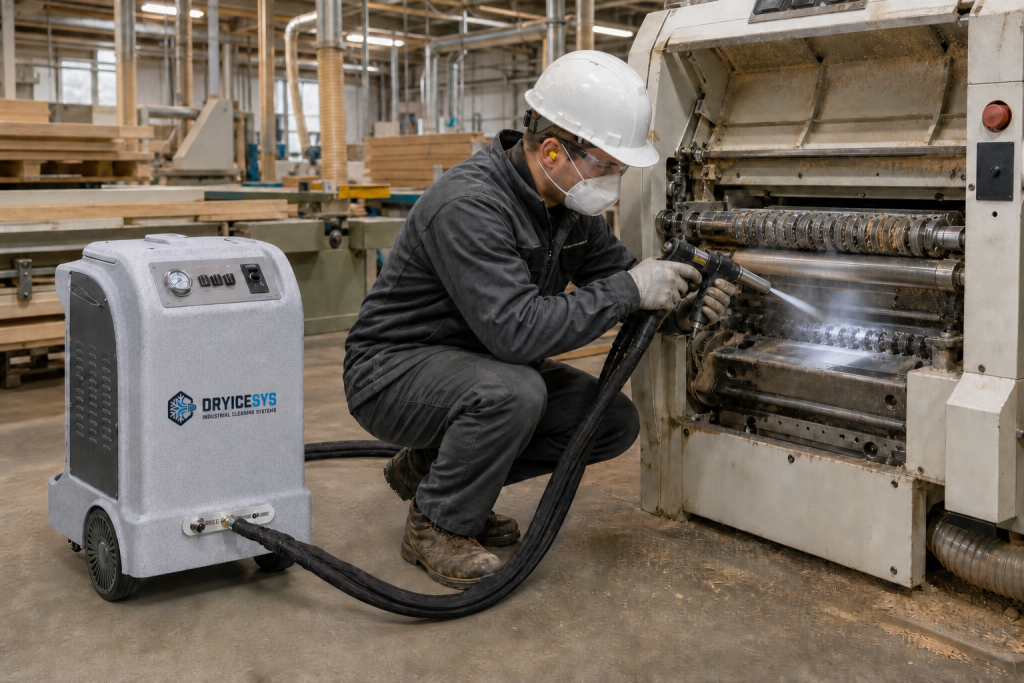
Resin and Dust Removal
Clean hardened resin, glue and compacted sawdust from cutters, feed rollers and woodworking machinery.
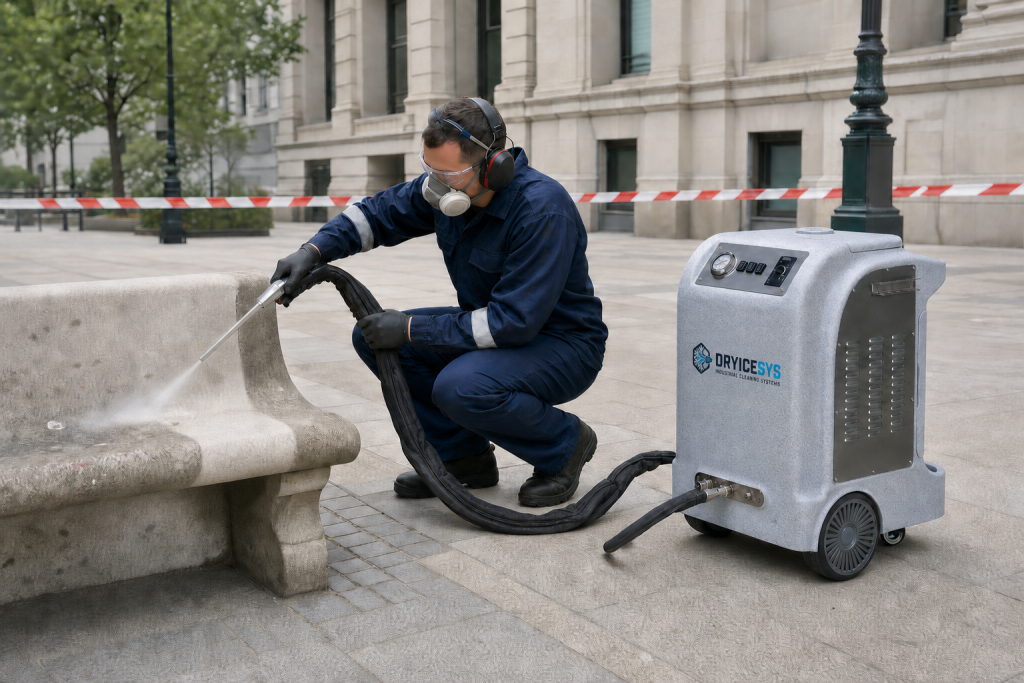
Public Facility Cleaning
Target gum, coatings and biological deposits on stone, paving and public fixtures after surface testing.
Decision criteria
Industry name alone does not determine machine fit.
Two cleaning tasks in the same industry can require different pressure, dry ice feed, nozzle geometry and operating controls. Electrical work requires approved isolation procedures. Food, pharmaceutical and cosmetic production requires site-defined hygiene controls. Public surfaces should be tested for finish changes.
Operators remain responsible for ventilation, carbon-dioxide controls, hearing protection, PPE and local risk assessment.
- Surface material, finish and acceptable change
- Contaminant type, thickness and condition
- Available compressed-air pressure and flow
- Access, isolation, ventilation and noise controls
- Cleaning frequency, downtime window and integration needs
Review your actual cleaning conditions.
Share the surface, contaminant, air supply and expected cleaning cycle. The project team can then review machine, nozzle and OEM options.