
Asphalt Paver Screed Cleaning: A UK Workshop Trial
For a UK paving contractor, can dry ice blasting help clean a paver screed before maintenance inspection?
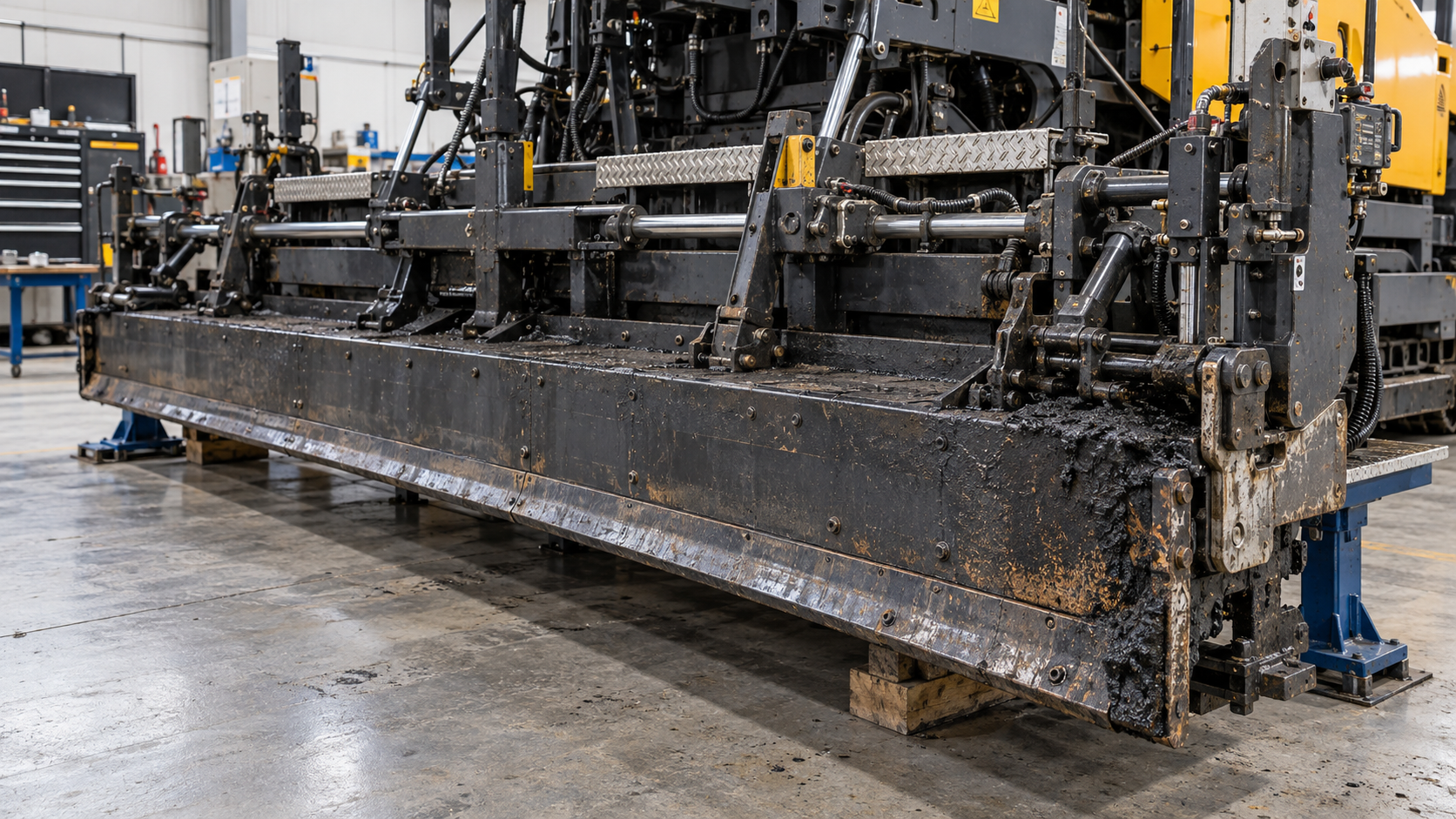
For a UK paving contractor, a dry ice cleaning trial may be considered on a cooled, isolated paver screed or a detached screed plate with bituminous residue. First confirm the screed manufacturer’s permitted cleaning method, protect heaters, sensors and wiring, and test a small defined area. Judge residue removal and surface condition separately; a clean screed is not evidence that the plate is flat, the heating system works or the next mat will meet specification.
This is a planning guide for a maintenance workshop, not a claim that dry ice blasting is suitable for every bitumen formulation, coating or paver model. The images are conceptual illustrations, not photographs of a customer job.
Why inspect the screed before choosing a cleaning method?
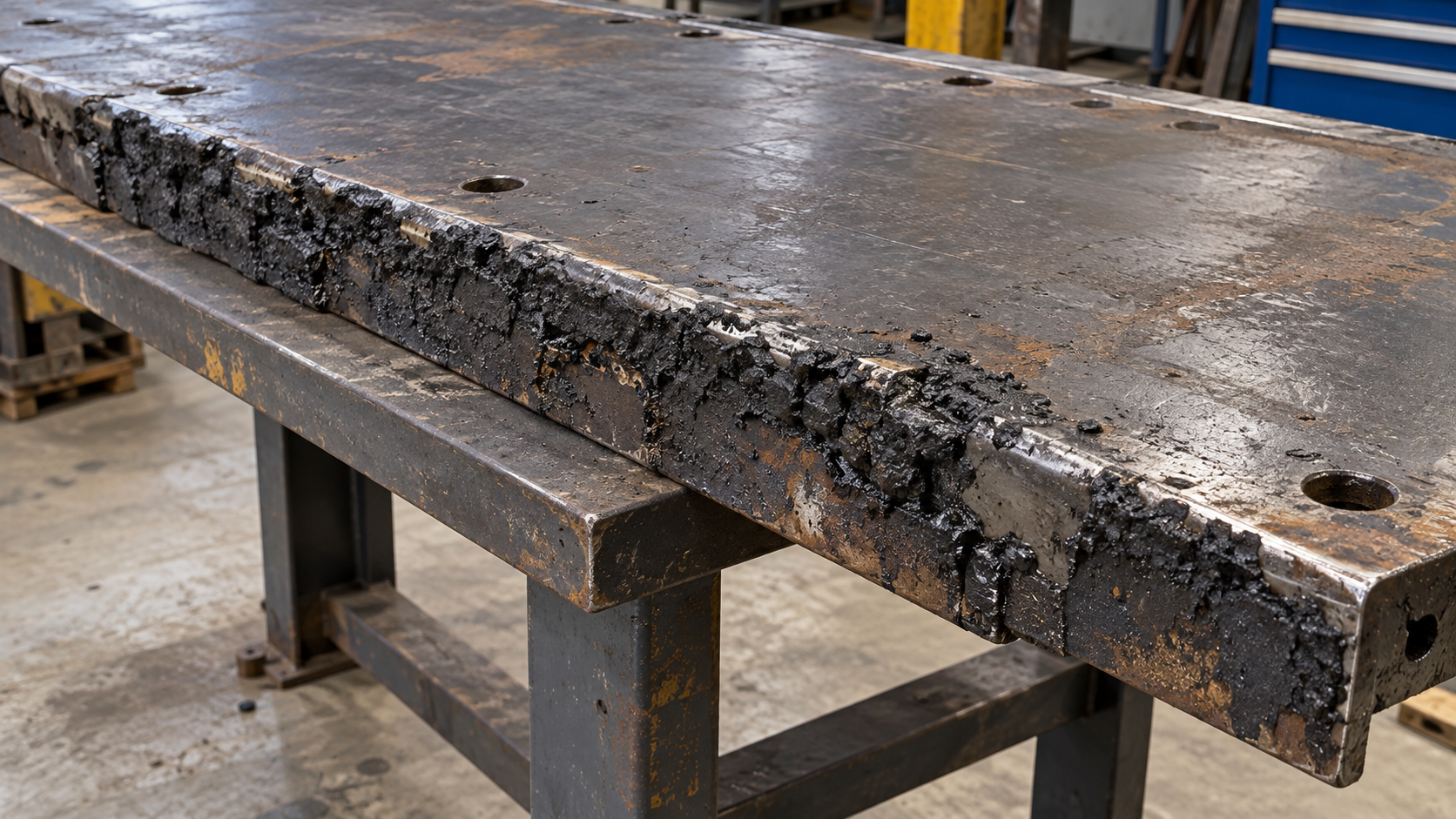
An asphalt paver’s screed is a precision working assembly. Build-up around a plate edge or on a removable component can obscure wear and interfere with a visual inspection. The first task is to identify the deposit, the substrate and any protective finish. Record photographs before cleaning, including any suspected damage, so cleaning does not erase useful fault evidence.
The UK Health and Safety Executive’s work-equipment maintenance guidance calls for machinery to be stopped, isolated and made safe before maintenance, including attention to stored energy. For a screed, the site procedure should address heat, electrical heaters, hydraulics, raised assemblies and inadvertent movement. Allow the component to cool to the OEM-approved handling condition. Do not aim a blast at live wiring, heater connections, sensors, bearings or seals.
What should a small trial record?
Choose a removable plate or a controlled corner of a cooled screed that the owner approves for testing. Define the deposit thickness and the finish that must remain intact. Use the machine supplier’s operating range as a starting point, then document the trial pressure, nozzle, stand-off, angle and dwell time. Stop if the coating, sealant or substrate changes unexpectedly. A before-and-after photograph should show the same area under similar lighting.
Collect displaced residue and check the surrounding machinery and floor. Dry ice itself turns into carbon dioxide, but removed bitumen and road dirt remain. Plan ventilation and the work location: HSE’s carbon-dioxide guidance explains the risk of accumulation in low or confined spaces. The workshop’s risk assessment must address both CO2 and any substance dislodged from the screed.
How is the cleaned plate accepted for reuse?
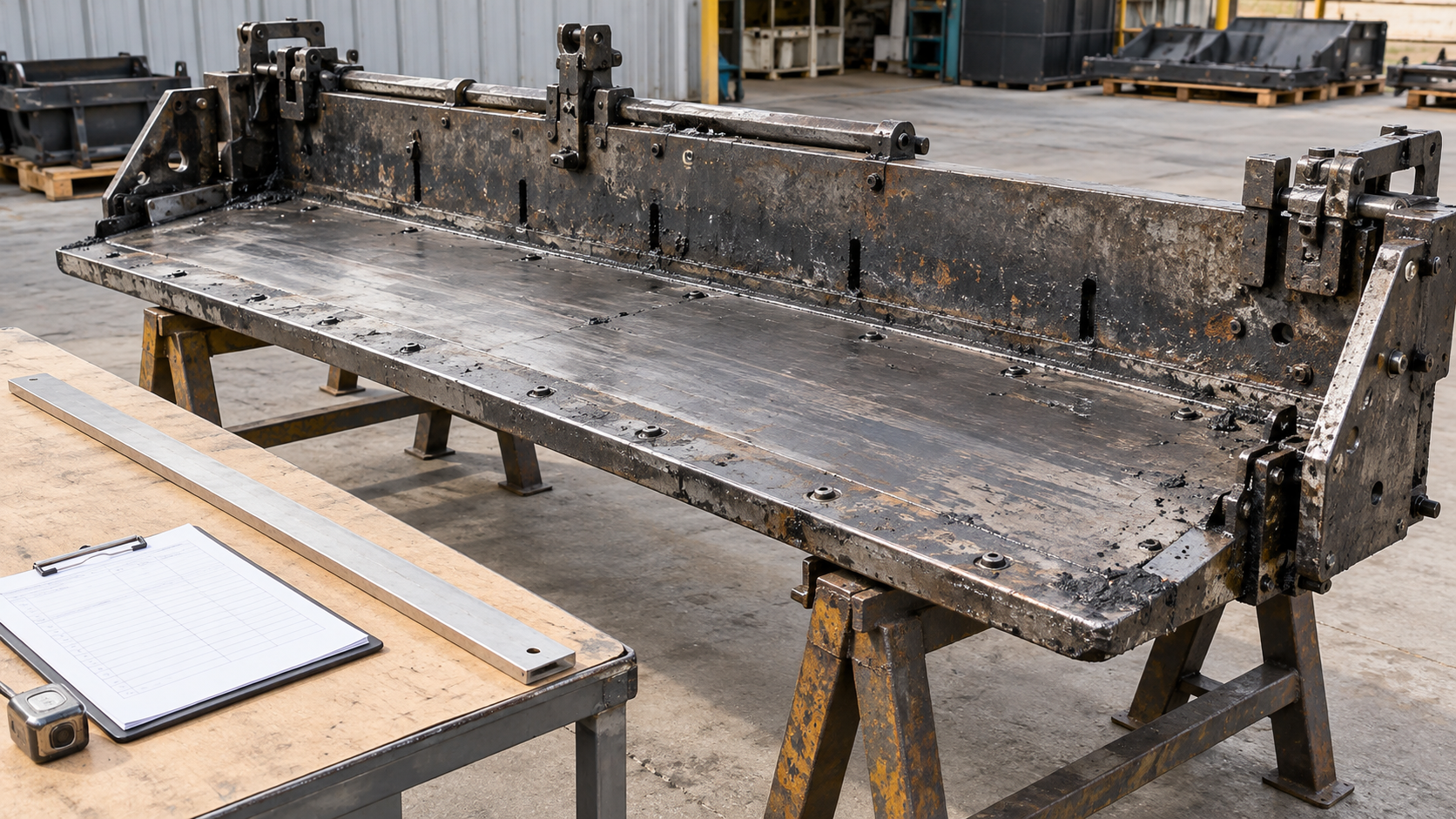
Separate cleaning acceptance from mechanical acceptance. The owner should check the specified surface finish, plate wear, edge condition, straightness and fastener seats under its own procedure. Electrical or heater checks, where relevant, belong to competent maintenance staff after cleaning and reassembly. The HSE maintenance guidance also stresses competent people and manufacturer instructions; a cleaning trial cannot replace those checks.
Nor does cleaning a paver component certify a road surface. A local authority’s highway construction specification illustrates that laid pavement has separate requirements for surface levels, regularity, material properties and compaction. Follow the actual contract and authority specification for the job; the Sheffield document is an example, not a universal UK requirement.
What should the buyer send for an equipment trial?
Share the paver and screed model, OEM cleaning restrictions, photographs of the deposit and the plate, coating details, available compressed air, work location and ventilation plan. Agree a test area and written stop criteria before selecting a nozzle. The DryIceSys air-requirements guide, site-readiness checklist and dry ice cleaning machine range can help frame a supplier discussion. For road-marking removal on an installed pavement, see our separate surface-check guide; it addresses a different substrate and approval decision.