
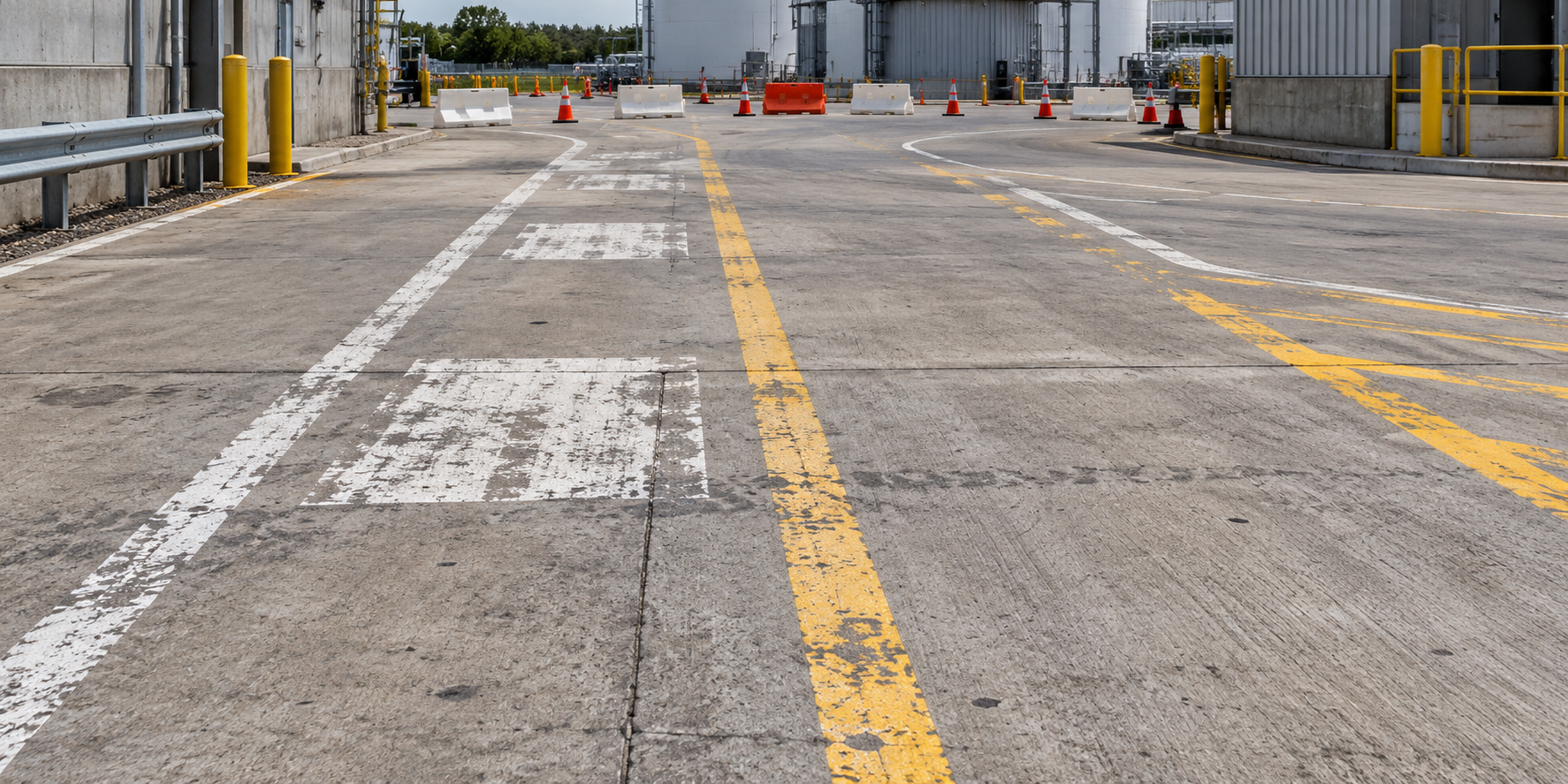
Road Marking Removal: Dry Ice Trial and Surface Checks
Dry ice blasting should be considered for road marking removal only after the pavement owner approves a trial on the actual marking and substrate. Removal completeness, residual ghost lines, pavement condition, debris control and readiness for the replacement marking must all pass the project acceptance criteria; a clean-looking strip alone is insufficient.
A changed loading route, a rebuilt junction or a revised warehouse traffic plan can make an old line an operational problem. The purchaser needs a clear route and a sound surface ready for its next use. Choosing equipment before defining that result makes competing quotations difficult to compare.
This guide proposes a trial-and-acceptance workflow for US highway and industrial-yard projects. It does not establish dry ice blasting as an approved removal method for every road authority. Approval depends on the contract, pavement condition, marking system and demonstrated result.
Separate line removal from cleaning and pavement repair
Start by identifying the actual task. Removing oil around a line, removing the line itself, preparing a surface for new paint and repairing deteriorated pavement are different scopes. A process that dislodges surface dirt may leave the bonded marking intact. A process that removes a marking may still leave a visible scar or an unsuitable surface for the replacement system.
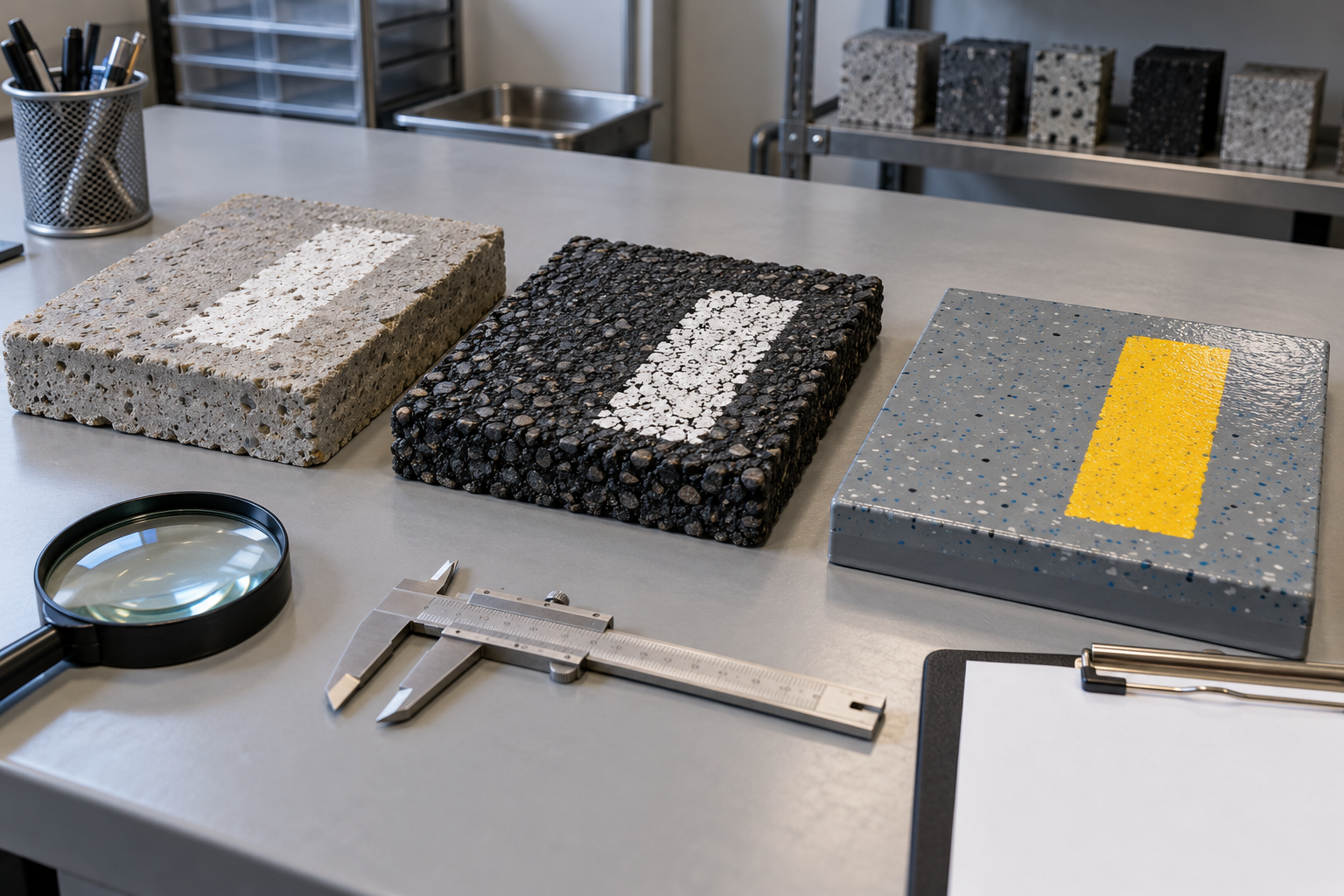
Record whether the substrate is concrete, asphalt or a coated industrial floor. Identify the marking material where records permit, including paint, thermoplastic, tape, primer and previous layers. If the system cannot be identified, record that uncertainty before the trial. Do not describe all coloured floor coatings as road paint.
Oregon DOT’s marking-removal advisory identifies pavement damage and ghost striping as concerns and links risk to substrate type, age, sealing and condition. It is Oregon guidance, not a nationwide dry ice approval. Its practical implication for a buyer is to assess the pavement and the finished route together.
What should the trial prove?
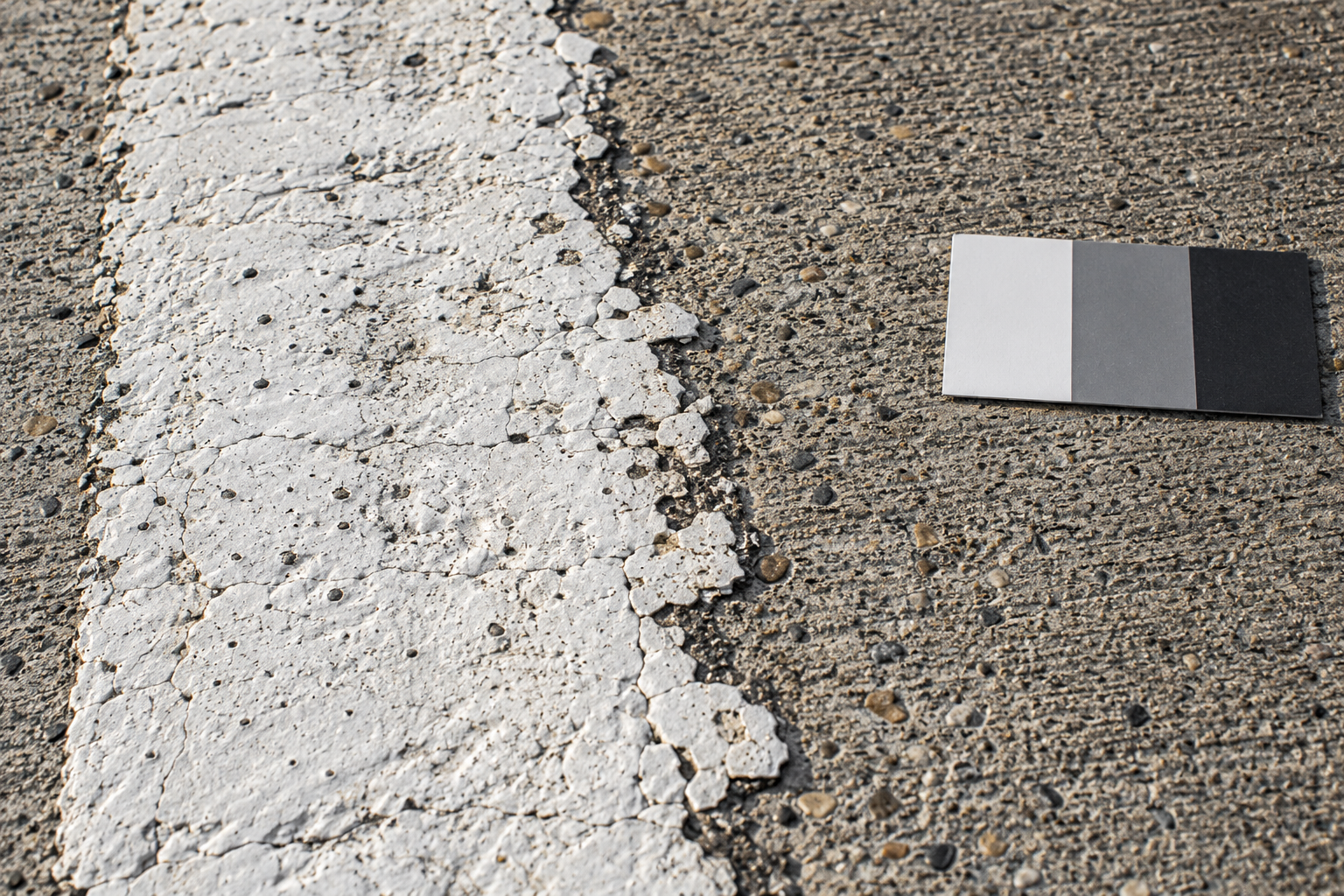
Choose an owner-approved test location representative of the hardest acceptable work area. Include an edge, a worn section and an overlapping layer if those occur in the scope. Keep an untreated reference and identify the test boundaries in photographs.
Before work begins, agree on the following questions:
- How much marking may remain, and how will it be assessed?
- What substrate changes require stopping or rejecting the method?
- How will residual lines be assessed under relevant lighting and wet conditions where safe and appropriate?
- What preparation and testing does the new marking manufacturer require?
- Who can approve the trial and release the larger work area?
There is no defensible universal pressure or cleaning-speed setting for this collection of surfaces. Record the actual machine, nozzle, air supply, feed, working distance, angle and exposure used in each test. Increase the scope only after the owner reviews the result. Stop if the surface deteriorates or the required removal cannot be achieved within the agreed limits.
Protect the traffic route and collect removed material
On a highway, the work must fit the approved traffic-management arrangement. In a distribution yard, the equivalent concerns include forklifts, reversing vehicles, pedestrians, emergency access and adjacent operations. A cordon around the nozzle operator does not by itself manage the whole route.
The FHWA pavement-marking report’s environmental and safety chapter discusses hazards from marking composition, removal equipment and roadway operations. This archived report is background evidence rather than a current project specification. Review the actual material information and site requirements before selecting collection and disposal arrangements.
Dry ice disappearing after use does not make removed paint, dirt or other contamination disappear. Plan capture, cleanup and waste handling for those materials. Review compressed-air, noise, flying-debris and carbon-dioxide exposure controls with the site team, especially around covered loading bays or low areas. Use the DryIceSys safety guide to structure the equipment discussion, followed by the site’s own assessment.
Inspect the surface before applying new markings
Compare the trial with its untreated reference. Record residual colour, loose material, surface defects and any change at the removal boundary. A photograph should document the assessment, not replace the required measurements or approval.
The NCDOT pavement-marking construction manual treats surface preparation and marking removal as distinct construction topics. Consult the applicable contract edition and product requirements rather than importing another state’s method into a local job.
Where a replacement marking requires a particular surface condition, confirm it through the specified procedure. Do not assume that removing a visible line has also removed oil, salts, primer or moisture concerns. Pavement repair, skid-resistance assessment and marking-performance verification remain separate work items when required.
Compare complete work packages before buying equipment
Ask bidders to quote trial preparation, traffic control, cleaning, collection, inspection and handover separately. Record accepted area and total crew time during the trial. Include setup, moves, cleanup and any additional preparation when estimating production cost. No removal rate or saving should be promised before representative work establishes it.
Check the actual compressor and hose arrangement against the DryIceSys air-requirements guide. Use the site-readiness checklist to review access, utilities and containment before mobilization.
For an application review, provide pavement photographs, marking information, approximate area, access constraints and the owner’s acceptance criteria. That information supports a useful trial proposal and helps determine whether dry ice merits further evaluation alongside other removal methods.
Images are AI-generated editorial illustrations for planning discussion, not customer-site photographs or evidence of a successful removal trial.