
Hydraulic Cylinder Cleaning Before Seal Repair: A Trial
Can a Canadian repair shop use dry ice cleaning on a hydraulic cylinder before a seal repair?
For a Canadian repair shop, consider dry ice cleaning only on the external metal surfaces of a removed, depressurized hydraulic cylinder after the repair lead has documented leaks and protected the rod, ports, seals and identification marks. Trial a small area with the component supported, capture dislodged oil and dirt, and inspect the surface afterward. Cleaning does not diagnose a leak, restore a damaged rod or establish that the rebuilt cylinder is pressure tight.
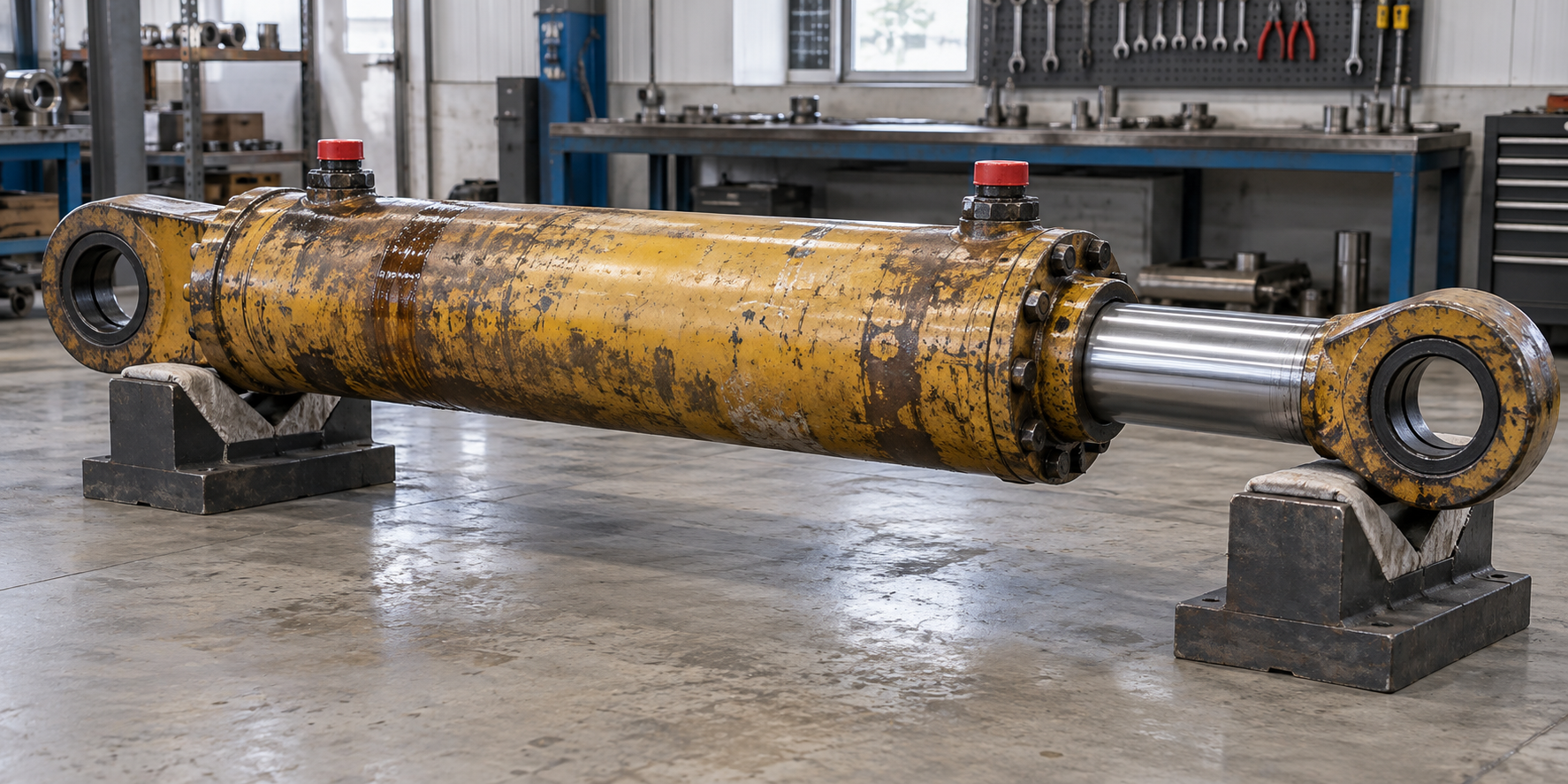
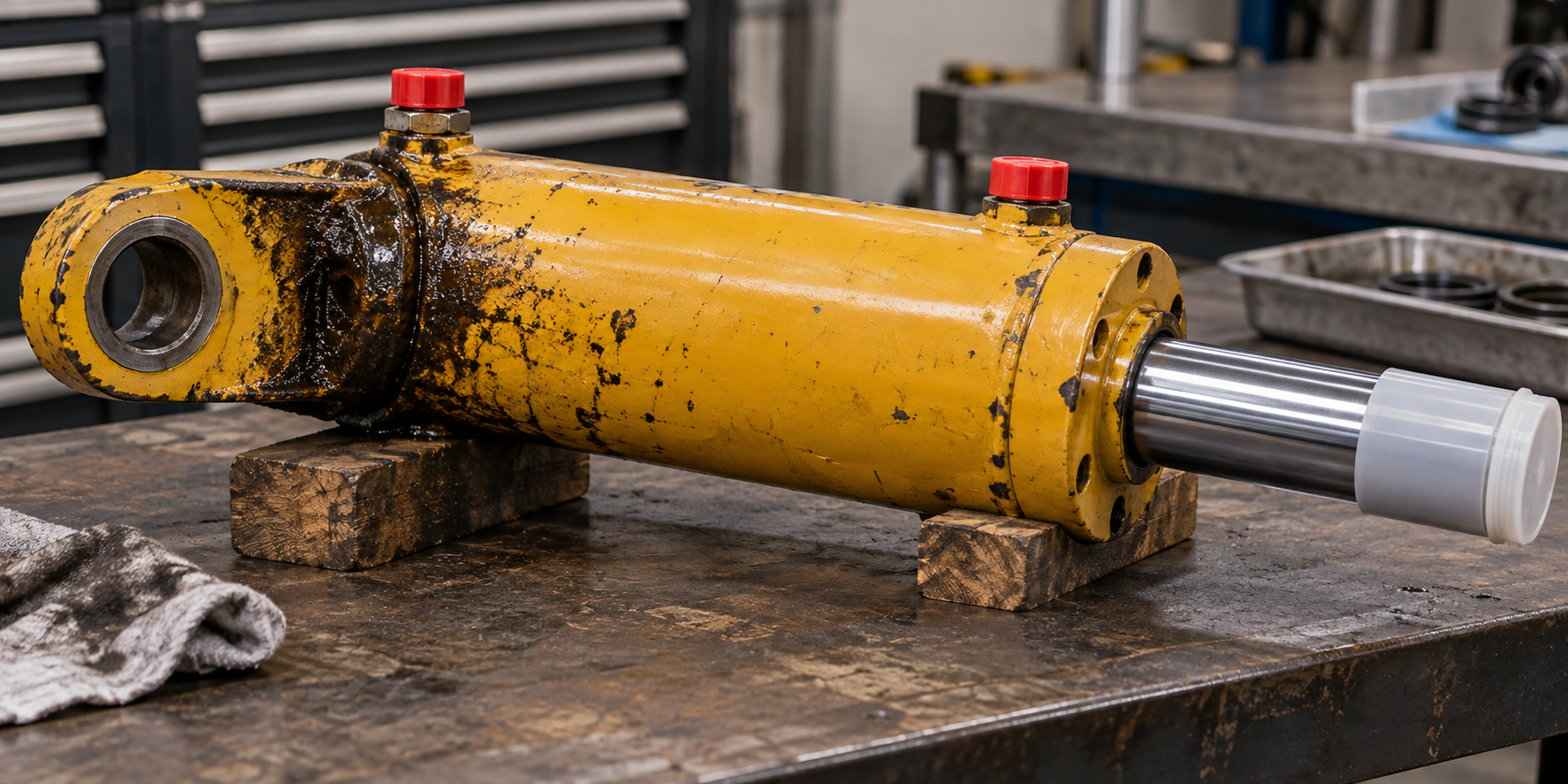
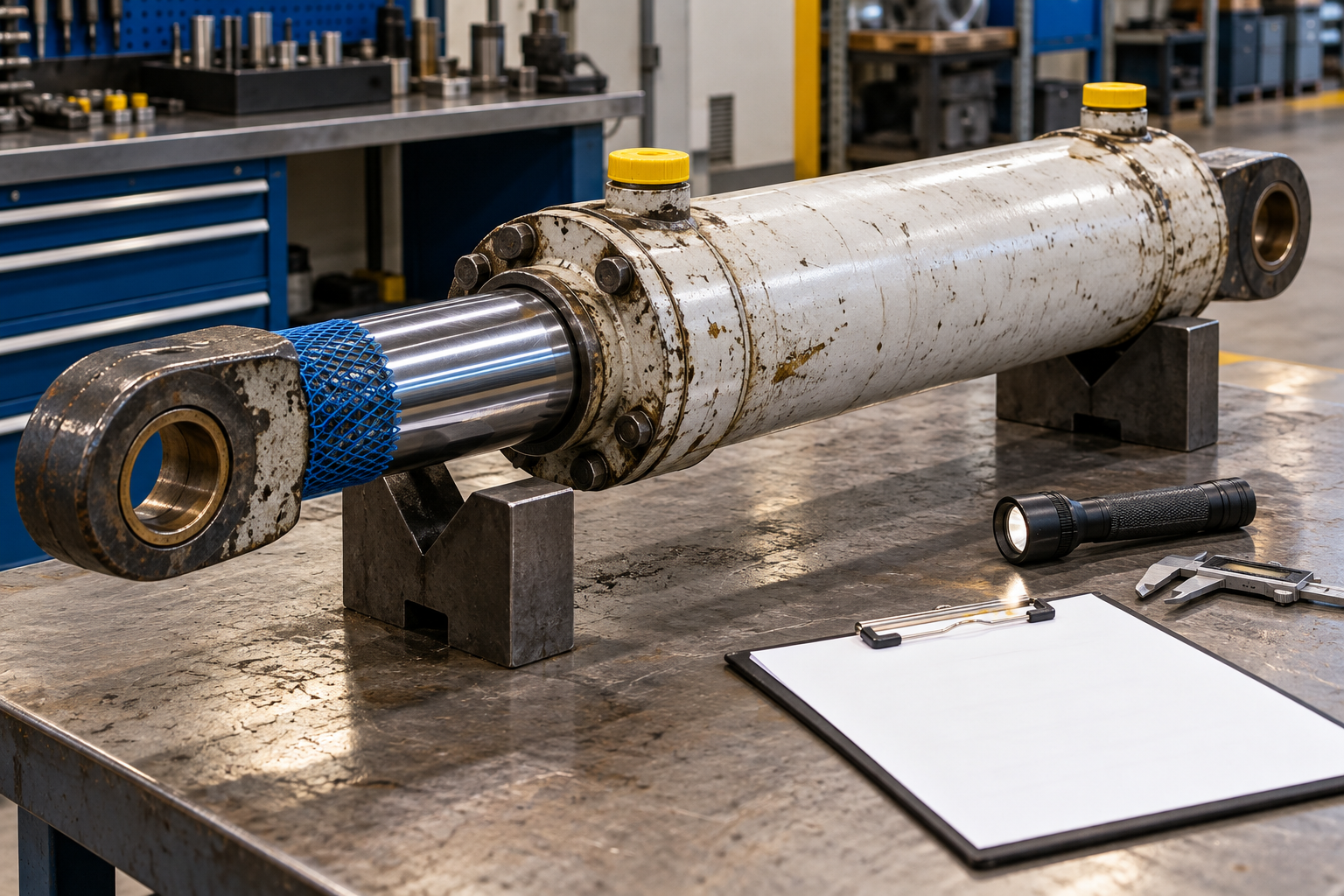
This article concerns a detached cylinder exterior in a controlled workshop. It is not a procedure for an installed, energized or pressurized hydraulic system. The images are conceptual illustrations, not customer-site photographs or proof of a repair outcome.
Why preserve evidence before cleaning?
Oil staining near a gland, port or welded joint may help a technician trace a leak path. Photograph the as-received cylinder and record its orientation, serial or part identification, damaged paint and visible fluid deposits. Cap or cover open ports under the shop’s repair procedure. Keep the polished rod surface and dynamic seals out of the blast path unless the cylinder manufacturer specifically permits a method for them. A clean exterior must not be mistaken for a repaired seal.
Canada’s CCOHS hazardous-energy guidance includes hydraulic energy among the sources that can harm personnel and stresses control of stored energy. Its lockout and tagout guidance discusses isolating hydraulic systems, relieving residual pressure and verifying that energy has been removed. The repair shop should use its own approved isolation and depressurization procedure before removing or working on a cylinder.
What belongs in a controlled cleaning trial?
Define the surface to be cleaned: for example, a painted barrel exterior or a metal mounting lug. Record the coating, grease or dried soil present and the required post-cleaning condition. On a securely supported cylinder, run a short, owner-approved trial away from the rod chrome, wiper, gland, open ports and nameplate. Record nozzle, pressure, distance, angle and time so the workshop can compare this method with its existing cleaning process. Stop if the coating lifts or a protected feature is exposed.
Dry ice changes into CO2, but the oil and dirt it dislodges remain in the work area. Capture and dispose of that residue according to the site’s waste procedure. Assess ventilation, especially in pits or enclosed rooms. CCOHS’s carbon-dioxide profile explains that high concentrations can displace oxygen. A trial plan should therefore include the workspace and air controls, not only the nozzle setting.
What inspection follows cleaning?
Have the repair lead inspect the previously obscured barrel, welds, mounting eyes and fasteners against the work order. If coating or corrosion protection was removed, agree a restoration step before release. Rod damage, gland wear, seal selection, dimensional checks, reassembly and pressure testing are separate repair decisions made under the OEM and shop procedures. The cleaning operator should not sign off cylinder function solely because the exterior looks clean.
For a supplier trial, send the cylinder model, photographs of deposits and suspected leak evidence, coatings, protected features, shop air supply, ventilation and acceptance criteria. Our air-requirements guide, site-readiness checklist and machine range can structure that discussion. A separate gearbox-housing repair guide covers a different component and contamination pattern.