
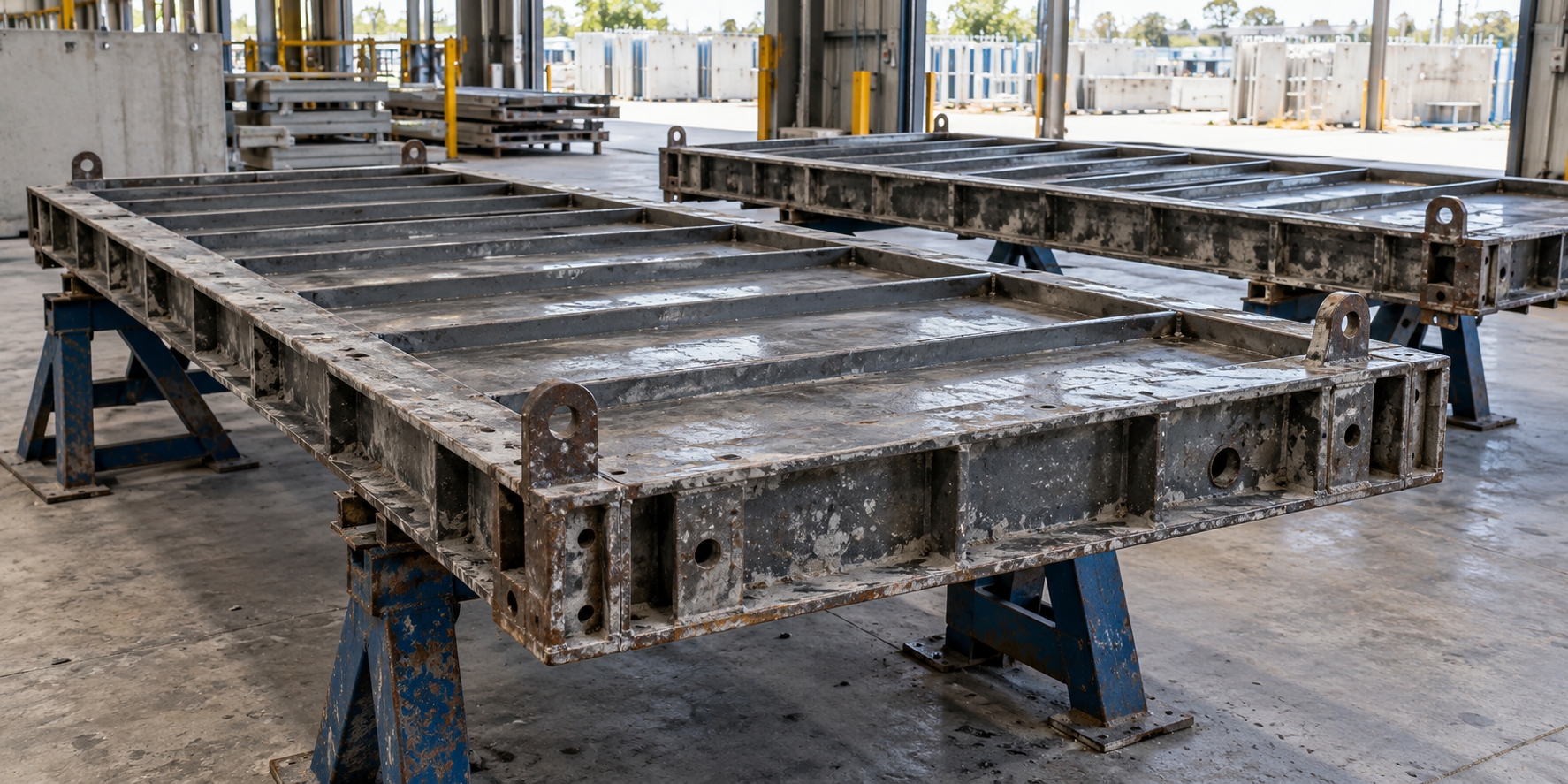
Precast Formwork Cleaning: A Reuse Trial Checklist
For reusable steel precast formwork, dry ice cleaning should be evaluated on a detached, supported panel with a documented trial area. Record the deposits, protect locating and sealing features, and compare the trial with the panel owner’s finish criteria. A cleaner face alone does not prove that the form is dimensionally sound or ready for another pour.
In a precast yard, the question is rarely whether a panel looks cleaner. The buyer needs to know whether the proposed method can remove the relevant residue within the maintenance window while preserving the panel’s working surfaces. This article sets out a trial and acceptance framework for Australian yards. It is a planning guide, not a claim that dry ice will remove every cured concrete deposit or replace a formwork inspection.
What must be recorded before cleaning a panel?
Identify the panel, its intended next use and the manufacturer’s or owner’s maintenance instructions. Photograph the as-returned face, edges, lifting points, connection hardware and areas that may be damaged. Separate release-agent film, loose dirt and attached concrete residue on the work record; they may respond differently to a cleaning method. Mark any area where the surface finish or geometry is already questionable.
Confirm that the panel is detached, stable and safely supported before a trial. The Safe Work Australia guide to formwork addresses management of formwork risks. In Queensland, the Formwork Code of Practice discusses inspection criteria, design documentation and material quality. Its pre-pour checks relate to the assembled formwork system; an off-line cleaning trial does not replace them. Other Australian jurisdictions should consult their own regulator and applicable requirements.
Which features should be excluded from a trial?
Agree the trial boundary with the formwork owner or competent maintenance lead. Keep the initial patch on an accessible, representative area away from seals, delicate coatings, identification, locating pins and machined alignment faces. Examine edge channels and joints before choosing a nozzle route. If a panel contains replaceable liners or elastomeric parts, confirm whether they should be removed or masked under the owner’s procedure.
Do not assume a standard pressure, nozzle distance or exposure time applies to every panel. Record the steel grade and coating where known, the contaminant, equipment setup, exposure, collection method and observed surface condition. If the proposed method does not remove a particular deposit at an acceptable setting, stop and choose an approved alternative instead of increasing treatment without a limit.
How should the trial be judged?
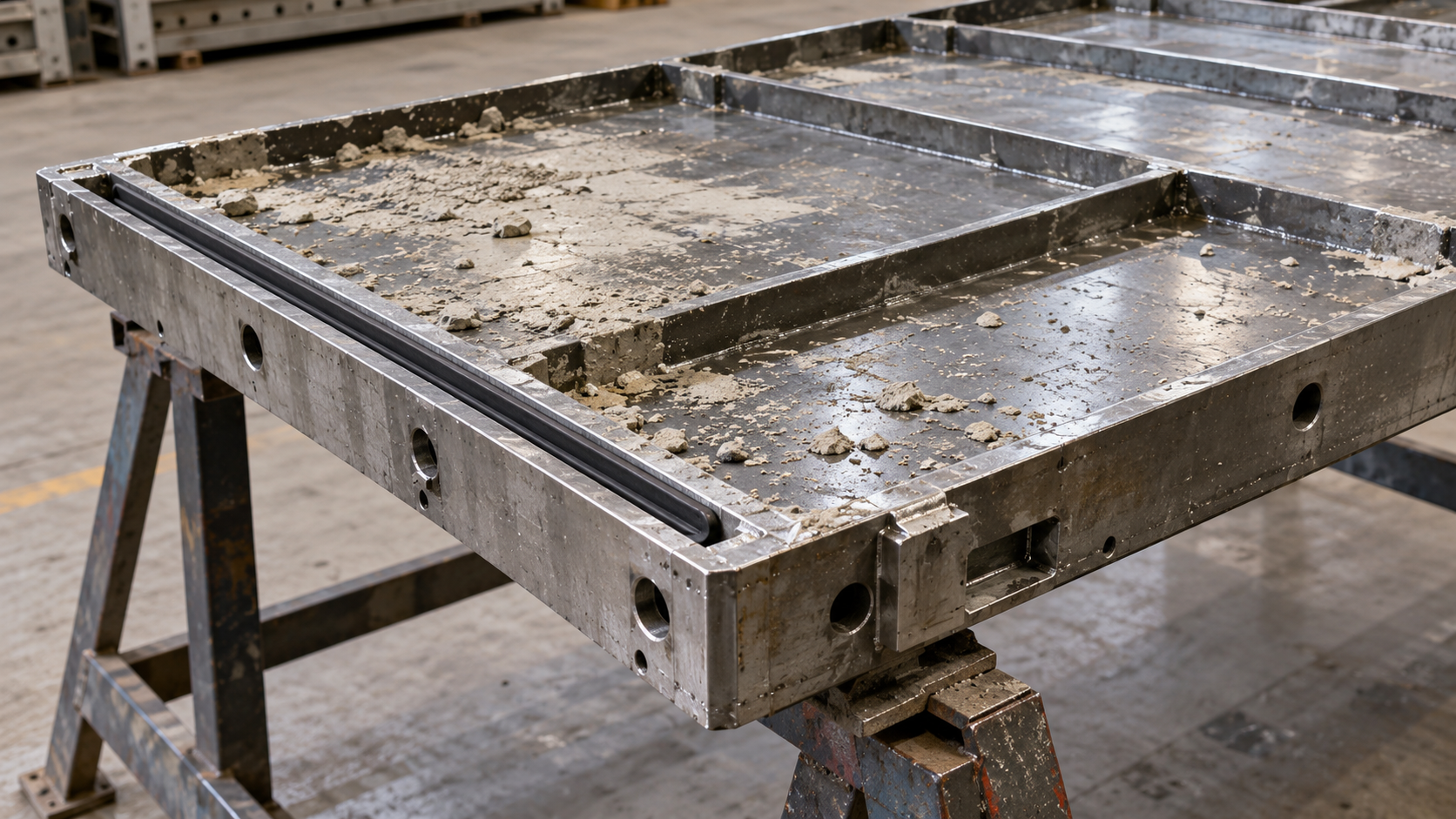
Compare the treated patch with an agreed reference, not with a generic “clean” photograph. Define the removal target and allowable residual material before starting. Inspect for unintended coating loss, edge damage, seal-channel contamination and changes that would affect the next casting surface. The responsible owner should decide whether the trial meets the relevant finish specification.
Dry ice sublimates, but displaced concrete fragments, release-agent residues and dust still need collection. Safe Work Australia’s construction dust guidance identifies ventilation and dust controls as part of exposure management. Plan containment and housekeeping for the actual material being removed. Do not describe the process as “dust free.”
What belongs in the reuse handover?
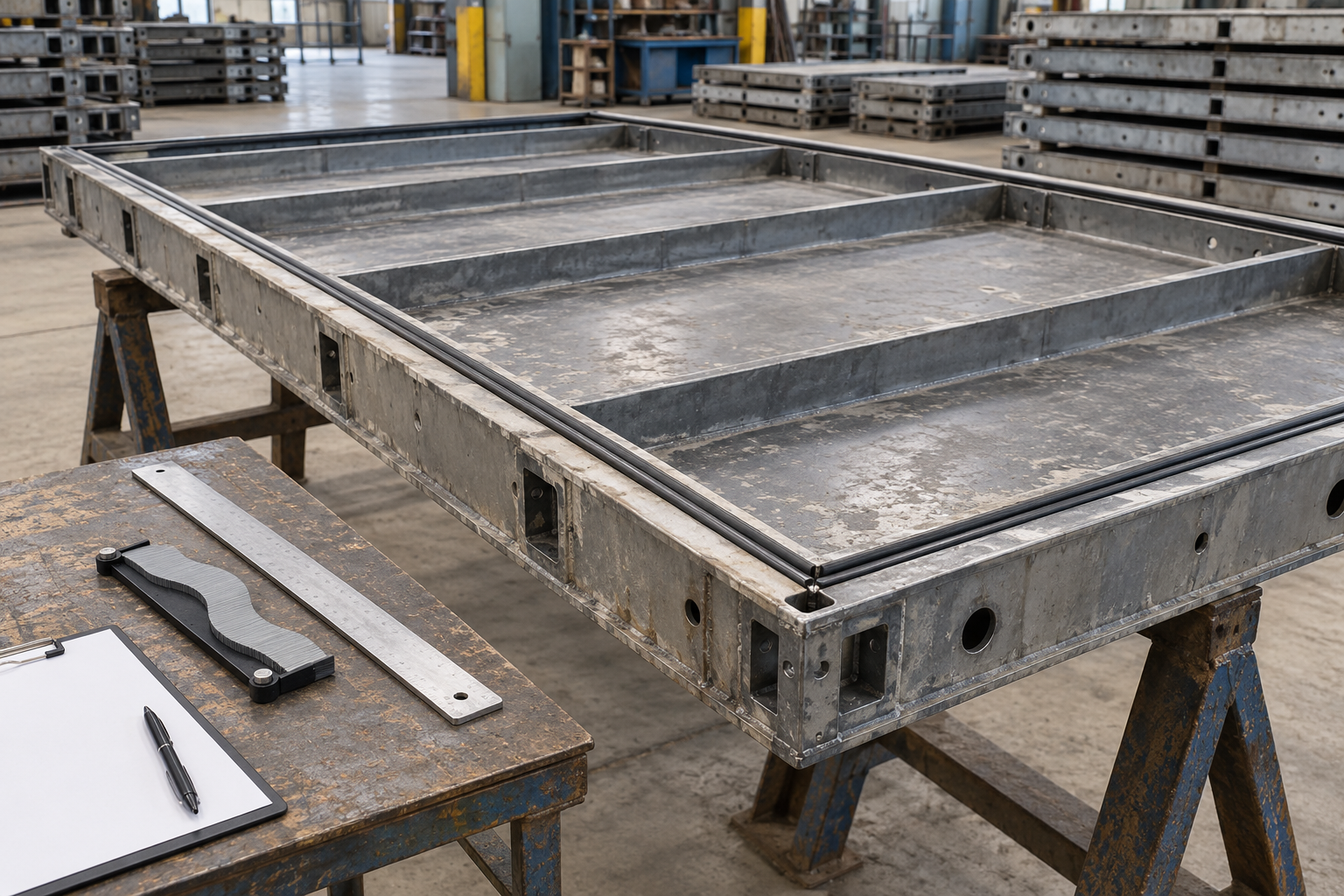
Record the panel ID, trial photographs, cleaning boundary, equipment settings, residual deposits, protected features and any observed damage. Separate the cleaning result from the inspection required before the panel is reused. Check flatness, edge condition, fastening points and seal function against the owner’s drawing or maintenance criteria, using an authorized inspector where needed. Do not infer dimensional acceptance from a clean-looking face.
The Safe Work Australia guidance on business duties includes a safe workplace, ventilation, instruction and control of airborne contaminants. Before work begins, review carbon-dioxide accumulation, compressed-air hazards, flying debris, noise and lifting controls for the yard layout. The DryIceSys safety guide, air requirements guide and site-readiness checklist can help structure the equipment discussion; they do not override local procedures or regulatory requirements.
For a meaningful equipment trial, send the supplier panel dimensions, photographs, coating details, a description of the release agent and concrete deposits, required finish, access constraints and acceptance criteria. That makes it possible to test a real maintenance question and document when the panel is ready for the separate reuse decision.
Images are AI-generated editorial illustrations for maintenance planning, not customer-site photographs or evidence of a cleaning or inspection result.