Gearbox Housing Cleaning Before Repair: Trial Checks
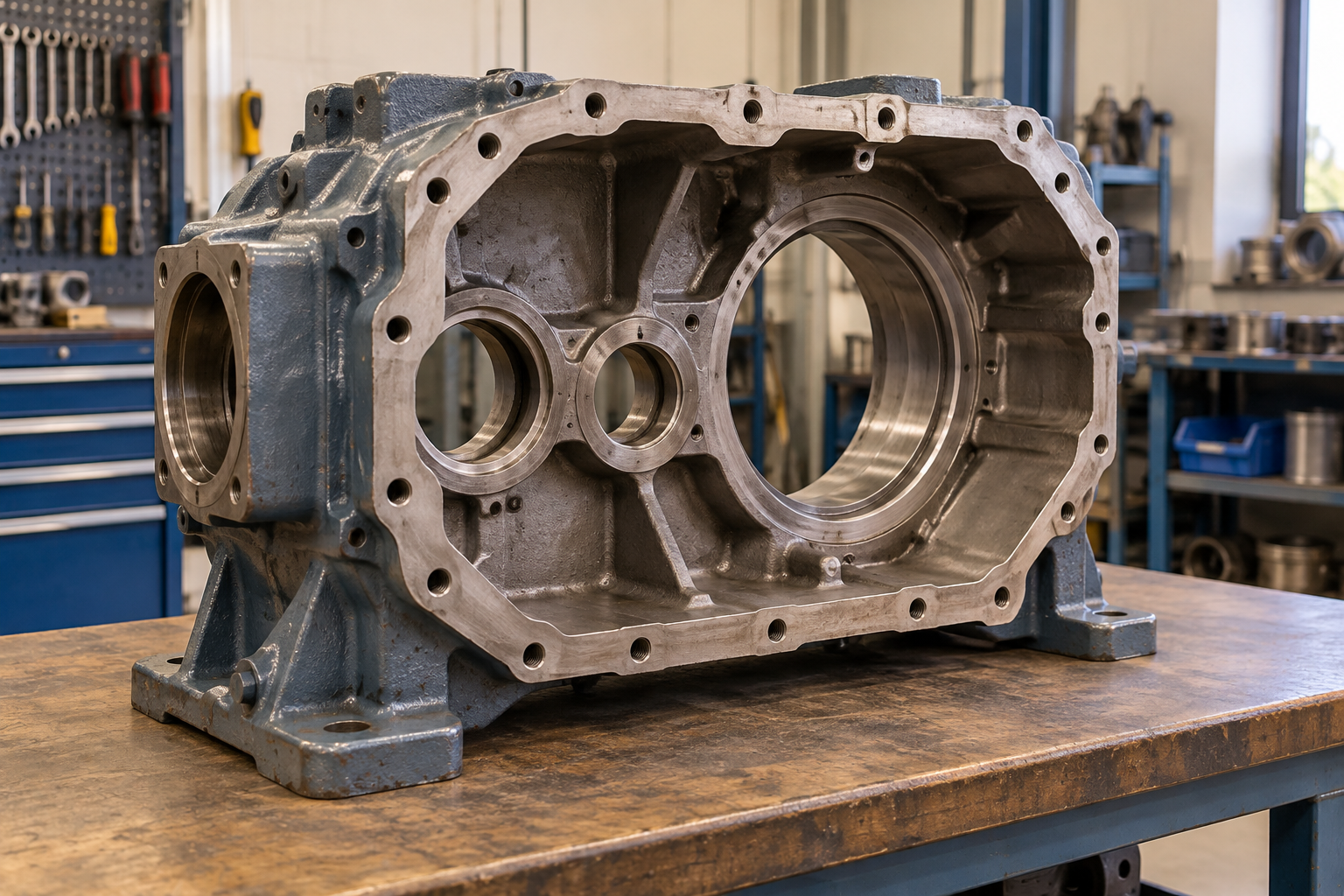
A repair workshop should preserve failure evidence, confirm the teardown scope and identify protected features before trialing dry ice cleaning on a detached gearbox housing. The trial must demonstrate acceptable residue removal without compromising surfaces needed for measurement or repair. Cleaning prepares the housing for assessment; it does not restore bearing fits, correct distortion or establish serviceability.
A gearbox arrives at a repair workshop with two things: a physical component and a history that may help explain its failure. Cleaning can make later examination easier, but premature preparation can remove evidence before the repair team has recorded it. The right starting point is the diagnostic plan.
This article proposes a workflow for German repair workshops considering dry ice cleaning on a detached, supported housing after authorized teardown. It does not recommend blasting an assembled gearbox, exposed bearings or an operating transmission.
Preserve the as-received evidence first
Identify the unit and link its photographs to the repair order. Record available operating history, the reported symptom and the customer’s requested scope. Note external leak paths, deposits, impact marks and visible damage before disturbing them.
The responsible diagnostician should decide whether oil, debris, filters or other evidence needs to be collected and retained. Keep such material identified and separate from cleaning waste. Do not wash or blast a suspicious area merely to make the incoming inspection photograph more presentable.
Once the evidence review is complete, record authorization to move to the next stage. This avoids a situation in which the cleaning team finishes its task but the repair team can no longer examine an important as-found condition.
Define the teardown and safe working condition
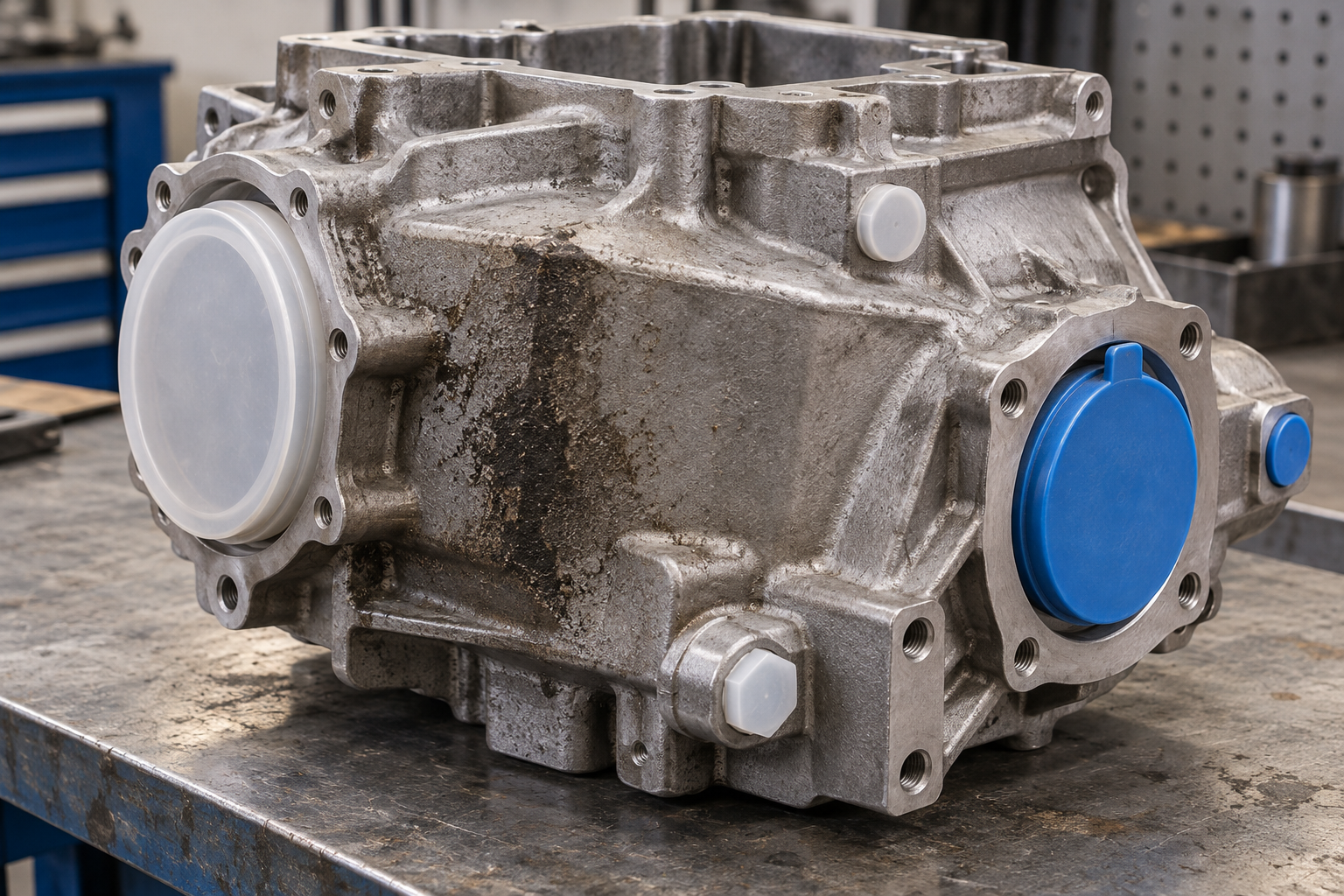
Confirm which components have been removed and which remain. A detached housing can still have inserts, seals, plugs or other features requiring protection. Support it securely for the planned orientation and handling method. Establish how it will be moved without exposing workers to an unstable load.
DGUV Information 209-015 on machinery maintenance addresses maintenance planning, execution and follow-up for the German context. The workshop should use the applicable guidance and its own risk assessment for the actual work. The publication is not a dry ice process approval for a gearbox model.
Record the permitted cleaning boundaries in the repair order. Avoid ambiguous instructions such as “clean everything” when the condition of a precision surface could affect a repair decision.
Distinguish deposit removal from restoration
Define what is to be removed and why: external oily dirt, an accessible deposit or contamination obstructing an approved examination area. Identify the required condition for the next operation. A housing being measured may need a different preparation route from one being repainted.
DGUV’s cleaning and degreasing overview emphasizes that cleaning occurs across assembly, dismantling, maintenance and repair, with different demands for each task. This supports defining the cleaning objective instead of assuming a single method suits every workshop stage.
Cleaning cannot correct an oversized bearing seat, restore a damaged thread or remove housing distortion. Those questions require appropriate examination, measurement and an approved repair decision. Keep them out of a cleaning contractor’s performance claim.
Trial an approved area and protect critical features
The repair engineer should identify features to exclude or protect. Depending on the component and scope, these may include bearing seats, locating faces, sealing tracks, identification, threaded openings and oil passages. Protection must suit the work and remain accountable through completion.
Select an accessible test area representative of the approved cleaning scope. Record the substrate, finish, contamination, equipment configuration and exposure. Compare the result with its documented reference and inspect for unacceptable surface or coating changes. If the result is uncertain, stop for review rather than expanding the treated area.
TWI’s surface-preparation overview explains that cleaning, roughening and other treatments serve different preparation needs. A successful deposit-removal trial does not establish that the housing is ready for coating or precision measurement under every procedure.
Avoid assigning a universal nozzle distance or pressure to cast housings. The actual component, deposit and accepted surface condition must guide a controlled trial. Record the conditions that produced an accepted result so the work can be reviewed.
Control displaced material and workshop exposure
Arrange collection so removed contamination does not enter protected features or spread to adjacent repair jobs. Dry ice sublimation leaves the removed dirt and oil to be managed. Account for blind features and inaccessible areas when deciding whether additional approved cleaning is necessary.
Review carbon-dioxide exposure, ventilation, compressed-air hazards, noise and flying debris for the actual workshop layout. Use the DryIceSys safety guide with the workshop’s procedures. Confirm the air supply using the air-requirements guide, and plan access and containment with the site-readiness checklist.
Release the housing to inspection, then decide on repair
The cleaning handover should identify treated areas, exclusions, residual contamination and any observed changes. Account for masks, plugs and temporary protection under the workshop procedure. Retain the evidence record and the trial approval with the repair order.
The next authorized stage may include dimensional assessment, crack examination, thread inspection or other checks required by the repair plan. Use the applicable measurement conditions and calibrated equipment. Record the disposition separately: reuse, approved repair, further investigation or rejection.
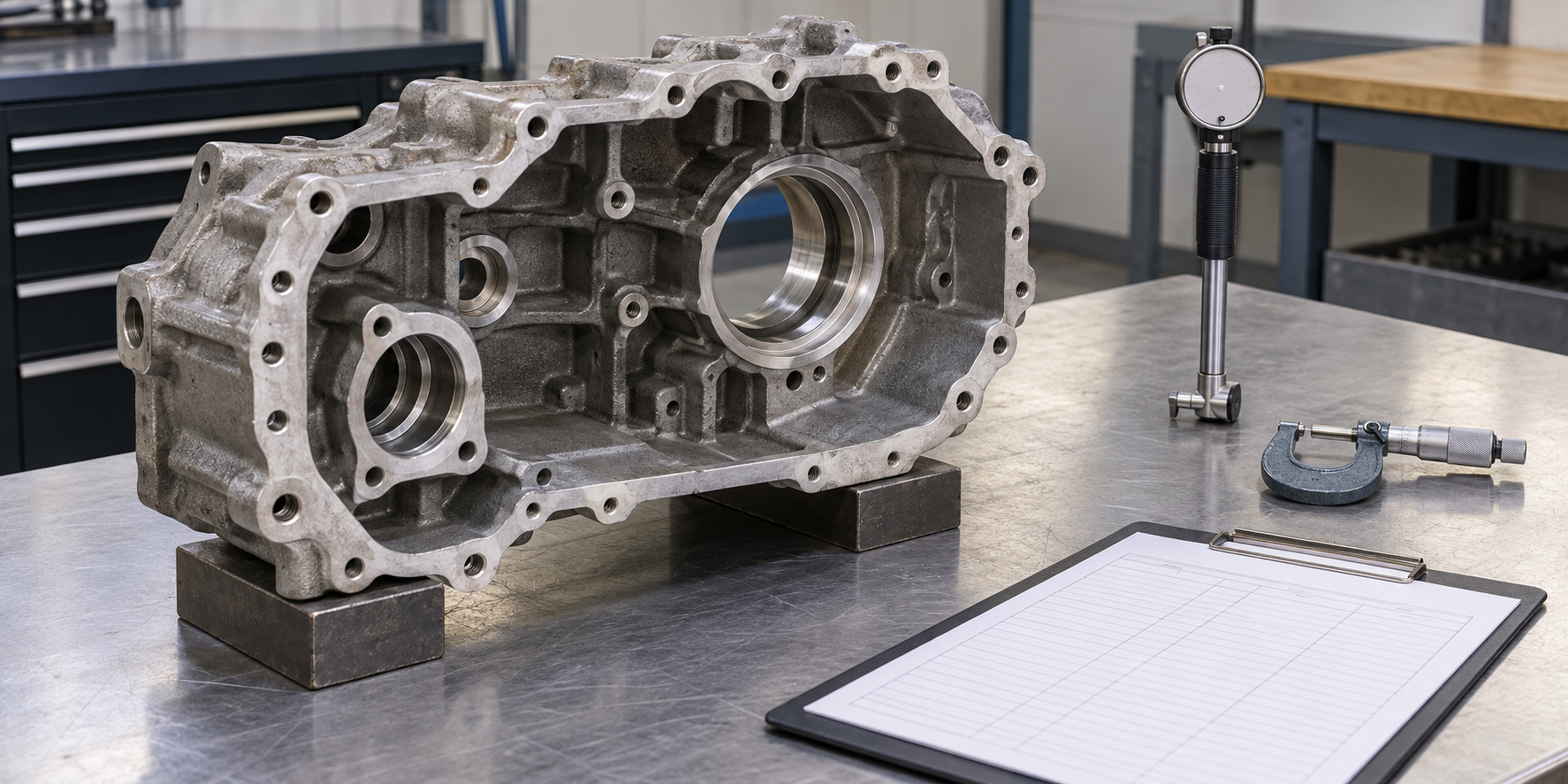
For an application review, provide the housing material, dimensions, photographs, contamination, teardown state and surfaces that must be preserved. This allows a practical discussion of a cleaning trial while keeping the core repair decision with the people responsible for the component’s condition and serviceability.
Images are AI-generated editorial illustrations for repair planning, not customer-site photographs or evidence of a cleaning, measurement or repair result.