

Dry Ice Pre-Cleaning for NDT: Inspection Hold Points
A dry ice cleaned surface should proceed to penetrant testing only when the responsible inspection authority accepts the preparation under the applicable procedure. Visible cleanliness alone does not demonstrate that surface-breaking flaws remain detectable or that residues and surface conditions are acceptable. Cleaning approval, examination results and final component acceptance require separate records.
For a UAE fabrication or maintenance buyer, a cleaning quotation and an inspection quotation answer different questions. The cleaning contractor proposes how to prepare a surface. The inspection provider defines how the component will be examined against the applicable requirements. Connecting the two before work starts reduces uncertainty at the inspection stage.
This guide focuses on preparation for penetrant testing as one specific example. It does not extend a trial result automatically to magnetic-particle, ultrasonic, radiographic or other examinations, and it does not certify dry ice blasting as an approved pre-cleaning method.
Ask the inspection authority what condition is required
Identify the component, material, examination area, applicable procedure and acceptance responsibility. Ask the responsible inspection personnel to specify the required preparation and any prohibited processes. If the proposed method differs from the established procedure, resolve the approval or qualification requirements before treating the production component.
TWI’s explanation of penetrant testing describes the detection of surface-opening flaws and the importance of pre-cleaning. It also warns that some mechanical preparation can close or obscure defects. This is a reason to assess preparation carefully, not evidence that every dry ice application preserves defect detectability.
A useful first hold point is written acceptance of the proposed preparation route by the person authorized under the inspection plan. If that acceptance is absent, pause the trial on the actual inspection item.
Match the trial to the material and surface condition
A general-purpose demonstration coupon may show deposit removal but fail to represent the production component. Review differences in material, coating, finish, geometry and contamination before using its result to support a decision.
TWI’s penetrant-system selection guidance identifies factors including geometry, surface condition and material compatibility. These considerations reinforce the need for a component-specific examination plan. They do not supply a universal preparation recipe.
The responsible inspection authority should determine whether representative samples, known indications or other validation evidence are needed and how they will be assessed. Record the approved comparison. Do not create a crack, modify a reference specimen or experiment on a safety-critical component without the necessary authorization.
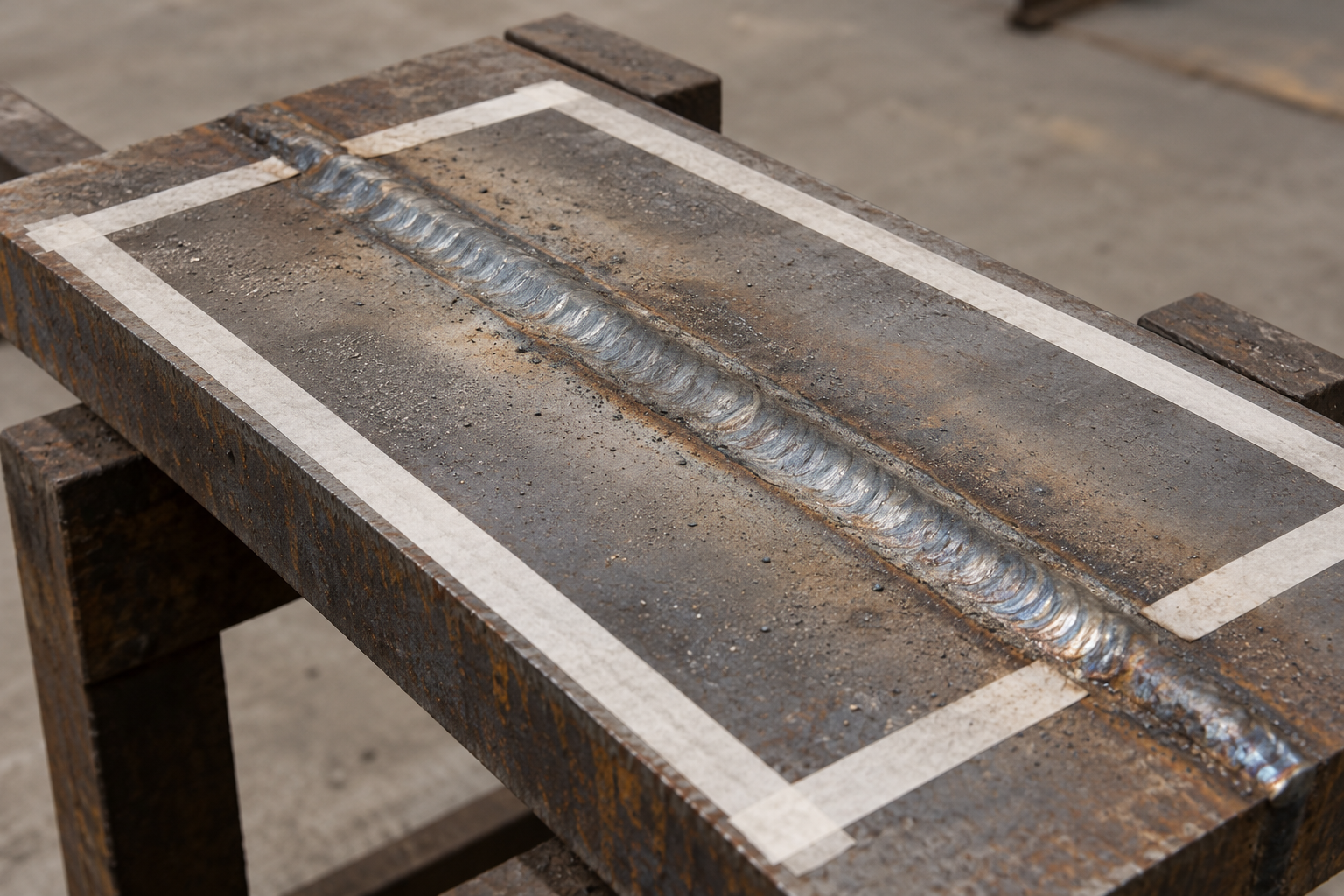
For the cleaning trial itself, document the area, configuration and exposure. Define stop conditions for coating changes, surface damage, obscured identification or a result that cannot be assessed confidently.
Separate four hold points in the work package
The following is a proposed planning structure, to be adapted to the applicable procedure:
- Before preparation: confirm identity, scope, procedure, approved method and any evidence that must be preserved.
- After the trial: have the authorized person assess the preparation result and determine whether the method may be used on the defined scope.
- Before examination: confirm the surface meets the procedure, including any further cleaning, drying or temperature requirements.
- After examination: issue the examination record and route the component for its separate acceptance or disposition decision.
The cleaning operator can record what was done and observed. That record should not be described as an NDT report unless the appropriate examination has actually been performed and reported by the authorized provider.
Check the provider’s scope and the client’s requirements
For UAE procurement, the Ministry of Industry and Advanced Technology’s FAQs include information on the national accreditation system. Use the relevant official services and the client’s requirements when checking a provider’s current status and scope. A broad claim such as “internationally approved” is not enough to establish suitability for a specific inspection contract.
Ask for evidence relevant to the method, personnel, component and acceptance framework. Distinguish company accreditation, individual qualification and project authorization. Do not imply that a cleaning-machine supplier holds an inspection accreditation simply because its equipment is used before an examination.
Keep the surface and the records under control
Record the component identifier, location map, as-found condition, approved cleaning parameters and surface review. Track any areas that remain inaccessible. If an inspector requests additional preparation, record that change and who authorized it.
Manage handling and protection between cleaning and examination so that the approved condition is maintained. Define how a delay, new contamination or environmental change triggers reassessment. Do not prescribe a universal waiting time: the applicable procedure and responsible authority must determine readiness.
The work area also needs appropriate controls for compressed air, noise, debris and carbon dioxide. The DryIceSys safety guide, air-requirements guide and site-readiness checklist provide useful inputs for planning the cleaning setup.
When requesting an application review, send the component material, contamination, inspection method, relevant preparation restrictions and responsible approval contact. The best outcome is an agreed route from preparation to examination, with evidence at each stage. A visually clean photograph can support that record, but it cannot establish an acceptable inspection result on its own.
Images are AI-generated editorial illustrations for inspection planning, not customer-site photographs, actual flaw indications or evidence of examination or acceptance.