
Vietnam Footwear Dies: A Dry Ice Cleaning Trial Guide
A Vietnam footwear factory can evaluate dry ice cleaning on a detached steel cutting die by testing the adhesive-covered wall while protecting its cutting edge and backing materials; acceptance must include die condition and a controlled cutting check.
This article is a proposed evaluation guide, not a report of a completed customer installation.
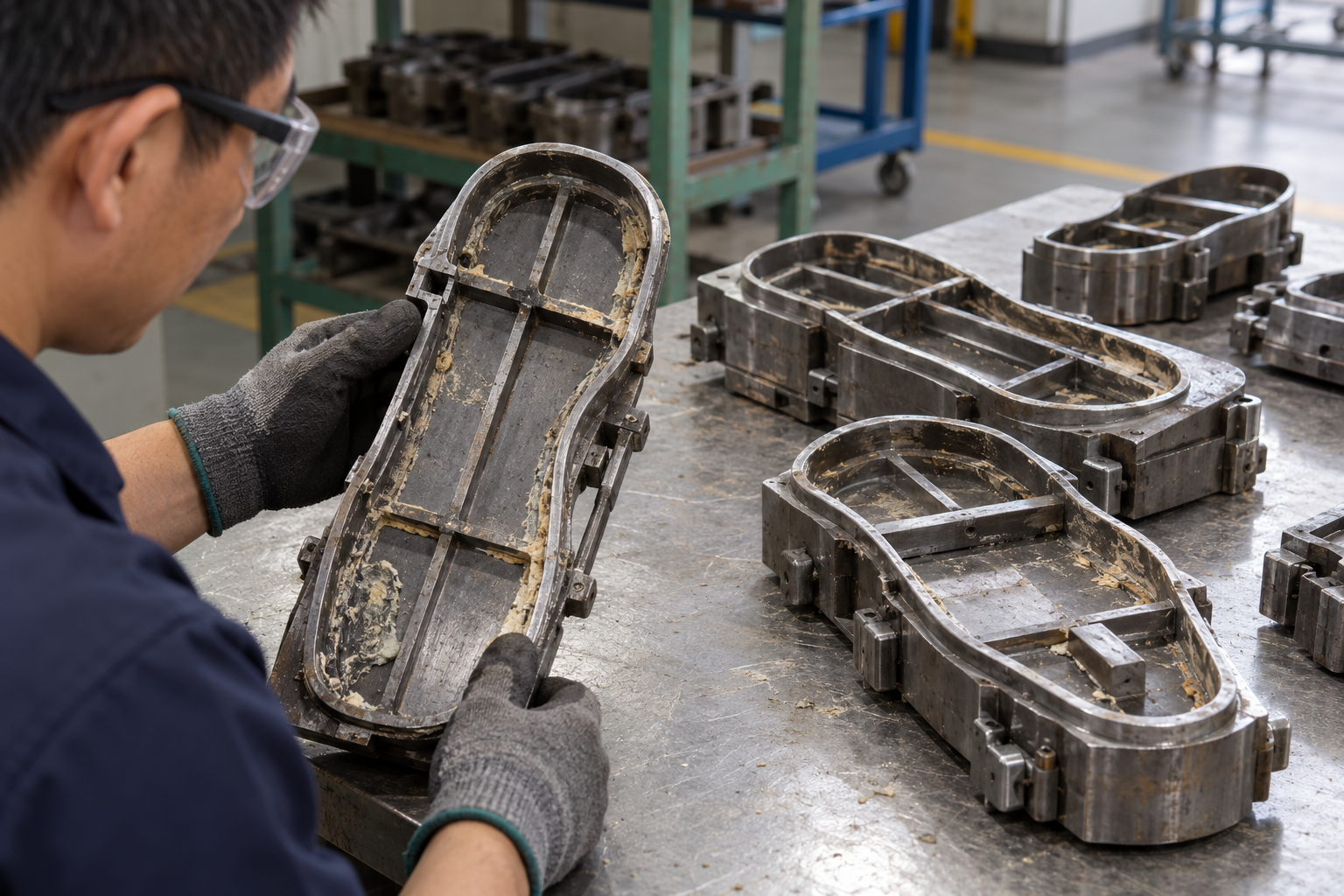
Identify what is sticking to the die
Adhesive on a shoe-pattern cutting die can occur with fibres, foam fragments and release material. Before choosing a method, identify the adhesive system and whether it has cured. A steel wall is not the same substrate as a rubber ejector, foam support or bonded backing. Record those materials separately. The first question is whether a defined deposit can be removed without changing the useful condition of the tool. Do not assume that a treatment suitable for a solid fixture is suitable for a thin sharpened die.
Remove the die from the press workflow
Use the factory’s authorised method to remove, carry and secure the die. The cutting edge remains a handling hazard even when no machine is running. A fixture should hold the tool without requiring someone to support it by hand near the trial area. Separate cleaning from open adhesive containers and other solvent-related work. Review the adhesive safety data and contamination before selecting collection controls. Do not use the process on an assembled press merely to avoid removing a tool whose neighbouring materials have not been assessed.
Trial the wall before the cutting edge
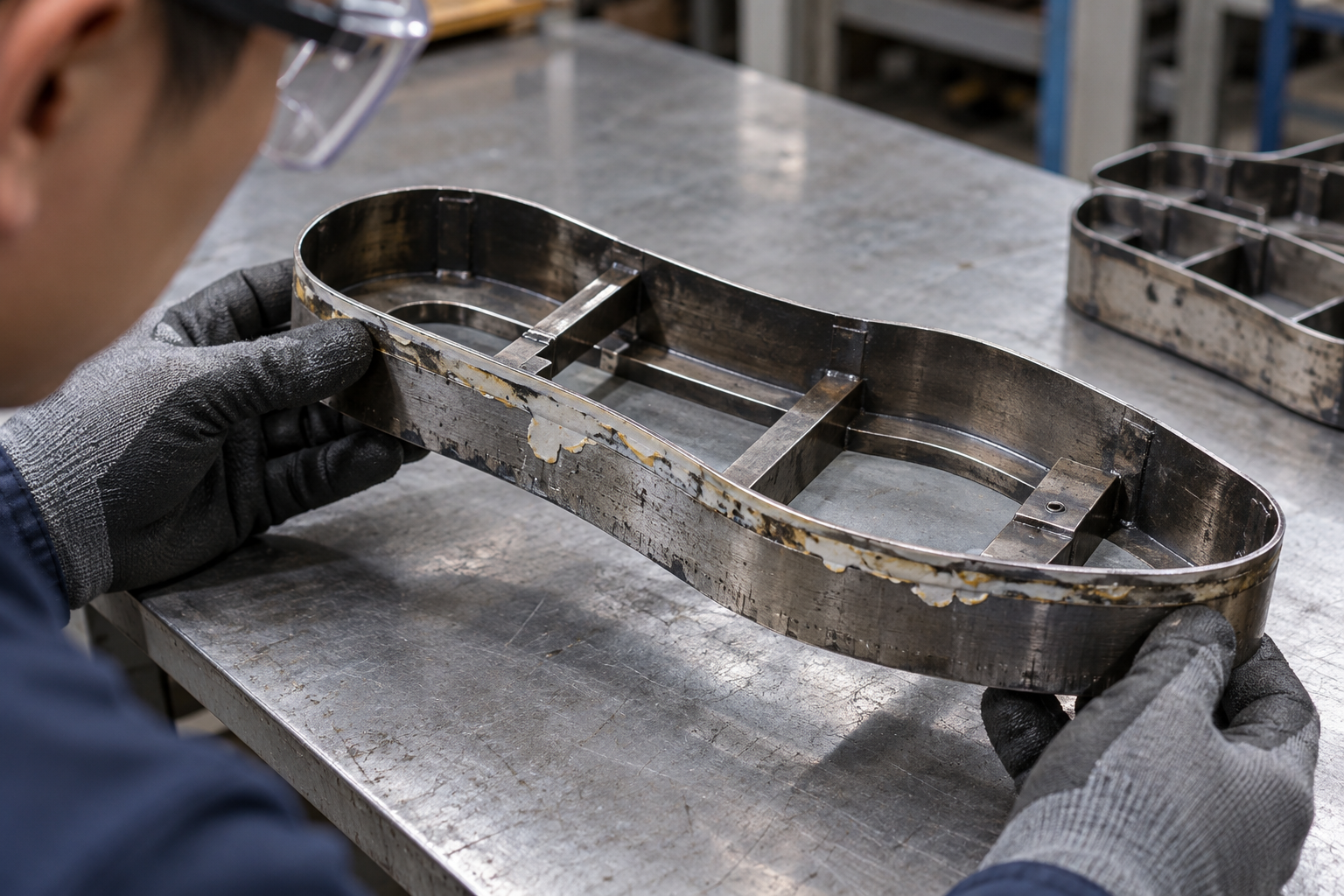
Mark a short section on the outside wall with a representative buildup and retain a comparison area. The die maker determines which edge zones, ejector materials and joints must be excluded. Record how the tool was supported and the cleaning exposure. Inspect for edge damage, loosened backing and changes to bonded components after the tool returns to workshop temperature. If removal requires aggressive exposure near an excluded material, stop and reconsider the method. A patch that leaves the adhesive but preserves the tool is a failed cleaning result, not permission to keep increasing intensity.
Check the next cut under the normal quality process
When the maintenance inspection passes, use the approved trial-cut procedure on representative material. Look for clean separation, dimensional consistency and unwanted marks. This is an acceptance proposal for the factory to define, not a claim that dry ice improves cutting quality. Record any manual touch-up and time needed to return the die to usable condition. A photograph of the wall alone cannot show whether the die still performs its production function. Keep the edge inspection and trial-cut result attached to the same tool identity.
Make the supplier quote useful
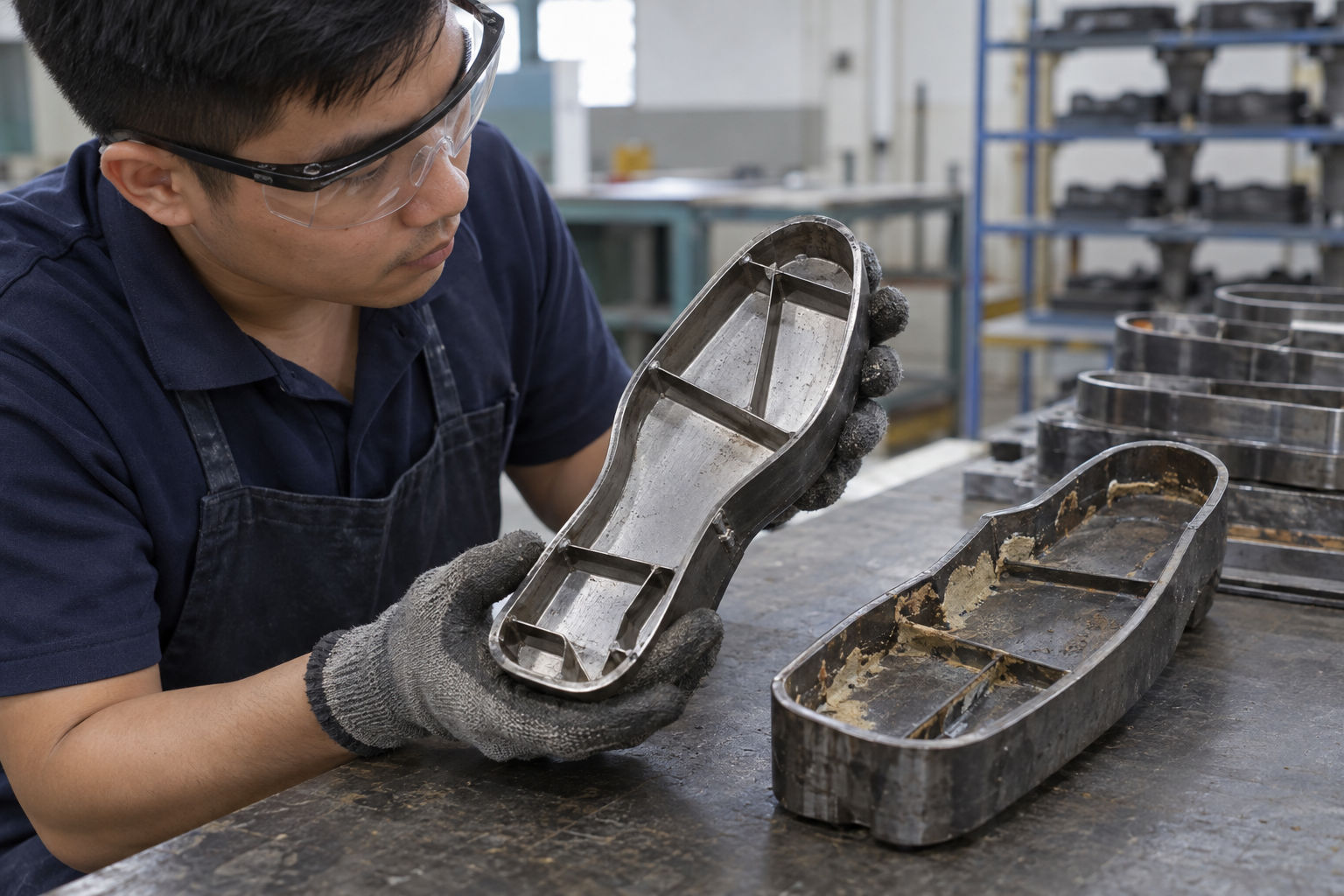
Provide die dimensions, steel and backing details, adhesive identity, deposit photographs and the maintenance location. State that thin cutting edges and nonmetal components need explicit treatment limits. Ask for the total work cycle, including removal, handling, setup, inspection and return. If a trial succeeds, qualify the same die construction and adhesive combination before extending it. A different foam backing or adhesive formula changes the question. Buy a reproducible maintenance procedure rather than a promise to remove every glue from every footwear tool.
Trial scope and acceptance
| Surface or task | Proposed action | Acceptance boundary |
|---|---|---|
| Steel wall with identified adhesive | Small secured-tool trial | Residue reduction with retained tool condition |
| Cutting edge and ejector foam | Maker-defined exclusions | No damage or loss of bonded parts |
| Tool returned to production | Controlled trial cut | Factory quality criteria met |
Local reference and work planning
The ILO-hosted translation of Vietnam’s Law No. 84/2015/QH13 describes prevention of hazardous factors and employer responsibilities. The factory’s authorised safety team should translate that framework into the actual maintenance procedure and confirm current applicable requirements. See Vietnam occupational safety and health law, ILO-hosted translation.
The NIOSH carbon dioxide reference identifies inhalation and cold-contact hazards. Have the competent site team establish ventilation, CO2 monitoring where required, handling, noise and eye protection, and emergency arrangements for the actual task. Do not rely on an oxygen reading alone to assess CO2 exposure. Removed contamination still needs collection and an appropriate waste route.
For maintenance-isolation background, the US OSHA hazardous-energy standard addresses control of hazardous energy. It is a US reference, not a statement of local law for this application. Use the facility’s approved isolation and restart procedure.
Questions before a supplier trial
Can all cutting-die materials be treated together?
No. Steel, foam, rubber and bonded backing need separate compatibility decisions.
Should the die be held by hand during the trial?
Use an approved secure fixture and the site handling procedure; do not make hand support part of the cleaning setup.
Prepare the supplier discussion
Send DryIceSys the substrate and coating details, photographs of the actual deposit, approved trial zone, available utilities and written acceptance criteria. Request an application review before selecting equipment or estimating production capacity. For practical preparation, use the site-readiness checklist, machine-safety guide and nozzle-selection guide. These guides support planning; the component owner still defines the permitted scope.