
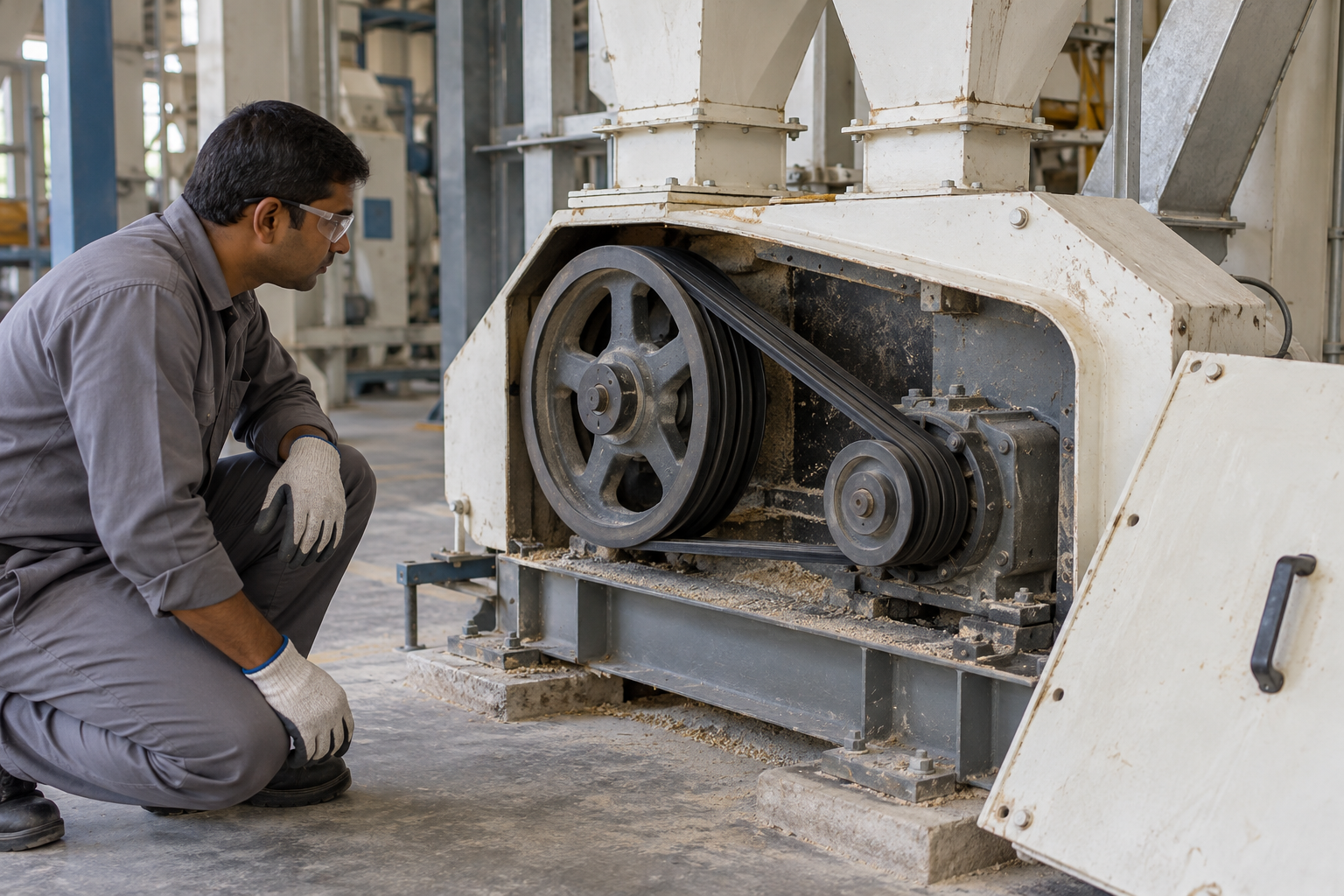
India Rice Mills: Dry Ice Cleaning Drive Housings
An Indian rice mill can consider a controlled dry ice trial on isolated non-food-contact drive housings, with grain dust assessed and product paths protected; the trial does not qualify food-contact sanitation or operation around moving drives.
This article is a proposed evaluation guide, not a report of a completed customer installation.
Choose a boundary outside the rice path
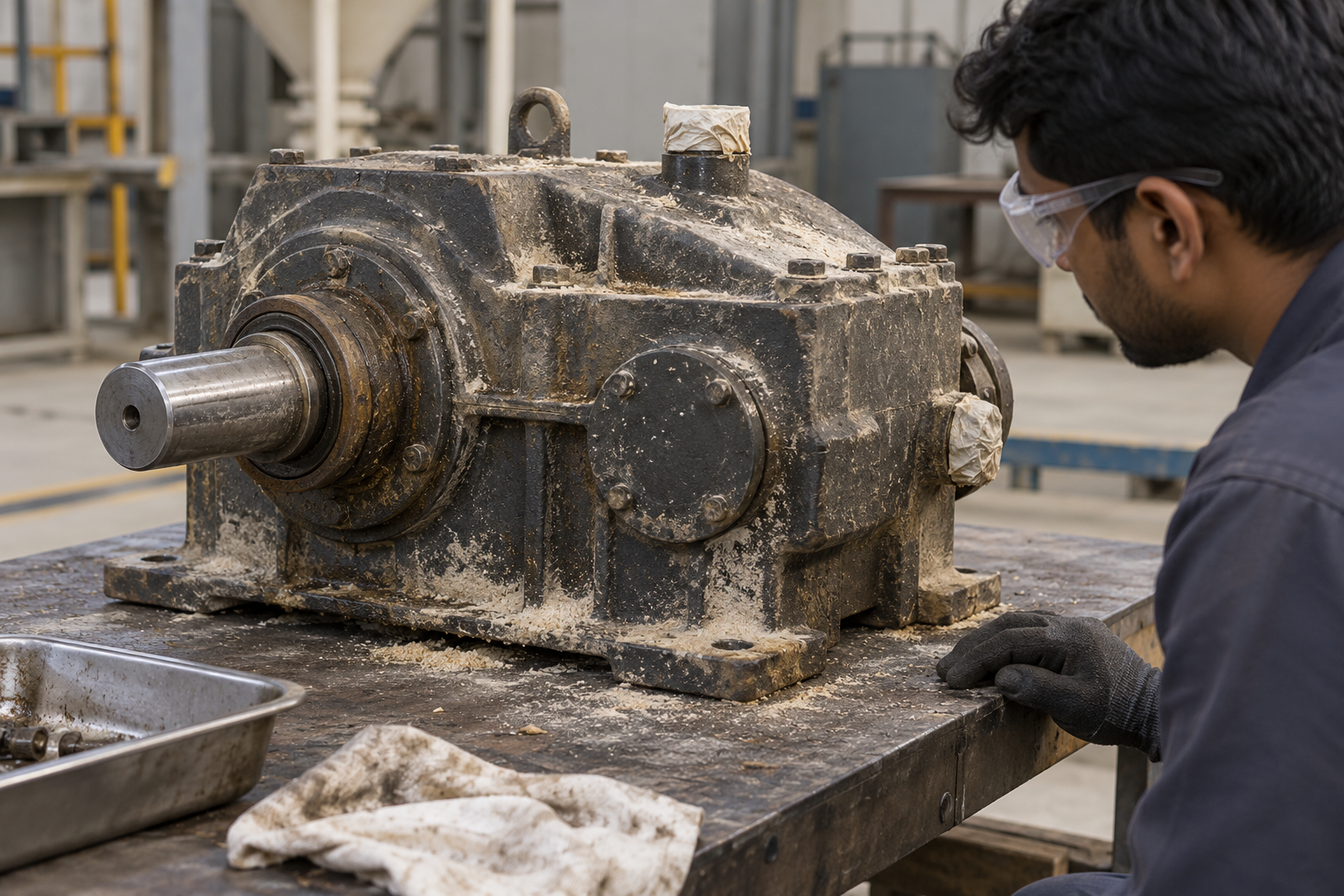
A useful first candidate is the exterior of a removable drive cover or a robust housing with dust bound into an oily deposit. That is a different task from cleaning a chute, polishing roll or product-contact surface. Mark the boundary on photographs. Protect product openings and remove exposed ingredients from the work area before disturbance. If deposits can be removed adequately by the mill’s existing approved method, there may be little reason to introduce another process. Select the trial because it answers a maintenance problem, not because the equipment is available.
Assess the dust before moving it
Grain-related dust requires attention before an air-driven cleaning method is introduced. The OSHA combustible-dust overview is a US technical reference, not an Indian compliance determination. For this task, the mill must decide whether the proposed disturbance, collection system and surrounding equipment are acceptable. Do not use a demonstration to blow settled material from a drive into the building. A cleaning plan that makes the housing look better but redistributes dust has not solved the problem.
Take the drive out of service
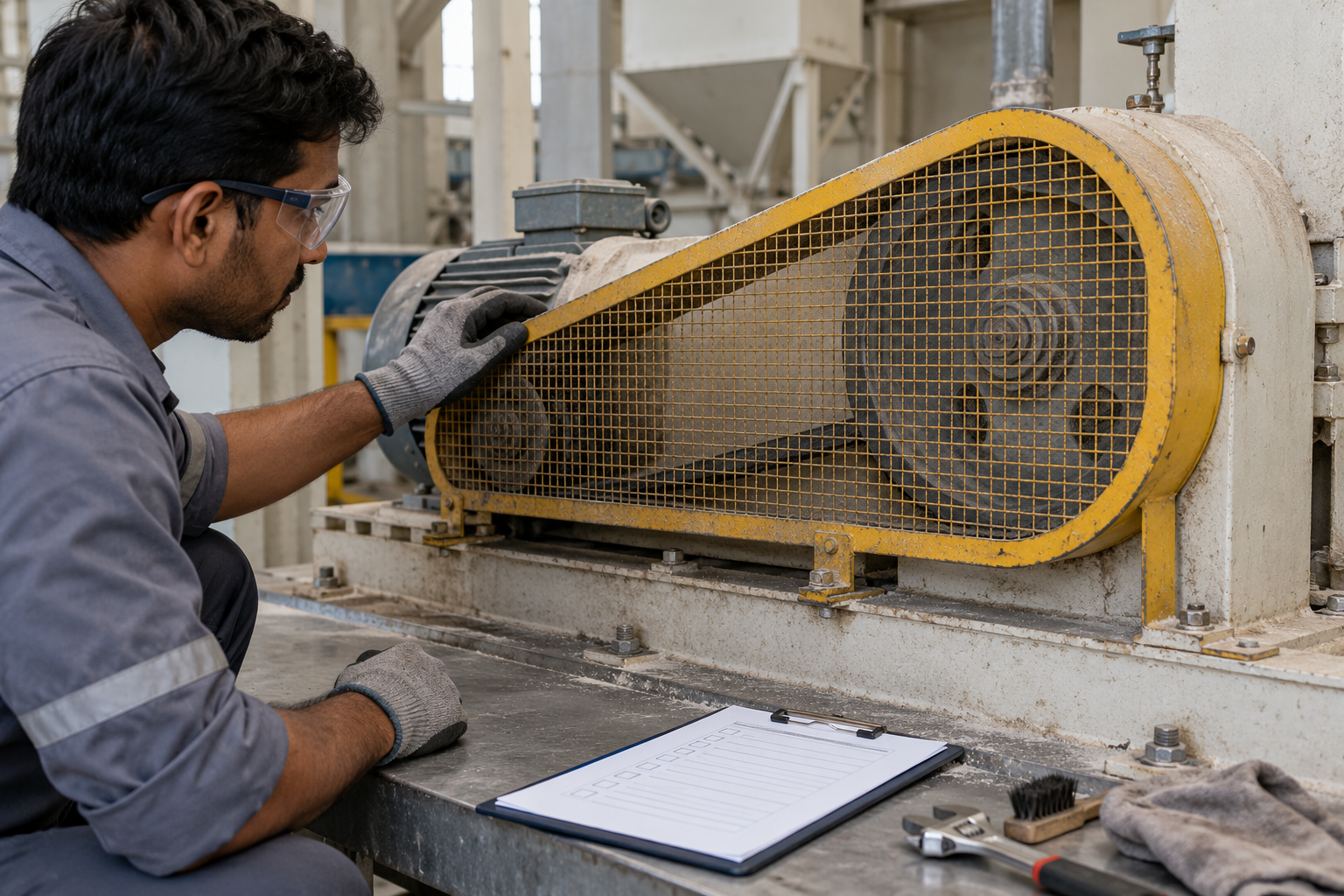
Follow the mill’s authorised shutdown and isolation procedure, including the driven machine, automatic starts and stored motion. Removing a cover can expose an unexpected route to a belt, coupling or shaft. Prefer a detached cover for the initial material test when removal is authorised. Close and identify the affected line so production cannot restart while guards are absent. Keep the test separate from normal grain handling. Do not direct a jet toward bearing seals, electrical connectors or lubrication points merely because they sit next to the dirty area.
Inspect paint, seams and the collection boundary
Test a small exterior area containing the actual deposit and finish. Photograph the untreated condition and the result at the same scale. Check coating retention, residue at seams and whether material has moved behind the housing. Decide in advance who can accept the surface and how collected solids leave the production environment. Condensation and compressed-air contamination need consideration even when no wash water is intentionally added. Refit the guard, inspect clearances and complete the existing release checks before returning the drive to service.
Specify maintenance cleanliness separately from sanitation
A request for a clean drive housing should state its maintenance acceptance criteria. It should not promise microbial control or readiness of a food-contact path. Ask the supplier to quote trial preparation, containment and inspection as well as machine time. Record whether the task can be carried out without contaminating adjacent equipment and whether any approved follow-up cleaning is necessary. If the proposed boundary cannot protect the rice path, move the task to a suitable maintenance area or choose another method.
Trial scope and acceptance
| Surface or task | Proposed action | Acceptance boundary |
|---|---|---|
| Detached exterior drive cover | Representative oily-dust patch | Finish retained and debris collected |
| Product chute or food-contact surface | Outside this trial | Separate sanitation qualification |
| Drive with exposed moving parts | No cleaning while operational | Authorised isolation and guard restoration |
Local reference and work planning
The Maharashtra Labour Department publishes a reference to the Occupational Safety, Health and Working Conditions Code, 2020. This is a state-government source, not a determination of requirements for every Indian mill. Have the responsible team establish applicable central and state requirements and retain the existing food-safety programme. See Maharashtra Labour Department occupational safety code publication.
The NIOSH carbon dioxide reference identifies inhalation and cold-contact hazards. Have the competent site team establish ventilation, CO2 monitoring where required, handling, noise and eye protection, and emergency arrangements for the actual task. Do not rely on an oxygen reading alone to assess CO2 exposure. Removed contamination still needs collection and an appropriate waste route.
For maintenance-isolation background, the US OSHA hazardous-energy standard addresses control of hazardous energy. It is a US reference, not a statement of local law for this application. Use the facility’s approved isolation and restart procedure.
Questions before a supplier trial
Does a dry process make a rice mill safe to clean during production?
No. Dust, product protection and mechanical isolation still govern the task.
Is a visibly clean cover a food-safety release?
No. It is only evidence for the defined maintenance boundary.
Prepare the supplier discussion
Send DryIceSys the substrate and coating details, photographs of the actual deposit, approved trial zone, available utilities and written acceptance criteria. Request an application review before selecting equipment or estimating production capacity. For practical preparation, use the site-readiness checklist, machine-safety guide and nozzle-selection guide. These guides support planning; the component owner still defines the permitted scope.