
UK Heritage Masonry: Should You Trial Dry Ice Cleaning?
Dry ice cleaning should be considered for historic masonry only after a conservation specialist approves a small trial that checks the stone, brick, mortar and retained surface character; a cleaner appearance alone does not establish suitability.
This article is a proposed evaluation guide, not a report of a completed customer installation.
Begin with the reason for cleaning
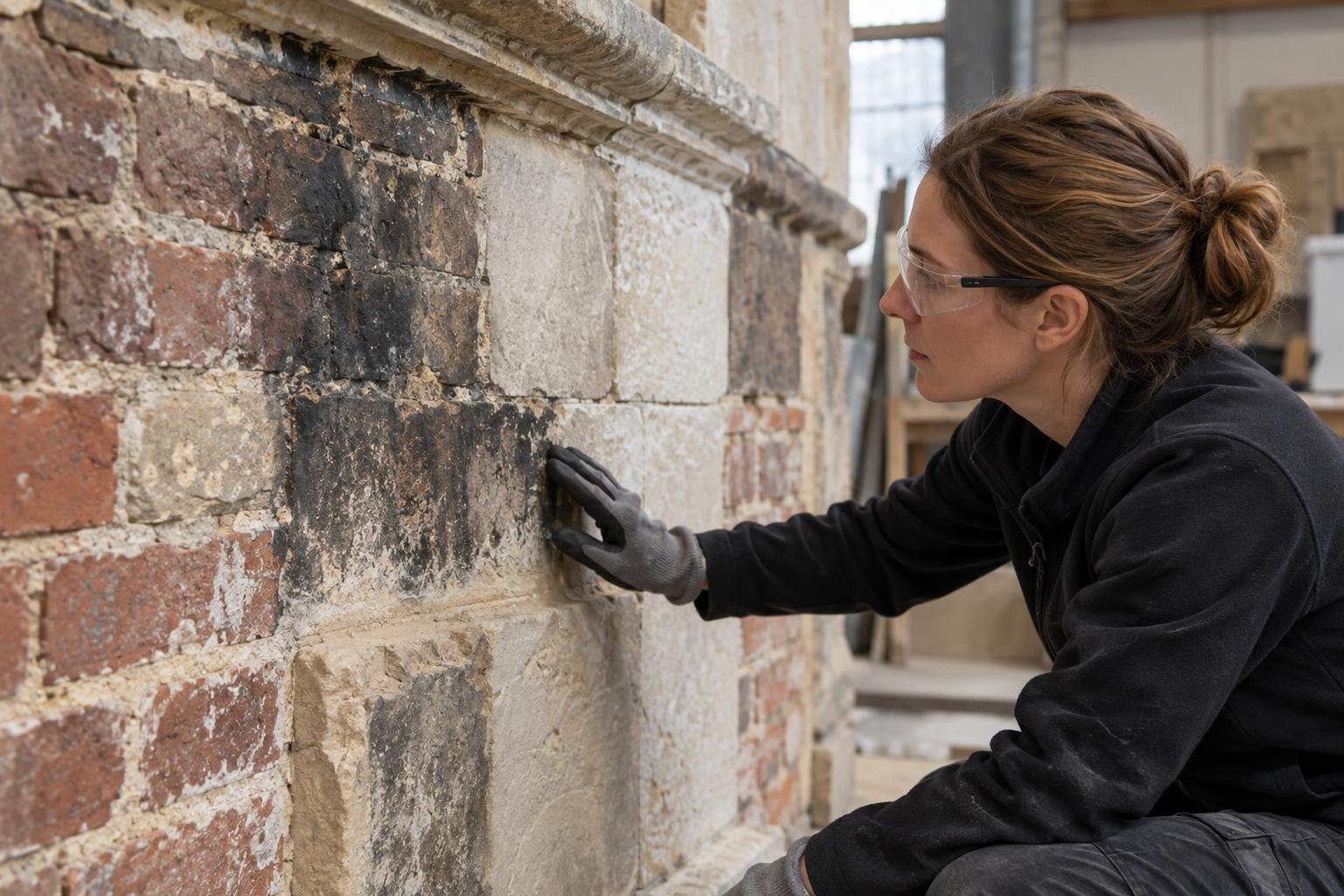
A soot-darkened wall can contain several different materials within a few centimetres: hard brick faces, weak lime joints, a later repair, a stone dressing and remnants of a historic finish. Treating the wall as one uniform substrate hides the most vulnerable area. Ask whether the objective is to improve inspection, remove a harmful deposit or change appearance. A request to make old masonry look new can conflict with retention of the original surface. Record what must remain before any demonstration is arranged.
Separate soot from damage and historic finishes
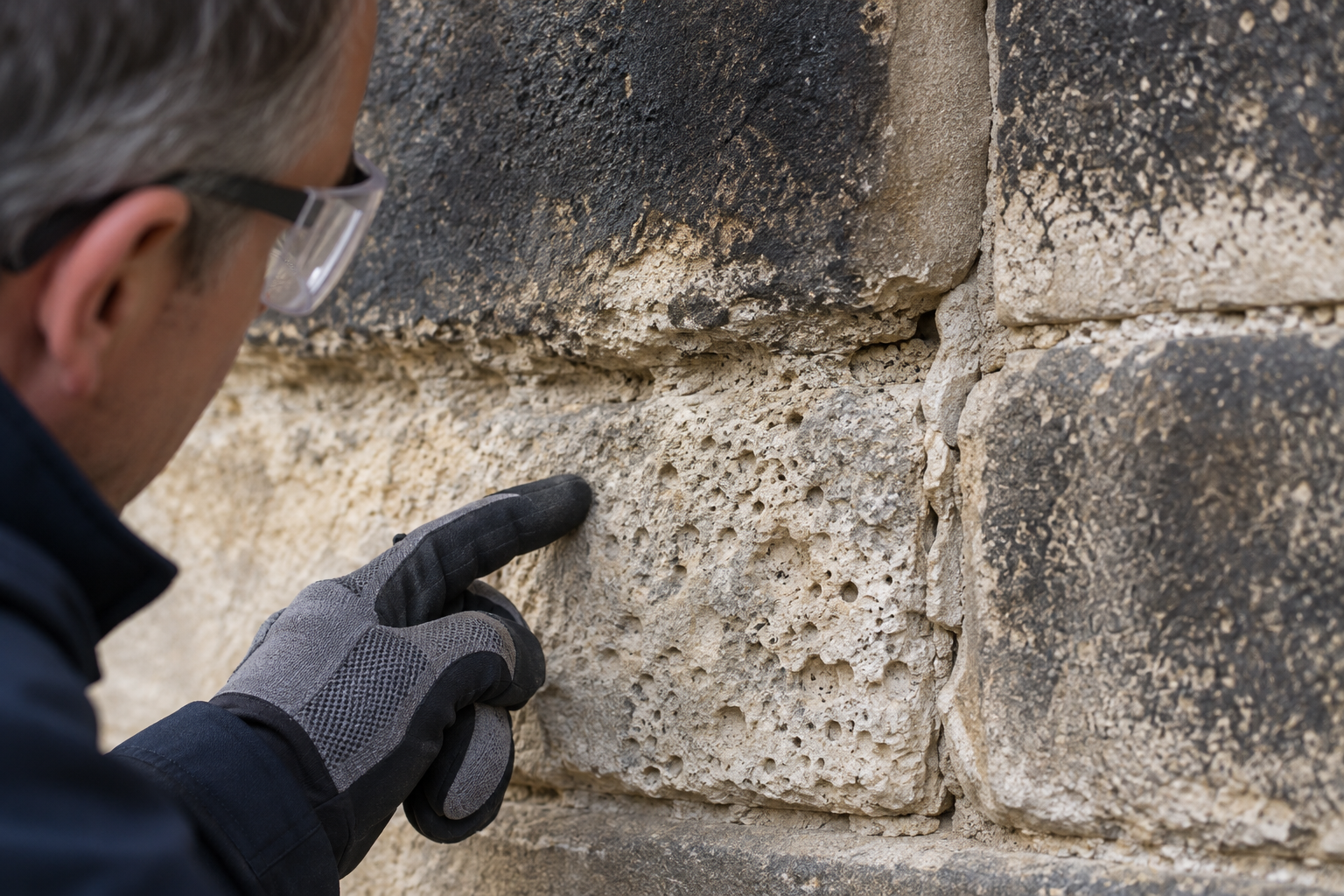
A dry ice trial is an assessment of a deposit-substrate pair. It is not proof that staining, salts, moisture-related decay or friable material can be removed safely. Photograph the proposed patch in normal and raking light. Have the specialist identify friable joints, flaking finishes, carved details and repaired edges. Those features can be exclusions rather than test targets. Do not start on the most prominent façade or an irreplaceable decorative feature. Where a detached representative sample exists, it offers a way to investigate without first committing the building itself.
Use a retained control area
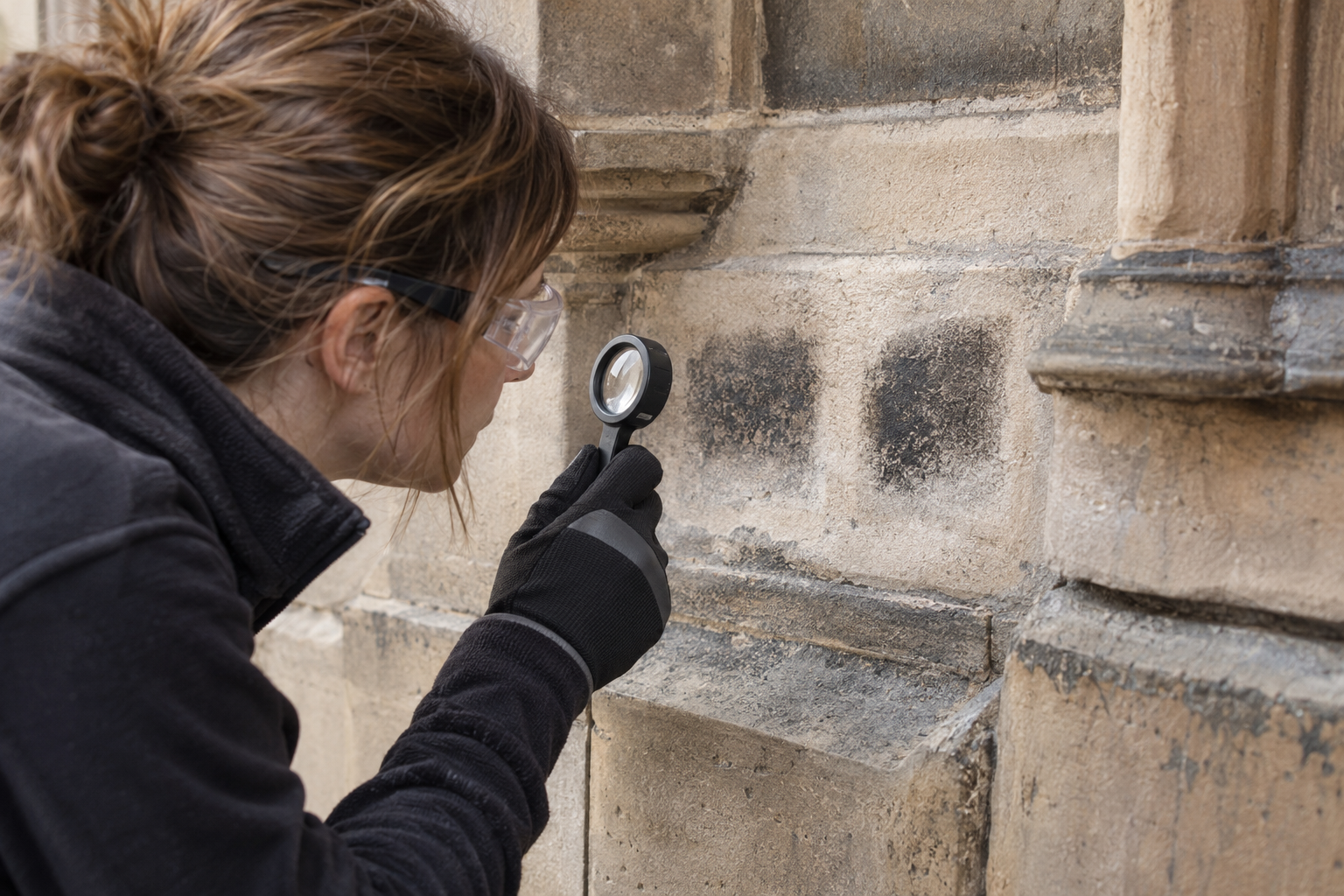
Leave an adjacent untreated reference and agree the smallest useful trial area with the conservation lead. Record the operator settings, nozzle, distance, angle and exposure time instead of relying on a photograph alone. Assess the patch after the surface has returned to ambient conditions. Look for a change in texture, loosened grains, recessed mortar and an unnatural contrast with the surrounding wall. A partial improvement with preserved material can be preferable to a brighter patch that has lost surface character. Stop if the trial changes the substrate rather than only the deposit.
Plan the working area around the building
Access, neighbouring properties and the route for collected material can determine feasibility before cleaning performance does. Capture loosened soot rather than spreading it over adjacent stonework or occupied space. Review contaminants in the deposit and historic coatings before disturbing them. The UK HSE COSHH guidance helps frame that assessment. Indoor rooms, stairwells and enclosed courtyards need a task-specific atmosphere review. Scaffolds, public separation and fragile surrounding finishes belong in the contractor method statement, not in an afterthought at the demonstration.
Buy an accepted outcome rather than a visual promise
A useful quotation identifies the approved patch, exclusions, containment, access and who can authorise a change of method. Ask for photographs at a repeatable scale and lighting, the conservator acceptance record and the route for waste. Do not extrapolate a successful brick patch to limestone, mortar or carved detail. If the trial fails the material-preservation criterion, retain the record and consider another conservation method. The value of the trial is the decision it supports, including a decision to leave the surface alone.
Trial scope and acceptance
| Surface or task | Proposed action | Acceptance boundary |
|---|---|---|
| Firm plain masonry with identified soot | Specialist-led representative trial | Deposit reduced with retained surface character |
| Friable joints, flaking stone or historic finishes | Exclude pending specialist decision | No cleaning release based on appearance |
| Staining caused by moisture or salts | Diagnose the cause separately | Do not promise a stain-free result |
Local reference and work planning
Historic England explains why the interaction between the deposit and the historic material matters. Its guidance supports a conservation-led assessment; it does not certify dry ice for a particular building. Establish the required conservation approvals before choosing a cleaning contractor. See Historic England graffiti-removal guidance.
The NIOSH carbon dioxide reference identifies inhalation and cold-contact hazards. Have the competent site team establish ventilation, CO2 monitoring where required, handling, noise and eye protection, and emergency arrangements for the actual task. Do not rely on an oxygen reading alone to assess CO2 exposure. Removed contamination still needs collection and an appropriate waste route.
For maintenance-isolation background, the US OSHA hazardous-energy standard addresses control of hazardous energy. It is a US reference, not a statement of local law for this application. Use the facility’s approved isolation and restart procedure.
Questions before a supplier trial
Can dry ice replace a conservation assessment?
No. A contractor demonstration cannot determine which historic material or finish should be retained.
Is there a universal pressure setting for old stone?
No. Substrate condition, access and the approved trial govern the method; a setting from another building is not a specification.
Prepare the supplier discussion
Send DryIceSys the substrate and coating details, photographs of the actual deposit, approved trial zone, available utilities and written acceptance criteria. Request an application review before selecting equipment or estimating production capacity. For practical preparation, use the site-readiness checklist, machine-safety guide and nozzle-selection guide. These guides support planning; the component owner still defines the permitted scope.