
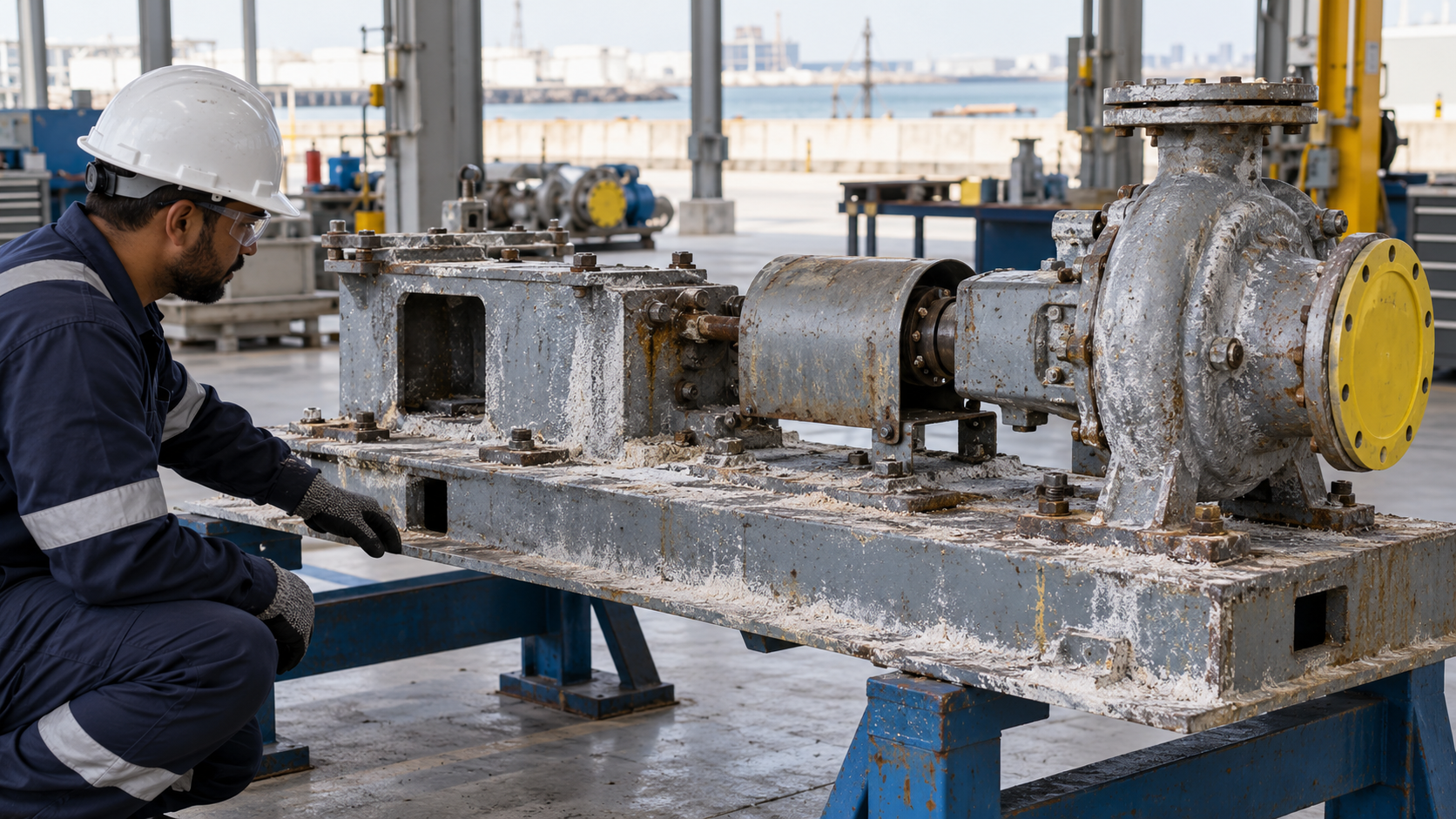
UAE Desalination Pump Skids: Dry Ice Cleaning Limits
Use a dry ice trial on a desalination pump skid to assess removal of accessible exterior deposits, then verify the coating condition and any specified salt limits separately; appearance alone cannot establish readiness for repainting.
This article is a proposed evaluation guide, not a report of a completed customer installation.
Separate the two possible work orders
A pump skid may need exterior cleaning for leak inspection, or coating preparation for a planned repair. Decide which work order applies before the demonstration. If the coating must remain, lifting it is a failure even when the steel underneath looks bright. If coating removal is intended, the coating specification still determines the required preparation and inspection. Avoid combining these objectives in a single before-and-after claim. Identify guards, baseplate edges and instrument supports separately from the pump itself.
Protect the instrumentation and the process boundary
The trial should take place under the facility permit and isolation process. Define exclusions around instruments, labels, cable glands, elastomers and open process connections. Do not direct cleaning toward a seal or bearing simply because it is close to a dirty bracket. A disconnected component still needs stable support and controlled openings. Review access below the baseplate and the route for removed material. If confined or poorly ventilated spaces are involved, their authorisation and atmosphere controls must be established before mobilisation.
Measure the condition that the coating owner needs
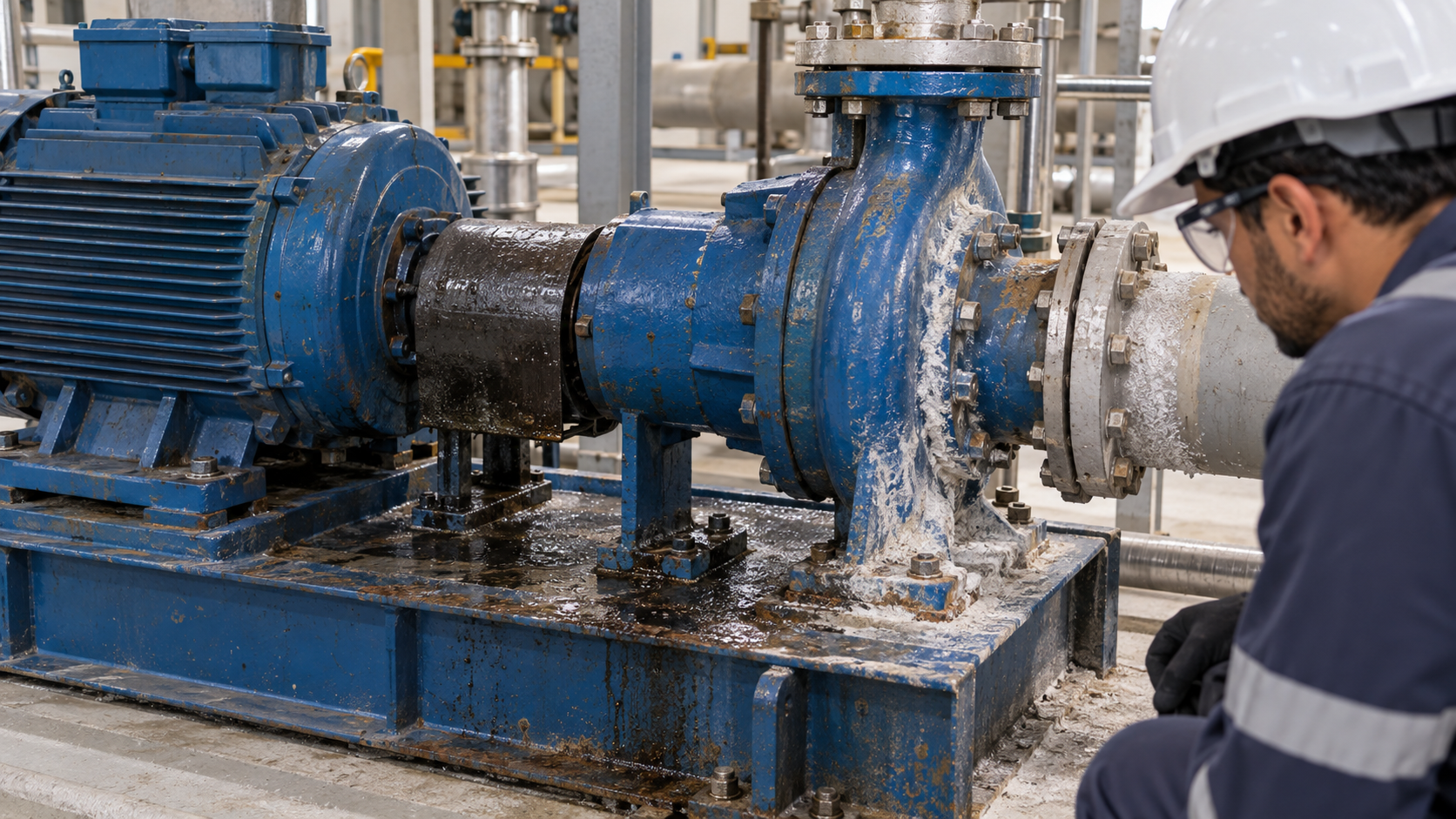
A dry surface can still carry residues that are not obvious in photographs. Agree with the coating inspector whether salt testing is required, which method applies and what limit governs the particular system. Do not invent a universal desalination acceptance number. Record test locations near seams and exposed edges where the specification requires them. A dry ice patch must not be advertised as proven desalting merely because the visible deposit has changed. Further preparation may remain necessary.
Use retained paint as an explicit criterion
Inspect a small patch spanning sound coating and an approved edge. Photograph blistering or corrosion already present before cleaning so that a pre-existing defect is not confused with the trial result. After stabilisation, check lifting, chalking changes and exposed edges. Any change of scope from cleaning to stripping should go back to the responsible maintenance and coating personnel. Do not continue simply because the demonstration has already started. Record the condition of nearby identifiers and fasteners as well as the flat surface.

Plan a practical shutdown handover
Ask the contractor to identify air demand, access equipment, containment and the time needed for the surface and inspection steps. Handover should state whether the skid is ready for leak inspection, additional coating preparation or another maintenance action. Include photographs and measured results where required. Comparing only cleaning time hides the cost of masking instruments, collecting waste and retesting surfaces. The useful outcome is a skid released for its next defined task, not a general claim that a pump installation has been restored.
Trial scope and acceptance
| Surface or task | Proposed action | Acceptance boundary |
|---|---|---|
| Sound exterior coated bracket | Small retention trial | Coating retained to owner acceptance |
| Steel awaiting repainting | Coating-specification assessment | Specified salts and surface condition verified |
| Instruments, seals and open connections | Exclude or protect under site procedure | No cleaning release based on proximity |
Local reference and work planning
The Abu Dhabi Public Health Centre lists occupational safety codes, including compressed-gas and compressed-air topics. That is an Abu Dhabi reference. A facility elsewhere in the UAE must identify its own applicable authority and site rules rather than treating it as a blanket national approval. See Abu Dhabi Public Health Centre codes of practice.
The NIOSH carbon dioxide reference identifies inhalation and cold-contact hazards. Have the competent site team establish ventilation, CO2 monitoring where required, handling, noise and eye protection, and emergency arrangements for the actual task. Do not rely on an oxygen reading alone to assess CO2 exposure. Removed contamination still needs collection and an appropriate waste route.
For maintenance-isolation background, the US OSHA hazardous-energy standard addresses control of hazardous energy. It is a US reference, not a statement of local law for this application. Use the facility’s approved isolation and restart procedure.
Questions before a supplier trial
Does a visually clean skid prove that salts are acceptable?
No. Use the coating system’s required test method and acceptance criteria where salt verification is specified.
Do Abu Dhabi references apply automatically throughout the UAE?
No. Confirm the authority and requirements applicable to the actual facility.
Prepare the supplier discussion
Send DryIceSys the substrate and coating details, photographs of the actual deposit, approved trial zone, available utilities and written acceptance criteria. Request an application review before selecting equipment or estimating production capacity. For practical preparation, use the site-readiness checklist, machine-safety guide and nozzle-selection guide. These guides support planning; the component owner still defines the permitted scope.