Australian Mining Rebuilds: Dry Ice Cleaning Castings
Dry ice cleaning can be evaluated for accessible exterior engine castings during a mining rebuild, after isolation and port protection; it does not replace internal cleaning, dimensional inspection or the specified crack-detection preparation.
This article is a proposed evaluation guide, not a report of a completed customer installation.
Define the rebuild boundary
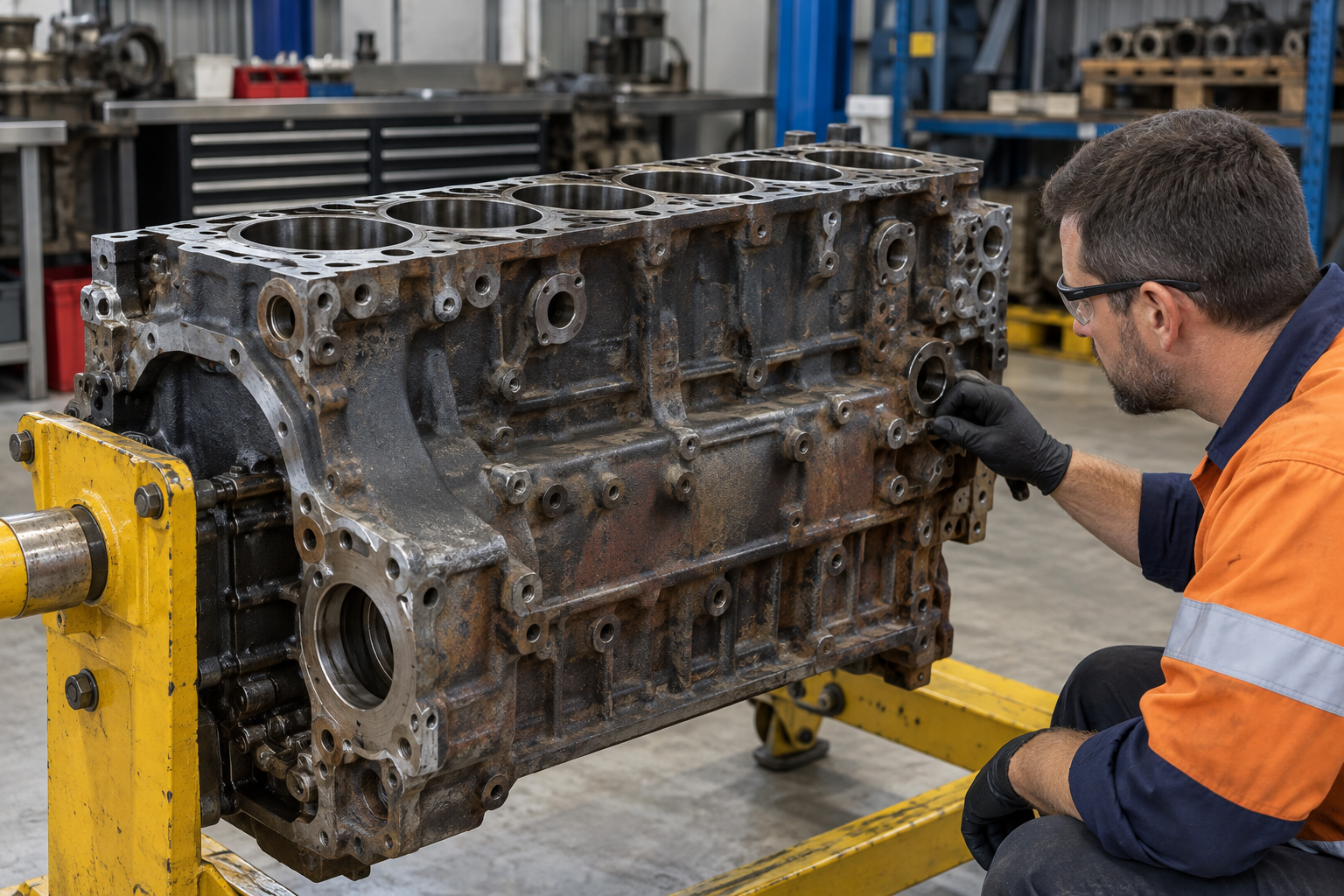
A removed diesel engine may have compacted oily dust on ribs and casting pockets while internal galleries require a separate cleaning route. Start with a marked drawing of exterior surfaces included in the trial. Separate engine identification plates, machined sealing faces, electrical assemblies and open ports. The workshop should know whether the immediate purpose is handling cleanliness, leak investigation or access for an inspection method. These objectives have different acceptance criteria. Do not describe an exterior trial as a complete engine decontamination service.
Protect openings before changing the surface
Secure the engine or casting on a rated stand and follow the workshop isolation and handling procedure. Use an approved blanking arrangement for ports; improvised loose plugs can become an additional contamination source. Record what will be removed after cleaning and who will verify that every protection item is accounted for. Cleaning should not drive loosened soil toward an open oil passage or bearing. Unknown historic gasket or insulation materials require identification through the workshop hazardous-material process before disturbance.
Test the casting finish and the residue together
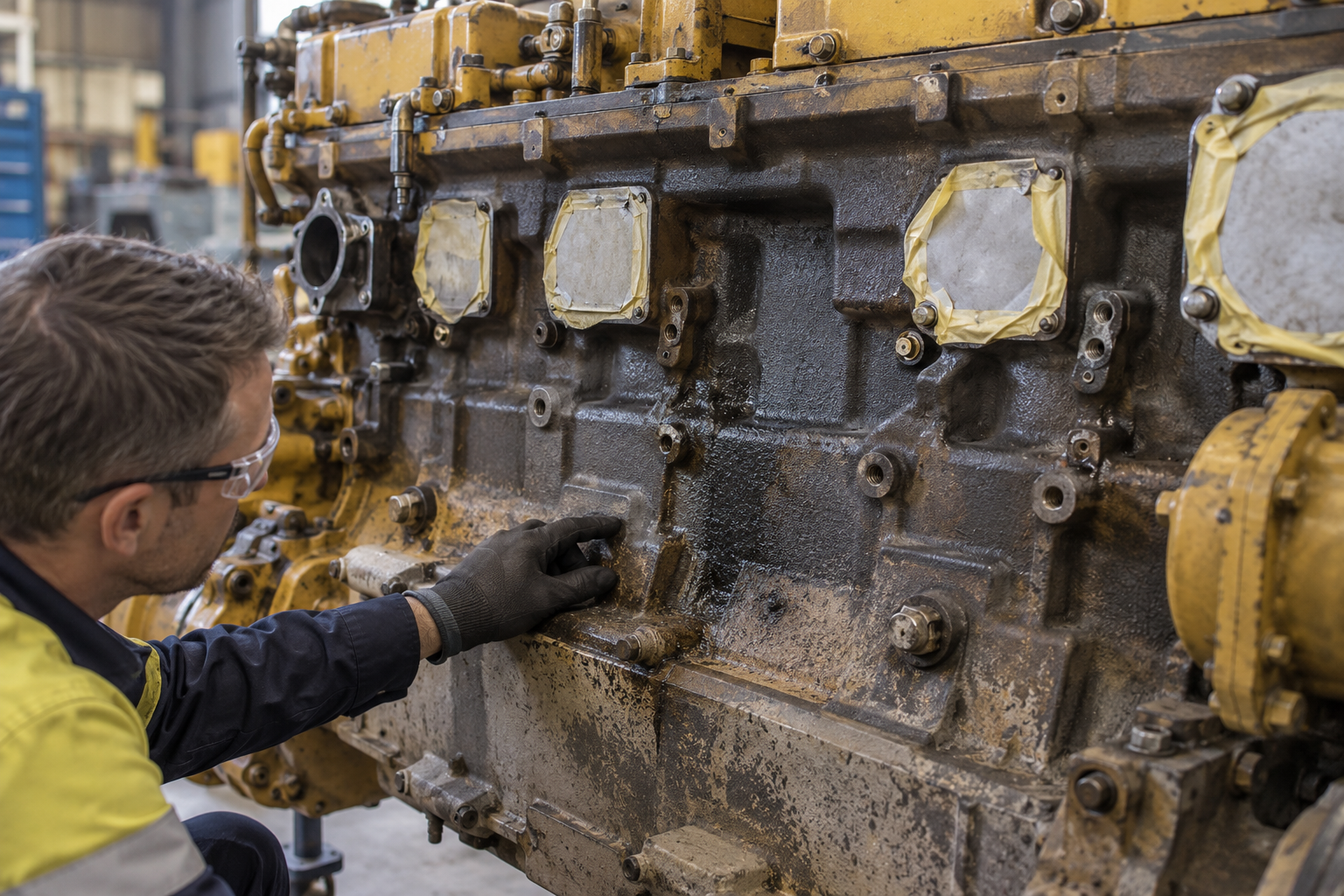
Choose a ribbed area with a realistic oily deposit and a nearby finish that represents the intended scope. Record settings and exposure on a retained reference photograph. Inspect paint, casting edges and identification marks after the patch stabilises. Collection matters as much as the visible result: material lifted from one pocket must not lodge behind a bracket that is refitted later. Stop if the result depends on stripping a finish that the rebuild specification requires to remain.
Keep inspection preparation under its own specification
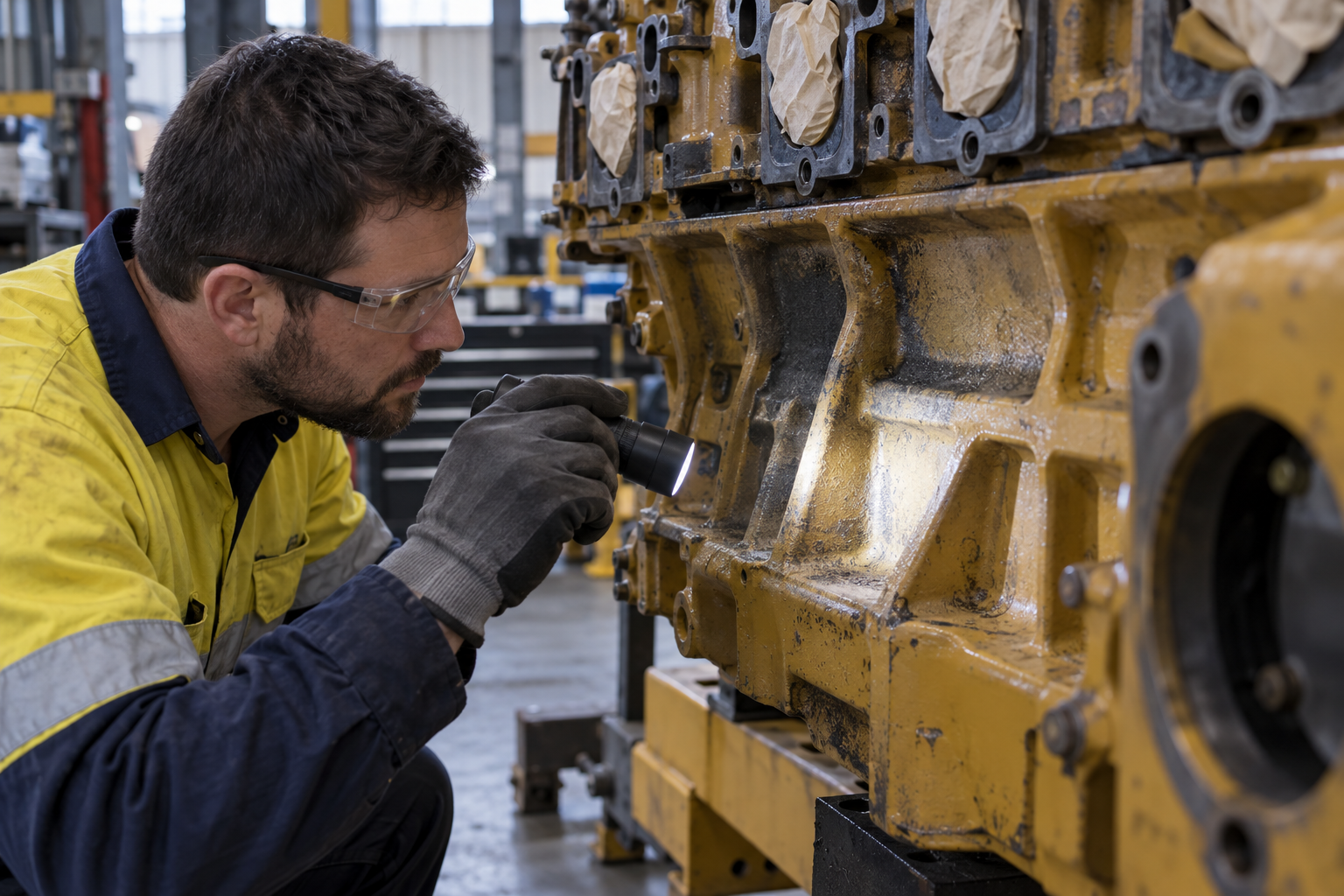
A clean-looking casting is not a crack-free casting. The person responsible for non-destructive testing should decide the required preparation for the chosen examination. Remaining oil, coatings and surface texture can matter differently to different inspection methods. Do not issue a pass based on a photograph of the cleaned area. Record the handover condition and any further preparation required. Likewise, damaged sealing faces, corroded fasteners and dimensional wear need their own repair or replacement decisions.
Quote for released rebuild work
Measure handling, blanking, setup, collection, cleaning and inspection handover as one work package. Compare the total with the existing approved exterior-cleaning route on a similar component. A trial on one engine family should not become a promise for all mining equipment. Record access restrictions around lifting frames and the compressed-air requirement actually available at the workshop. A useful supplier response explains what remains outside scope and what evidence the rebuild supervisor will receive before the component moves to the next station.
Trial scope and acceptance
| Surface or task | Proposed action | Acceptance boundary |
|---|---|---|
| Accessible exterior casting ribs | Representative oily-dust patch | Required finish and identification retained |
| Oil galleries and open bearing areas | Separate internal-cleaning route | No migration of removed exterior soil |
| Casting for crack examination | Inspector-approved preparation | Release by the specified examination procedure |
Local reference and work planning
Safe Work Australia publishes a model code for managing plant risks. The workshop must confirm its state or territory requirements and any applicable mining rules; a model code is not evidence that one national procedure covers every mine. See Safe Work Australia model plant code.
The NIOSH carbon dioxide reference identifies inhalation and cold-contact hazards. Have the competent site team establish ventilation, CO2 monitoring where required, handling, noise and eye protection, and emergency arrangements for the actual task. Do not rely on an oxygen reading alone to assess CO2 exposure. Removed contamination still needs collection and an appropriate waste route.
For maintenance-isolation background, the US OSHA hazardous-energy standard addresses control of hazardous energy. It is a US reference, not a statement of local law for this application. Use the facility’s approved isolation and restart procedure.
Questions before a supplier trial
Does an exterior clean establish that the engine is ready to assemble?
No. Internal cleanliness, dimensions, repairs and the rebuild release process remain separate.
Can one successful patch justify a whole fleet programme?
Only after checking other component families, finishes, deposits and access conditions against the approved scope.
Prepare the supplier discussion
Send DryIceSys the substrate and coating details, photographs of the actual deposit, approved trial zone, available utilities and written acceptance criteria. Request an application review before selecting equipment or estimating production capacity. For practical preparation, use the site-readiness checklist, machine-safety guide and nozzle-selection guide. These guides support planning; the component owner still defines the permitted scope.