Japan Rail Depots: Dry Ice Cleaning Bogie Frames
A rail depot should restrict the dry ice trial to approved bogie-frame surfaces, protect bearings and brake components, and obtain inspection-team acceptance; cleaning does not replace the operator’s crack examination or maintenance release.
This article is a proposed evaluation guide, not a report of a completed customer installation.
Choose the frame surface rather than the entire bogie
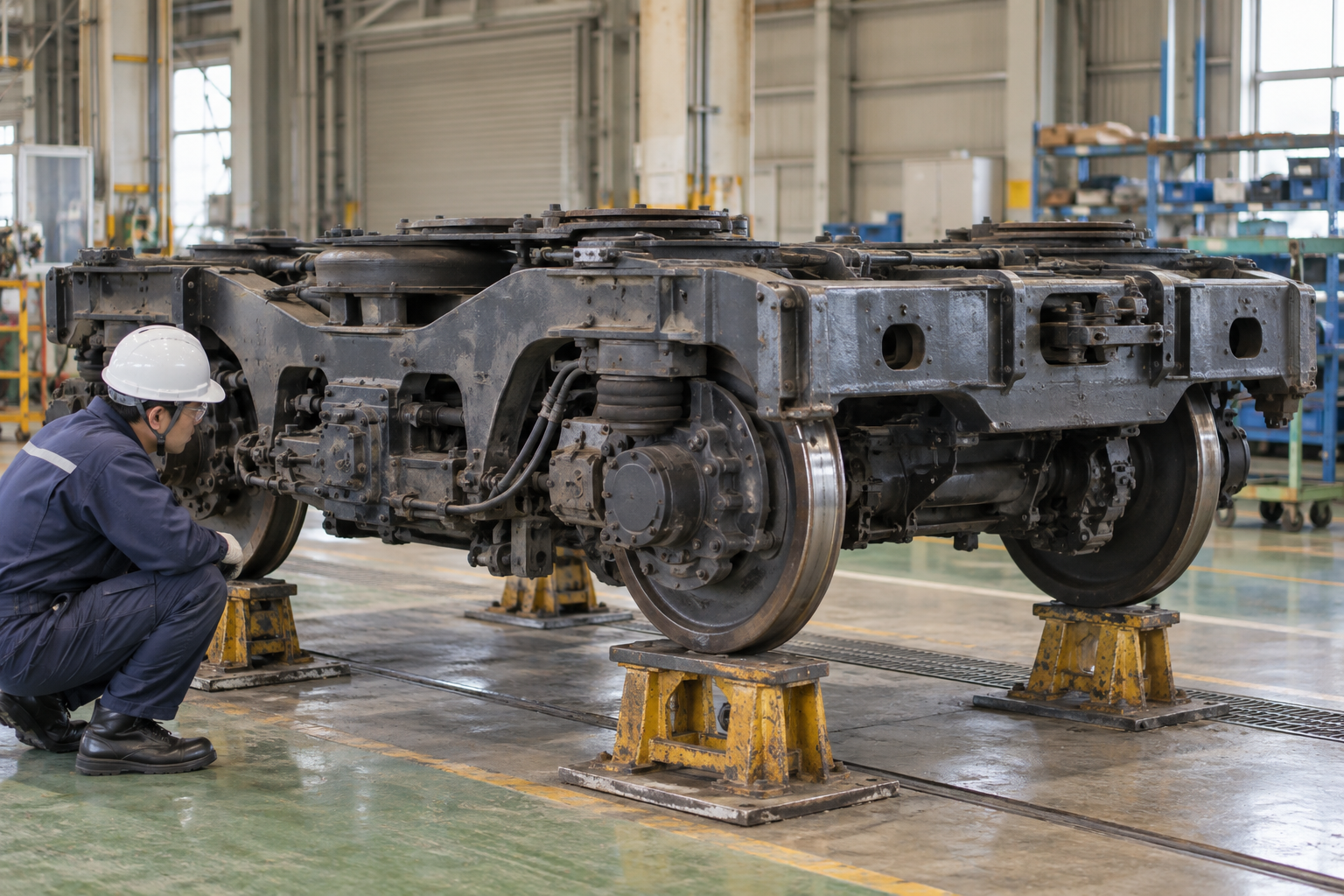
A bogie assembly combines structural steel, painted areas, suspension elements, brake equipment and bearings. A trial authorised on a steel frame web should not extend automatically to those other components. Mark the included zones and keep traceable frame identity visible in the records. Establish whether the frame is removed and supported or remains in a larger assembly. If a safe collection path and inspection access cannot be provided, revise the work arrangement before assessing cleaning performance.
Protect functional parts and traceability
Follow the depot isolation and lifting procedure, including stored energy in the relevant equipment. Protect or exclude bearing interfaces, brake friction material, elastomers, sensors and identification markings under the operator instructions. Do not clean dirt toward an exposed bearing or assume that grease visible on a nearby surface is unwanted. Some lubricated areas have a functional purpose. The maintenance team should identify the boundary between contamination to remove and material that belongs in the assembly.
Build the trial around inspection access
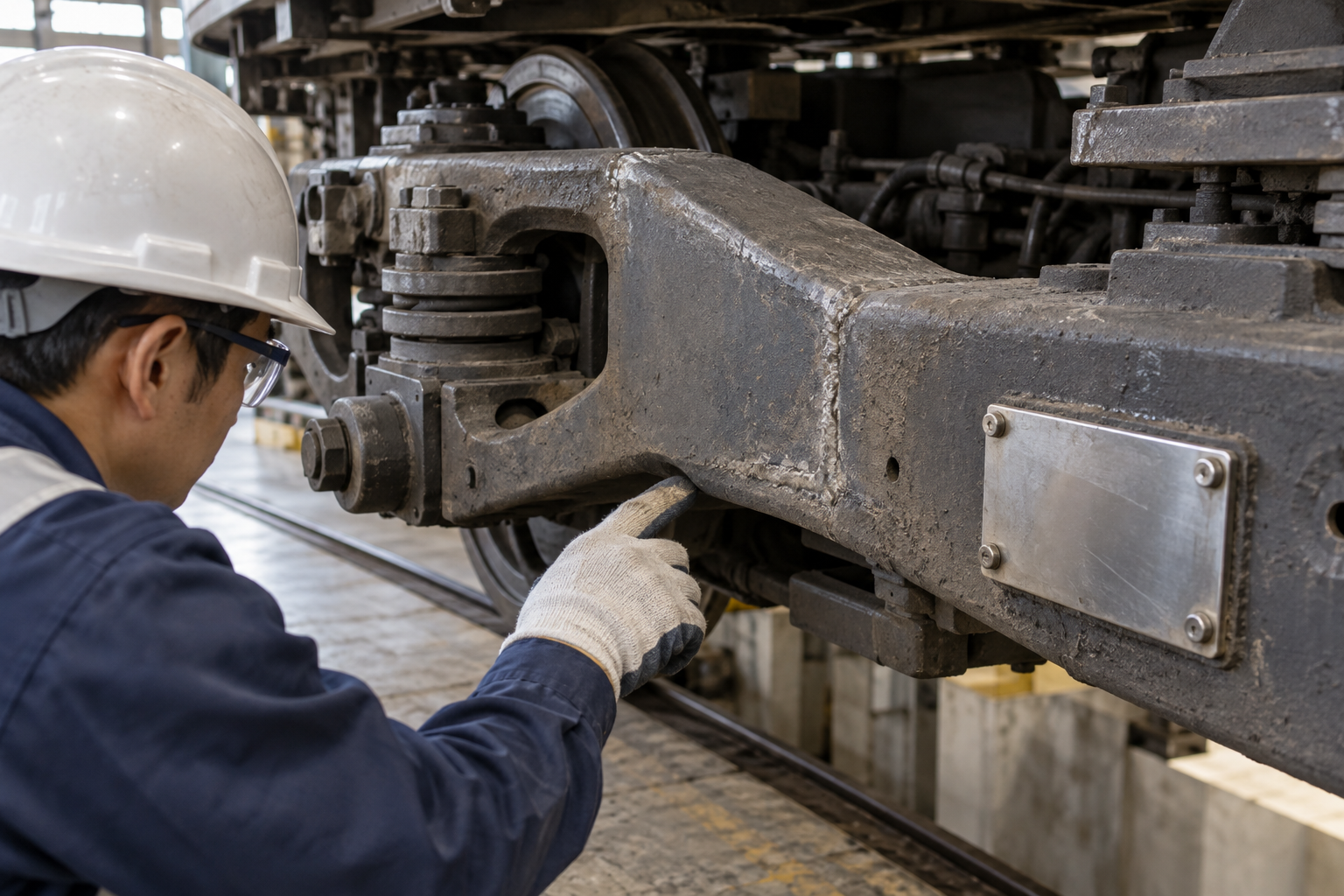
Select a representative frame area where the inspection team needs a consistent surface. Record the deposit, coating condition and any existing damage before cleaning. Review the patch after stabilisation with suitable lighting. Residue left in a welded corner can matter more to inspection than a bright flat web. The accepted condition must suit the subsequent examination method. If further paint removal or degreasing is specified, retain it as a separate step rather than asserting that dry ice makes it unnecessary.
Do not confuse visible improvement with structural release
Cleaning can change access to a surface; it does not establish fatigue life or prove the absence of cracking. Keep the inspection report, repair decision and maintenance release within the operator’s qualified process. Record the trial settings and the exact component zone so the depot can reproduce the accepted condition. A supplier should not label a frame safe based on before-and-after photographs. Any altered identification or damaged coating edge should be evaluated before the frame progresses to reassembly.
Evaluate repeatability across the depot workload
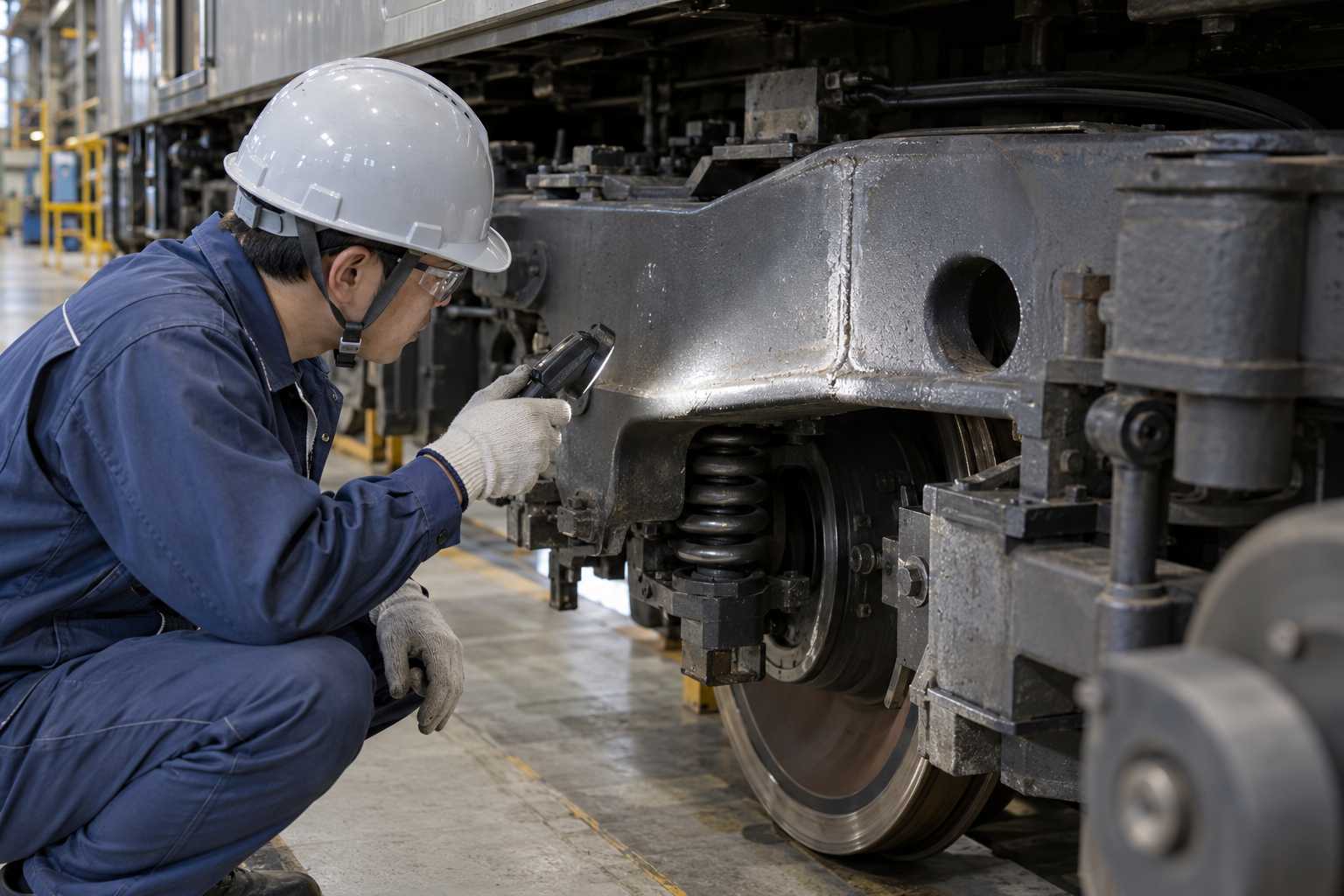
Compare similar frame types and deposit conditions, including the areas that require repositioning. Count handling, protection, cleaning, collection and inspection waiting time. A result on a removed frame does not establish the same productivity on a complete bogie with restricted access. Ask how the procedure is controlled when another operator or shift performs the work. A limited, repeatable scope with a clear stop rule is more useful than an unqualified claim covering every part beneath a rail vehicle.
Trial scope and acceptance
| Surface or task | Proposed action | Acceptance boundary |
|---|---|---|
| Approved structural frame zone | Inspection-led patch | Surface accepted for the next examination |
| Bearings, brake material and sensors | Protected or excluded | Function not assessed by frame-cleaning trial |
| Frame identification | Record and preserve | Identity traceable through maintenance release |
Local reference and work planning
JISHA provides machinery-safety information on limits of use and residual-risk communication. It is useful context for workshop planning, not a rail-operator approval or a substitute for the depot’s maintenance instructions. See JISHA machinery safety information.
The NIOSH carbon dioxide reference identifies inhalation and cold-contact hazards. Have the competent site team establish ventilation, CO2 monitoring where required, handling, noise and eye protection, and emergency arrangements for the actual task. Do not rely on an oxygen reading alone to assess CO2 exposure. Removed contamination still needs collection and an appropriate waste route.
For maintenance-isolation background, the US OSHA hazardous-energy standard addresses control of hazardous energy. It is a US reference, not a statement of local law for this application. Use the facility’s approved isolation and restart procedure.
Questions before a supplier trial
Does cleaning replace a crack examination?
No. Examination methods and release decisions remain under the rail operator’s maintenance process.
Can the same settings be used on a complete bogie?
Not without checking the different access, coatings, sensitive components and approved scope.
Prepare the supplier discussion
Send DryIceSys the substrate and coating details, photographs of the actual deposit, approved trial zone, available utilities and written acceptance criteria. Request an application review before selecting equipment or estimating production capacity. For practical preparation, use the site-readiness checklist, machine-safety guide and nozzle-selection guide. These guides support planning; the component owner still defines the permitted scope.