Mexico Wind Blade Molds: Dry Ice Cleaning Trials
Trial dry ice first on a representative approved mold sample or non-critical area, then check the mold finish and the next release cycle; visible removal of release buildup alone does not establish suitability for blade production.
This article is a proposed evaluation guide, not a report of a completed customer installation.
Identify the tooling surface and the buildup
Wind-blade tooling can include a finished composite surface, edges, inserts and connections to temperature-control or vacuum equipment. Record the actual tooling construction and the release system before arranging a demonstration. Different deposits can look similar under workshop lighting. Ask the tooling supplier which surfaces and coatings may be tested. Do not extend experience from a steel mold to a composite tool without that review. The proposed trial should have an explicit boundary and a reason linked to production quality.
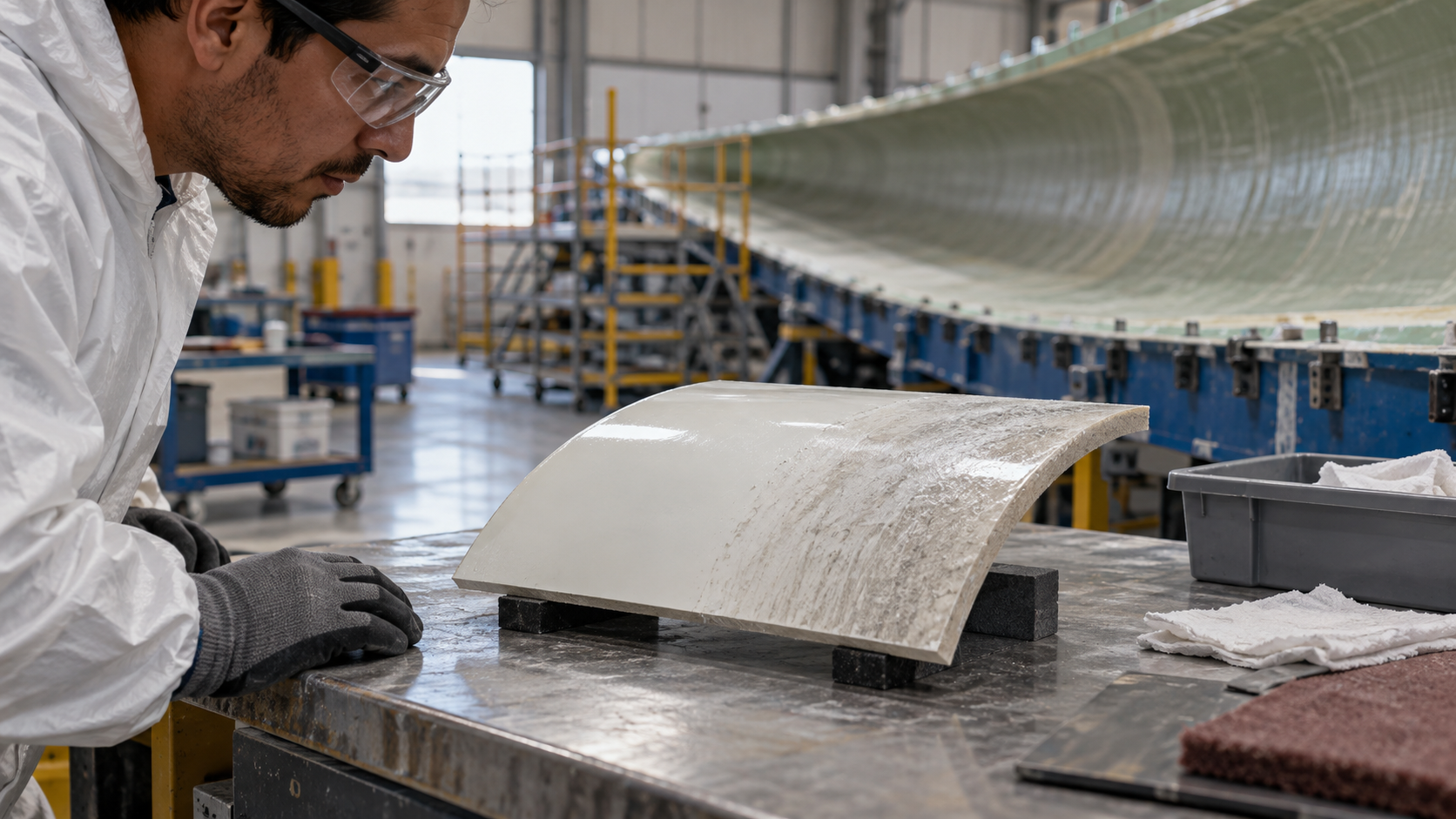
Start with a representative sample
Where available, use a tooling sample with the same finish and a representative buildup. A conveniently available scrap panel with a different finish is not equivalent. If the process owner authorises a small area on a production tool, choose its position and stop criteria before work. Isolate relevant machinery and protect connections under the factory procedure. Record starting photographs and any existing finish defect. Keep a retained reference so the team can compare more than the brightness of two unrelated areas.
Inspect the retained finish after the patch
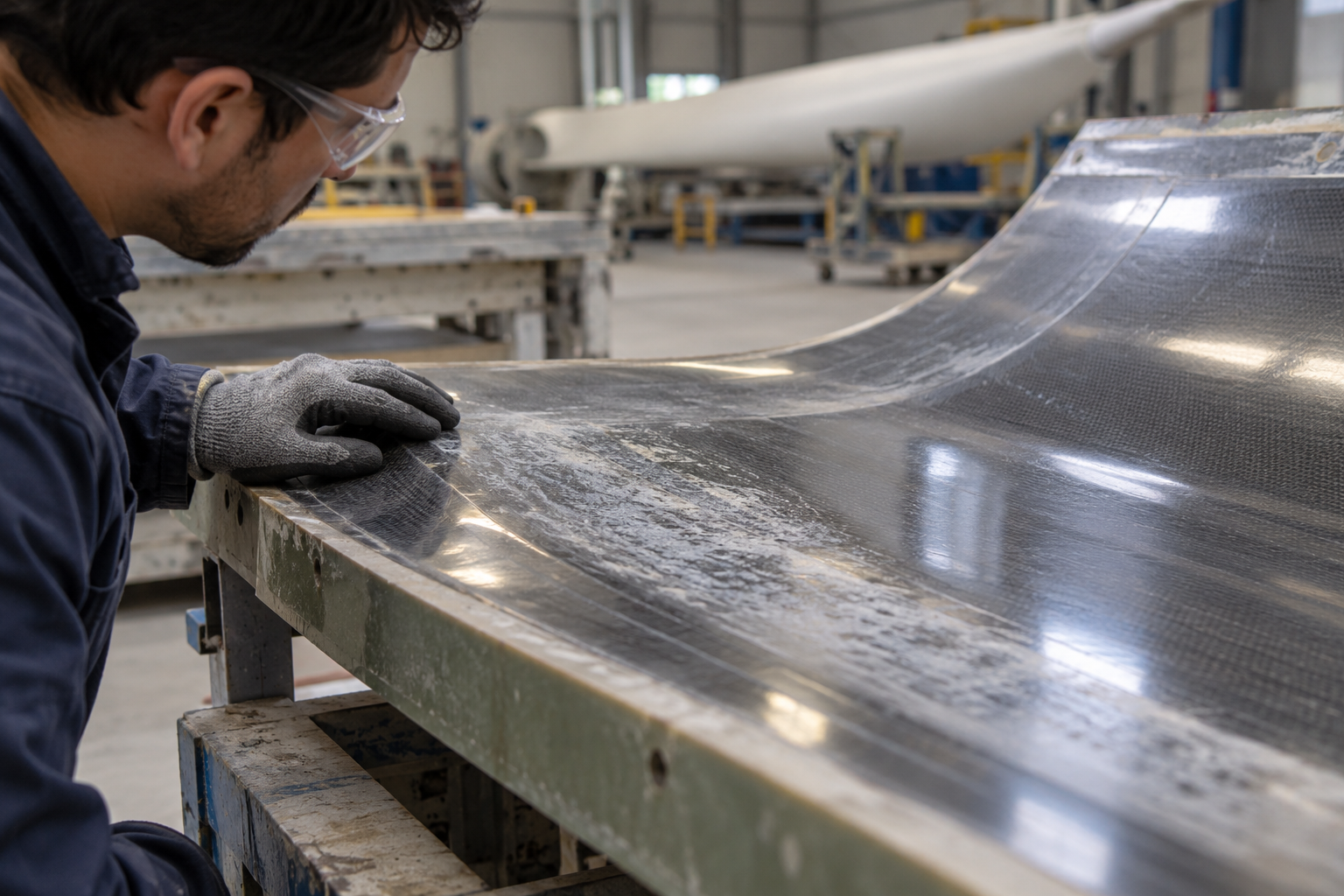
Evaluate gloss or other finish measures only through the tooling specification and agreed inspection method. Look for dulling, pinholes, exposed reinforcement, edge damage or a changed surface texture. Do not invent a universal acceptable gloss loss or pressure setting. Inspect after the surface has stabilised. If the tooling owner cannot define how a damaged finish will be detected, the trial is not ready for scale-up. A clean-looking sample with an altered surface can create more production work than it saves.
Validate release through the approved process
Removing buildup is only one part of the decision. The factory should determine whether release-system reapplication is needed and how a representative subsequent release will be evaluated. Any sample laminate or production check must follow the existing process approval route. Record sticking, surface defects and any additional preparation rather than declaring success at the cleaning stage. Do not claim that a cleaning trial certifies a blade, changes structural acceptance or eliminates release agents. Those are separate material and manufacturing decisions.
Scale by tool zone and cycle evidence
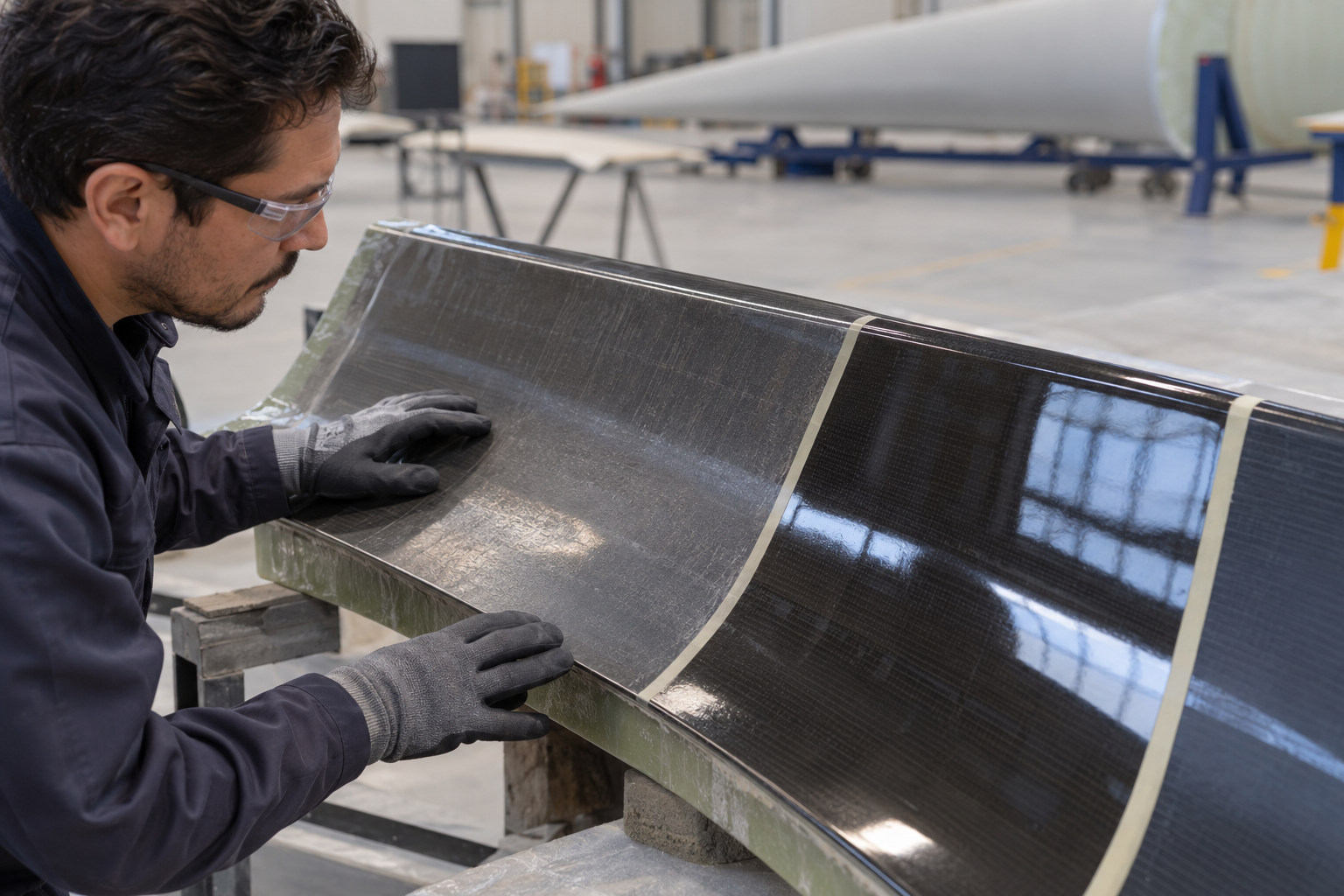
A long blade mold has changing access and geometry. A successful flat patch does not establish uniform treatment around flanges, tight curves or inserts. Quote the work by approved zones and include protection, collection, inspection and process requalification where required. Compare the complete return-to-production route with the current method. Keep the settings and release observations linked to each sample. Expand only after the responsible tooling and process personnel accept evidence relevant to the next zone.
Trial scope and acceptance
| Surface or task | Proposed action | Acceptance boundary |
|---|---|---|
| Representative tooling sample | Initial buildup-removal trial | Finish and subsequent release accepted |
| Production-tool edges and inserts | Separate zone review | No extrapolation from a flat sample |
| Blade quality and structural release | Existing production process | No certification claim from cleaning |
Local reference and work planning
Mexico’s published NOM-004-STPS text addresses machinery safeguards and safety arrangements. It provides local machinery context, not approval of a particular composite-tool cleaning method. The factory must check applicable requirements and its tooling and process specifications. See Mexico NOM-004-STPS machinery-safety publication.
The NIOSH carbon dioxide reference identifies inhalation and cold-contact hazards. Have the competent site team establish ventilation, CO2 monitoring where required, handling, noise and eye protection, and emergency arrangements for the actual task. Do not rely on an oxygen reading alone to assess CO2 exposure. Removed contamination still needs collection and an appropriate waste route.
For maintenance-isolation background, the US OSHA hazardous-energy standard addresses control of hazardous energy. It is a US reference, not a statement of local law for this application. Use the facility’s approved isolation and restart procedure.
Questions before a supplier trial
Does removing buildup mean the tool can go straight into production?
Not automatically. Follow the release-system preparation and process-owner approval needed for the next cycle.
Can steel-mold settings be copied to a composite blade tool?
No universal transfer should be assumed; obtain tooling guidance and validate a representative sample.
Prepare the supplier discussion
Send DryIceSys the substrate and coating details, photographs of the actual deposit, approved trial zone, available utilities and written acceptance criteria. Request an application review before selecting equipment or estimating production capacity. For practical preparation, use the site-readiness checklist, machine-safety guide and nozzle-selection guide. These guides support planning; the component owner still defines the permitted scope.