
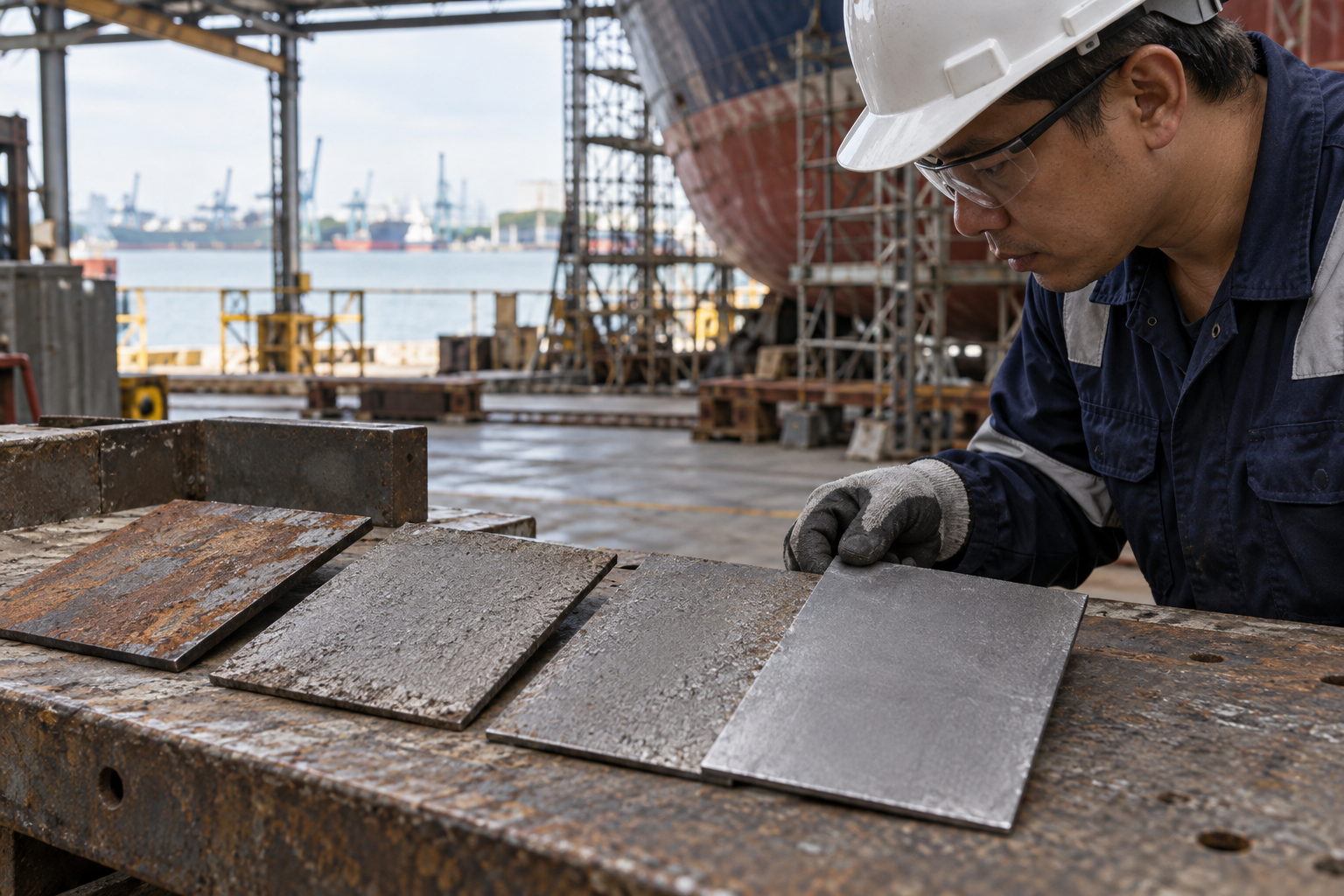
Singapore Shipyards: Dry Ice Cleaning Before Coating
Do not treat dry ice cleaning alone as proof that ship steel is ready for coating: the coating specification must still be met for retained coating, contamination, soluble salts and the required surface profile.
This article is a proposed evaluation guide, not a report of a completed customer installation.
Begin with the coating repair specification
A local coating repair and a full steel recoating project are different work orders. Identify whether sound coating is to remain, which contaminated areas require cleaning and where other preparation is specified. Ask the coating representative to define the required surface condition before choosing equipment. A photograph showing less oil or loose material cannot establish the complete condition. Record the work location, access and coating system so the trial is tied to an actual decision rather than a general promise about ship maintenance.
Separate cleanliness from surface profile
The inspector should specify how cleanliness and the required profile will be assessed. Do not assume that a dry ice pass creates the profile required for a coating or repairs an inadequate existing profile. If profile preparation is needed, retain the specified operation and its checks. This distinction is central to the quotation: a method that removes selected deposits can still leave substantial coating preparation to do. Show that remaining work explicitly rather than comparing unlike scopes on cleaning speed alone.
Verify salts and hidden contamination where required
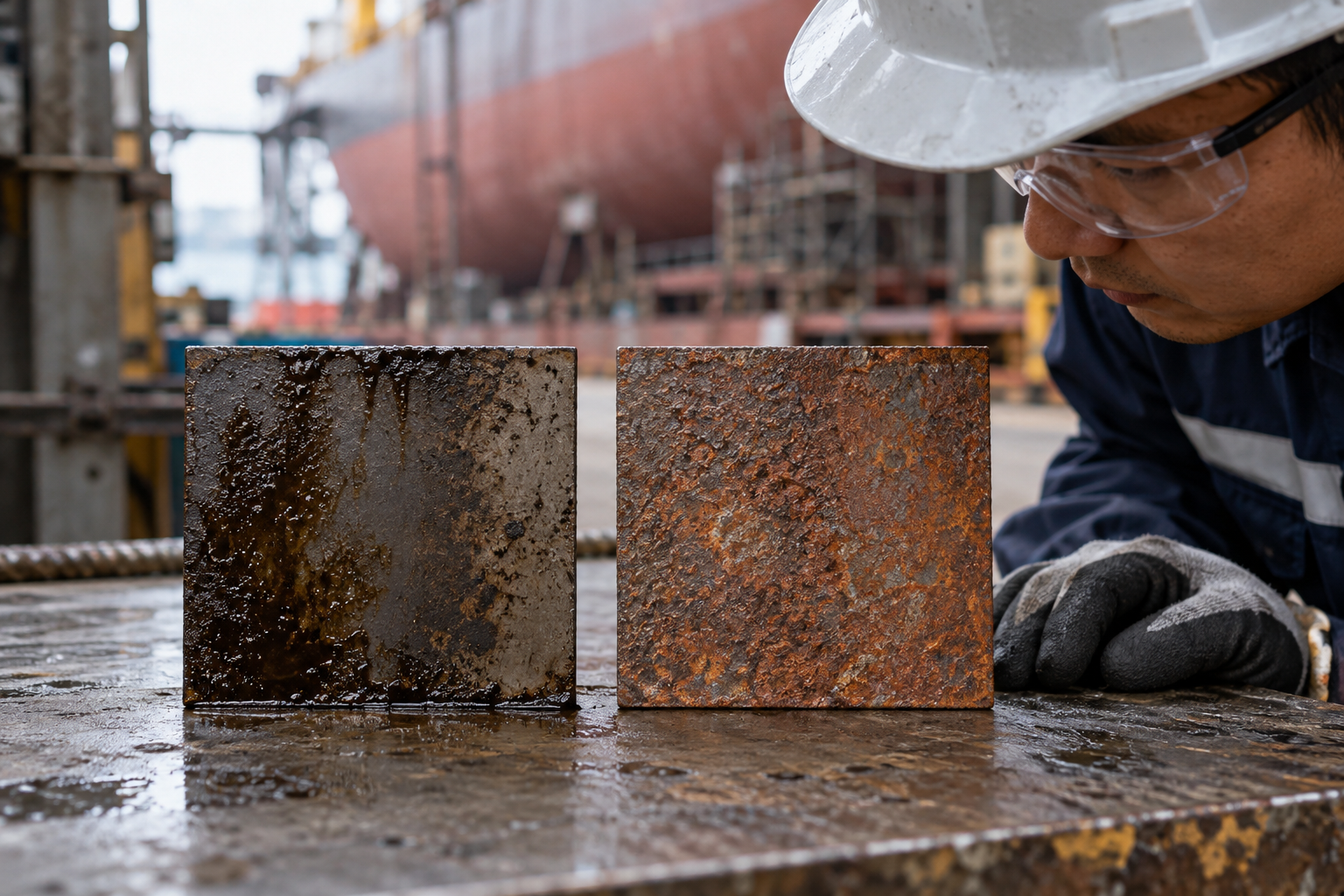
Agree the required contamination tests, test locations and acceptance limits with the coating owner. Use the system specification rather than a universal number copied from another project. Flat dry steel and crevices can present different inspection challenges. A visually changed surface does not prove that soluble salts meet the required limit. Record the result and any further preparation. Treat unknown old coatings and removed material through the shipyard hazard and waste procedures before disturbing them.
Plan access and atmosphere controls with the yard
The trial needs the yard’s work authorisation, isolation where relevant, collection and separation from other activities. Work in tanks or other enclosed spaces requires its own assessment and controls; an exterior deck trial cannot approve it. Confirm the compressed-air supply and safe routing without creating conflicts with lifting and access routes. Set the collection boundary so removed material does not settle on a neighbouring area already prepared for coating. Sequence inspection and coating work to avoid recontamination.

Accept the complete coating handover
Use a small area that represents the actual retained coating, edges and deposit. After stabilisation, inspect it against the agreed criteria and record all remaining work. If dry ice is accepted only as a preliminary cleaning step, state that clearly in the work instruction. Compare the complete route to coating acceptance, including containment, tests and follow-up preparation. The result should tell the coating supervisor what can proceed and what cannot, without implying that a surface treatment has approved a vessel or coating warranty.
Trial scope and acceptance
| Surface or task | Proposed action | Acceptance boundary |
|---|---|---|
| Sound coating intended to remain | Small retention and cleaning trial | Coating owner accepts condition |
| Steel requiring a specified profile | Separate profile verification | Specified preparation retained if necessary |
| Surface subject to salt limits | Agreed contamination test | Coating-system limit met and recorded |
Local reference and work planning
Singapore’s Ministry of Manpower lists workplace safety legislation including shipbuilding and shiprepairing regulations. The shipyard must identify the applicable permits and requirements for the job; a surface-cleaning demonstration is not a substitute for them. See Singapore MOM workplace safety legislation.
The NIOSH carbon dioxide reference identifies inhalation and cold-contact hazards. Have the competent site team establish ventilation, CO2 monitoring where required, handling, noise and eye protection, and emergency arrangements for the actual task. Do not rely on an oxygen reading alone to assess CO2 exposure. Removed contamination still needs collection and an appropriate waste route.
For maintenance-isolation background, the US OSHA hazardous-energy standard addresses control of hazardous energy. It is a US reference, not a statement of local law for this application. Use the facility’s approved isolation and restart procedure.
Questions before a supplier trial
Does a clean-looking photograph prove coating readiness?
No. Use the coating specification’s required condition, contamination and profile checks.
Can a deck trial authorise the same method inside a tank?
No. The work area, atmosphere, access and permits require a separate assessment.
Prepare the supplier discussion
Send DryIceSys the substrate and coating details, photographs of the actual deposit, approved trial zone, available utilities and written acceptance criteria. Request an application review before selecting equipment or estimating production capacity. For practical preparation, use the site-readiness checklist, machine-safety guide and nozzle-selection guide. These guides support planning; the component owner still defines the permitted scope.