
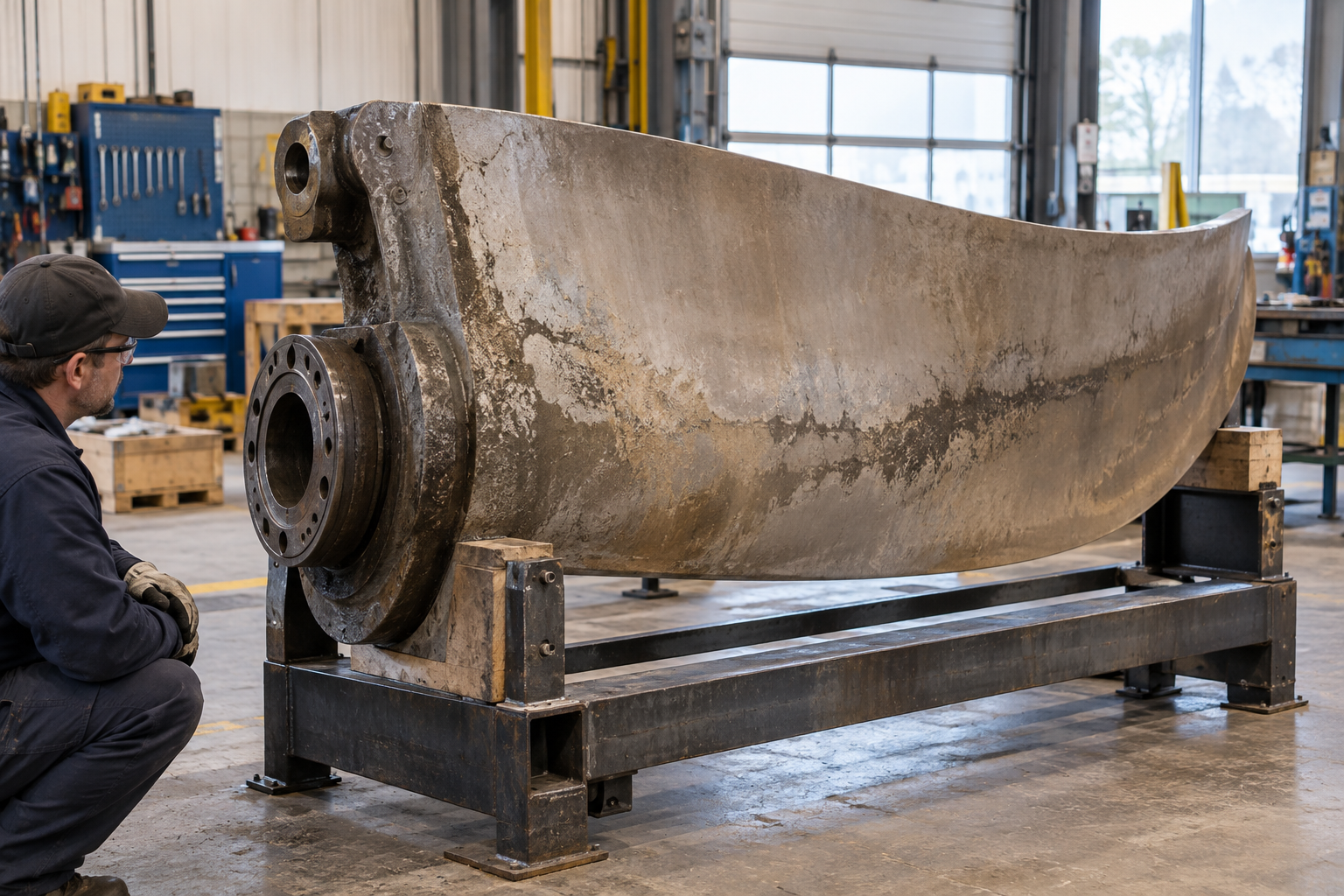
Canada Hydro Overhauls: Dry Ice Cleaning Wicket Gates
Dry ice may be trialled on approved deposits on removed wicket-gate components, while journals, sealing surfaces and identification remain protected; dimensional checks, corrosion repair and return-to-service acceptance are separate overhaul tasks.
This article is a proposed evaluation guide, not a report of a completed customer installation.
Keep this trial in the component workshop
This application concerns removed components on a stable workshop fixture. It does not assume authorisation to work inside a turbine water passage, intake or other confined space. Document the station isolation and handling arrangements that permitted removal. Tag the part so inspection records remain linked to its position and identity. The cleaning contractor should understand the surfaces included in the order before any trial begins. An accessible exterior surface and a precision journal require different treatment decisions.
Distinguish removable soil from material loss
An old grease deposit on an approved exterior area is not the same problem as corrosion, erosion or a damaged sealing face. Identify the actual deposit and what the inspector wants to see beneath it. Dry ice should not be sold as a way to restore dimensions or repair pits. Where a coating is retained, agree how much change is acceptable. Where restoration is planned, let the overhaul specification determine preparation. Photograph the original condition so the inspection team can distinguish deposit removal from pre-existing damage.
Guard the precision interfaces
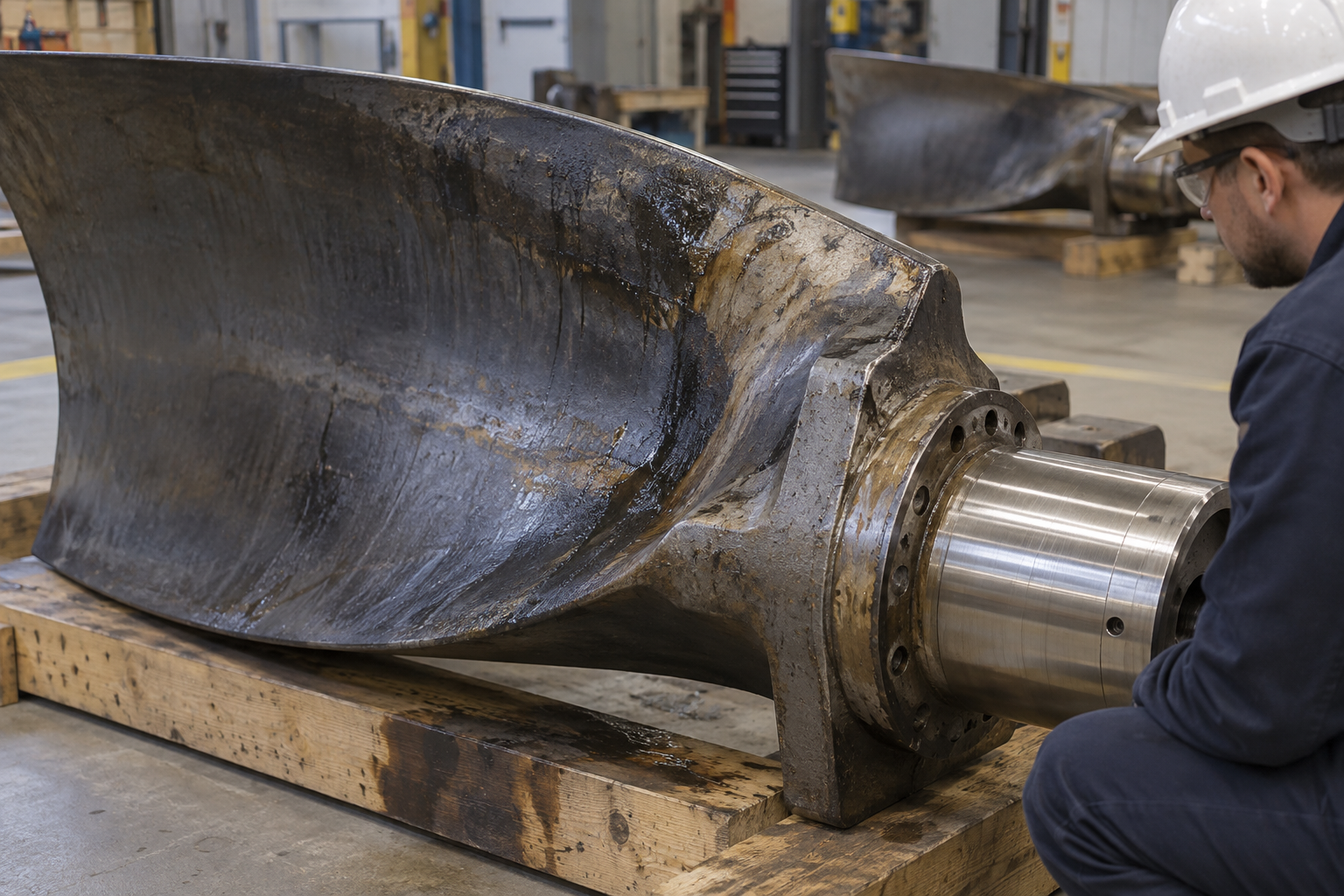
Protect journals, bush interfaces and sealing surfaces using the workshop’s approved methods. Confirm that protective items remain secure and are accounted for afterwards. Do not direct loosened material into holes, grease passages or an open bearing interface. Choose a test area with a realistic edge or recess but outside excluded precision zones. Inspect the patch and nearby protected boundaries after stabilisation. If the method cannot control residue around these interfaces, a different cleaning arrangement may be needed.
Connect cleaning records to overhaul acceptance
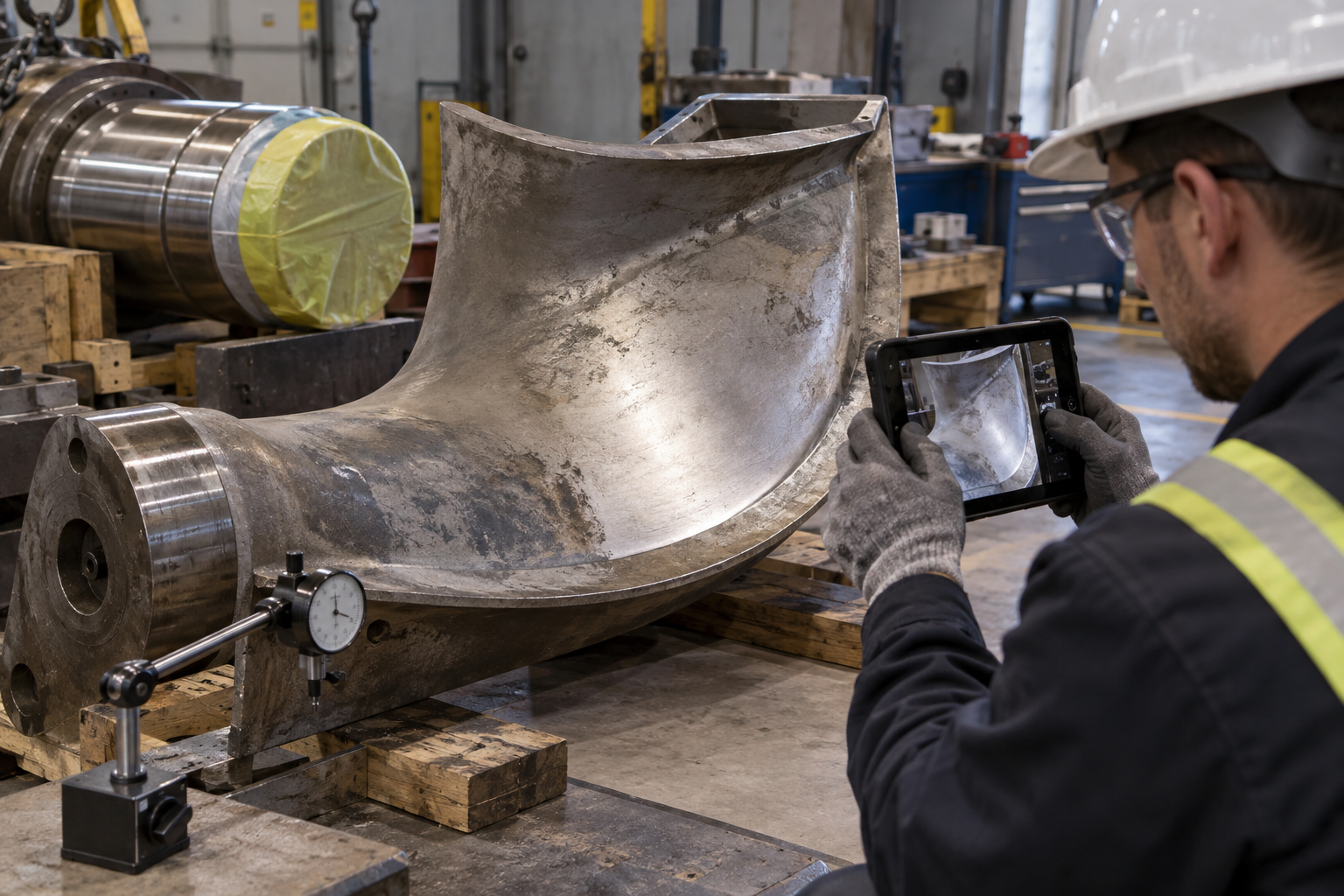
The inspector should specify the cleanliness needed for measurements and any subsequent examination. Record settings, access, retained coating and remaining deposits. Keep dimensional results separate from the cleaning report. A smooth-looking photograph cannot establish journal size, sealing performance or freedom of movement after assembly. The trial record should identify whether the part is ready for inspection, further preparation or repair. This avoids a handover in which every team assumes that the previous team has already authorised return to service.
Compare the complete turnaround
On a hydro overhaul, lifting and inspection queues can dominate the schedule. Compare the entire component route, including protection, repositioning, collection and inspector availability. Do not base a shutdown saving on seconds spent cleaning one flat patch. Test another representative geometry before extrapolating to a set of gates. Keep storage conditions and identification under control after cleaning so the part does not require avoidable rework before assembly. A useful decision can limit dry ice to selected exterior deposits rather than every overhaul surface.
Trial scope and acceptance
| Surface or task | Proposed action | Acceptance boundary |
|---|---|---|
| Removed component exterior with identified deposit | Controlled workshop trial | Accepted inspection access without finish damage |
| Journals and sealing faces | Protect or use specified separate process | Dimensions and interfaces controlled |
| Corrosion or erosion damage | Inspect and route to repair decision | No restoration claim from cleaning |
Local reference and work planning
CCOHS describes hazardous-energy control as a planned process covering relevant energy sources. Use it as Canadian safety guidance while confirming provincial or territorial duties and the generating station’s own isolation and overhaul requirements. See CCOHS hazardous-energy guidance.
The NIOSH carbon dioxide reference identifies inhalation and cold-contact hazards. Have the competent site team establish ventilation, CO2 monitoring where required, handling, noise and eye protection, and emergency arrangements for the actual task. Do not rely on an oxygen reading alone to assess CO2 exposure. Removed contamination still needs collection and an appropriate waste route.
For maintenance-isolation background, the US OSHA hazardous-energy standard addresses control of hazardous energy. It is a US reference, not a statement of local law for this application. Use the facility’s approved isolation and restart procedure.
Questions before a supplier trial
Does this guidance cover work inside a turbine passage?
No. The trial scope is removed components in a workshop; other work areas require their own assessment and authorisation.
Can a cleaned wicket gate be returned directly to service?
Only after the required overhaul inspections, repairs, assembly checks and station release process.
Prepare the supplier discussion
Send DryIceSys the substrate and coating details, photographs of the actual deposit, approved trial zone, available utilities and written acceptance criteria. Request an application review before selecting equipment or estimating production capacity. For practical preparation, use the site-readiness checklist, machine-safety guide and nozzle-selection guide. These guides support planning; the component owner still defines the permitted scope.