
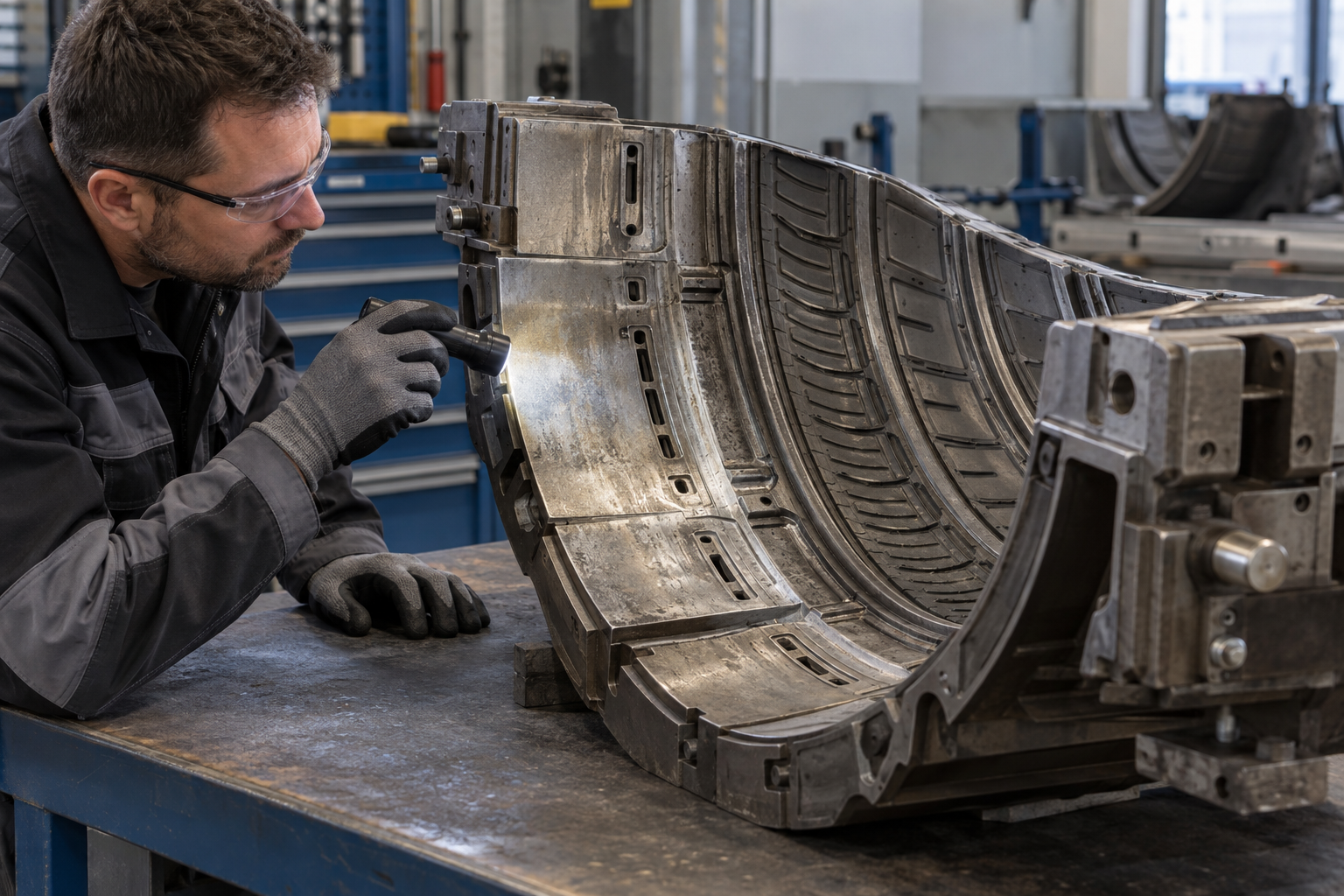
Dry Ice Cleaning Tire Molds in Germany: Vent Checks
Evaluate dry ice cleaning of tire curing molds by testing a defined mold segment and verifying vent function, tread detail and surface condition under the mold maker’s acceptance procedure; visible rubber removal does not prove that every vent is clear.
This article is a proposed evaluation guide, not a report of a completed customer installation.
Why the vent is the acceptance point
A tire mold can look clean across its broad tread surface while deposits remain in a small vent or an insert interface. Begin with the defect or maintenance concern: blocked vent paths, residue around a lettering insert, or inconsistent release on one segment. These are separate inspection questions. Define the feature to be evaluated and document its pre-cleaning condition. A wide photograph of a bright mold is weak evidence if the actual decision depends on the condition of a small passage.
Map the segment before selecting the nozzle
Identify base material, surface treatment, replaceable inserts, moving vent elements and any prohibited impact zones. The mold maker should determine whether a feature can be exposed, masked or removed. A dismounted, cooled segment may make a more controllable first evaluation than a complete mold inside a curing press. Do not infer that a metal substrate has no damage limit: edges, finishes and small moving elements can have different requirements. Avoid forcing loosened rubber into a passage that cannot subsequently be inspected.
Build the trial around vent verification
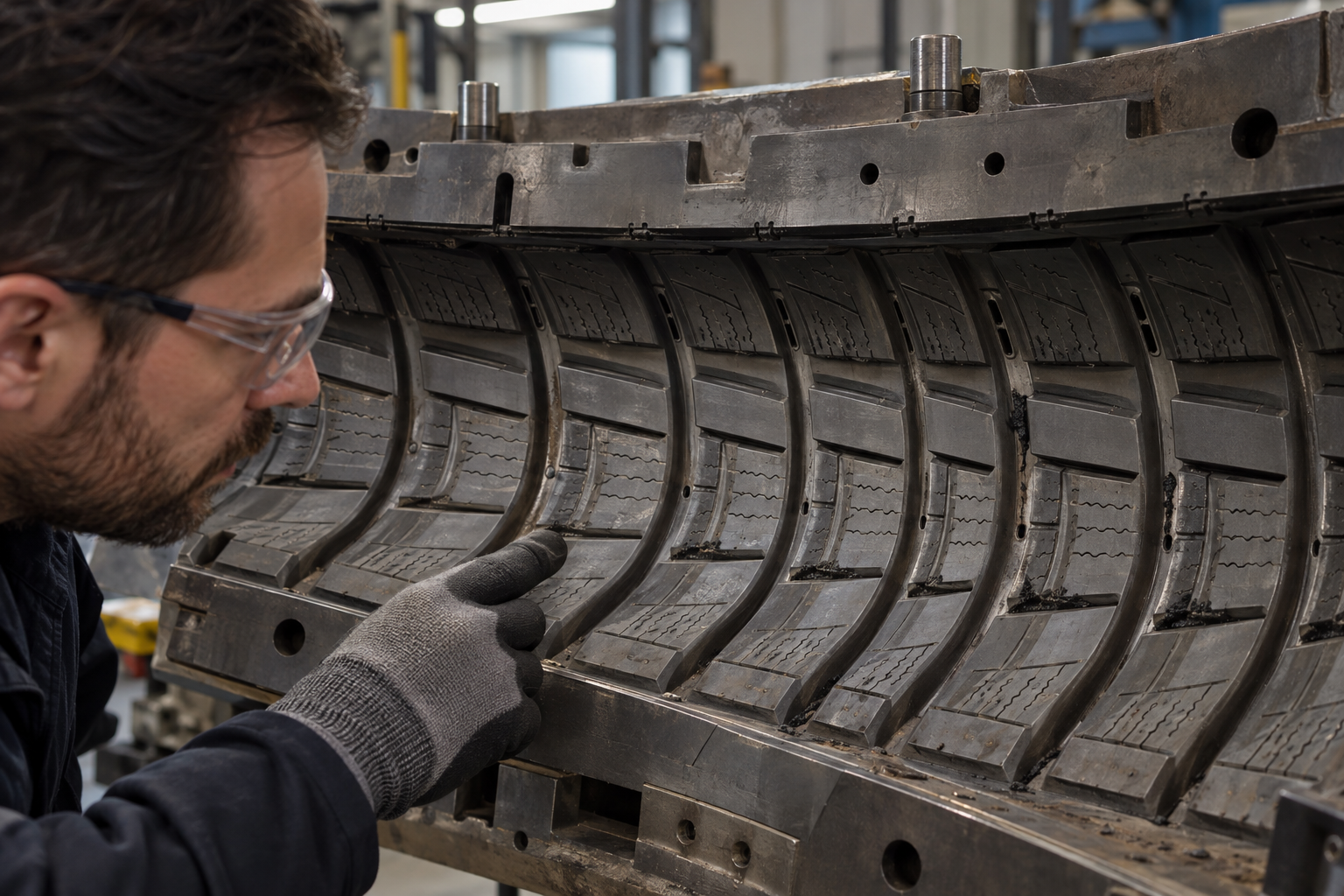
Select representative deposits rather than an unusually easy flat section. Keep an untreated reference and record pellet condition, delivered air, nozzle, distance and pass duration. After cleaning, use the maker-approved vent verification method and inspect the tread detail and insert seats. Where the approved method includes measurement or a functional check, retain the readings. Do not improvise drilling, probing or abrasive treatment to turn a failed cleaning trial into a pass. Escalate a blocked or damaged vent to the authorised mold maintenance process.
Separate the cleaning station from the curing process
Press isolation, residual heat and mechanical restraint require their own controls. A shutdown screen is not a complete energy isolation procedure. Locate the cleaning task so residue can be captured without drifting into other molds or product handling. Rubber deposits and their additives must be identified before deciding collection and disposal. Plan access to the mold surface without putting an operator under an unsupported component. Record how the cleaned segment is protected during transfer back to storage or assembly.
Compare cost per released mold
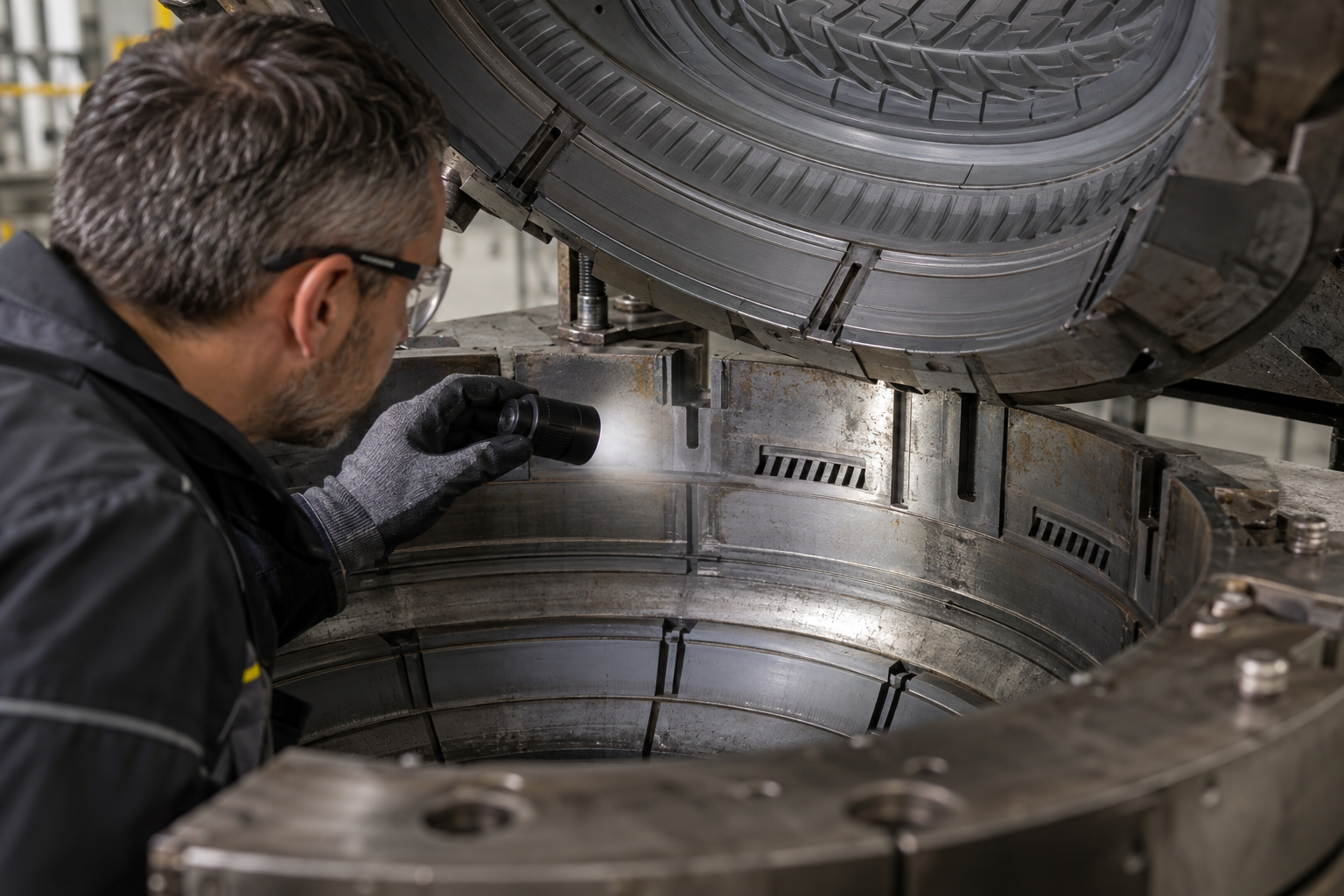
Ask a supplier to distinguish preparation, cleaning, vent inspection, residue collection and reassembly time. The useful comparison is the effort to return an accepted mold to service, including any further work required on failed features. A faster visual cleaning pass can still create a longer maintenance job if vent verification is difficult. Extend a successful trial only to equivalent mold families with engineering approval. A separate finish, vent design or rubber compound may require another qualification.
Trial scope and acceptance
| Surface or task | Proposed action | Acceptance boundary |
|---|---|---|
| Accessible tread segment | Defined cleaning patch | Detail and finish meet mold-maker criteria |
| Small vent or moving vent element | Maker-approved functional inspection | No inferred pass from surface brightness |
| Coated insert or unfamiliar treatment | Separate material review | No expansion without compatibility evidence |
Local reference and work planning
Germany’s DGUV Information 213-115 addresses hazards and protective measures when producing, storing and using dry ice. Use it in the local task assessment alongside the mold maker’s instructions; it is not an endorsement of a cleaning result. See DGUV Information 213-115 on dry ice.
The NIOSH carbon dioxide reference identifies inhalation and cold-contact hazards. Have the competent site team establish ventilation, CO2 monitoring where required, handling, noise and eye protection, and emergency arrangements for the actual task. Do not rely on an oxygen reading alone to assess CO2 exposure. Removed contamination still needs collection and an appropriate waste route.
For maintenance-isolation background, the US OSHA hazardous-energy standard addresses control of hazardous energy. It is a US reference, not a statement of local law for this application. Use the facility’s approved isolation and restart procedure.
Questions before a supplier trial
Does rubber removal prove that a vent is open?
No. Verify the vent by the approved inspection method.
Can a result on one mold qualify the whole plant?
Only for a scope approved by the plant and mold maker. Different finishes and vent designs need separate consideration.
Prepare the supplier discussion
Send DryIceSys the substrate and coating details, photographs of the actual deposit, approved trial zone, available utilities and written acceptance criteria. Request an application review before selecting equipment or estimating production capacity. For practical preparation, use the site-readiness checklist, machine-safety guide and nozzle-selection guide. These guides support planning; the component owner still defines the permitted scope.