
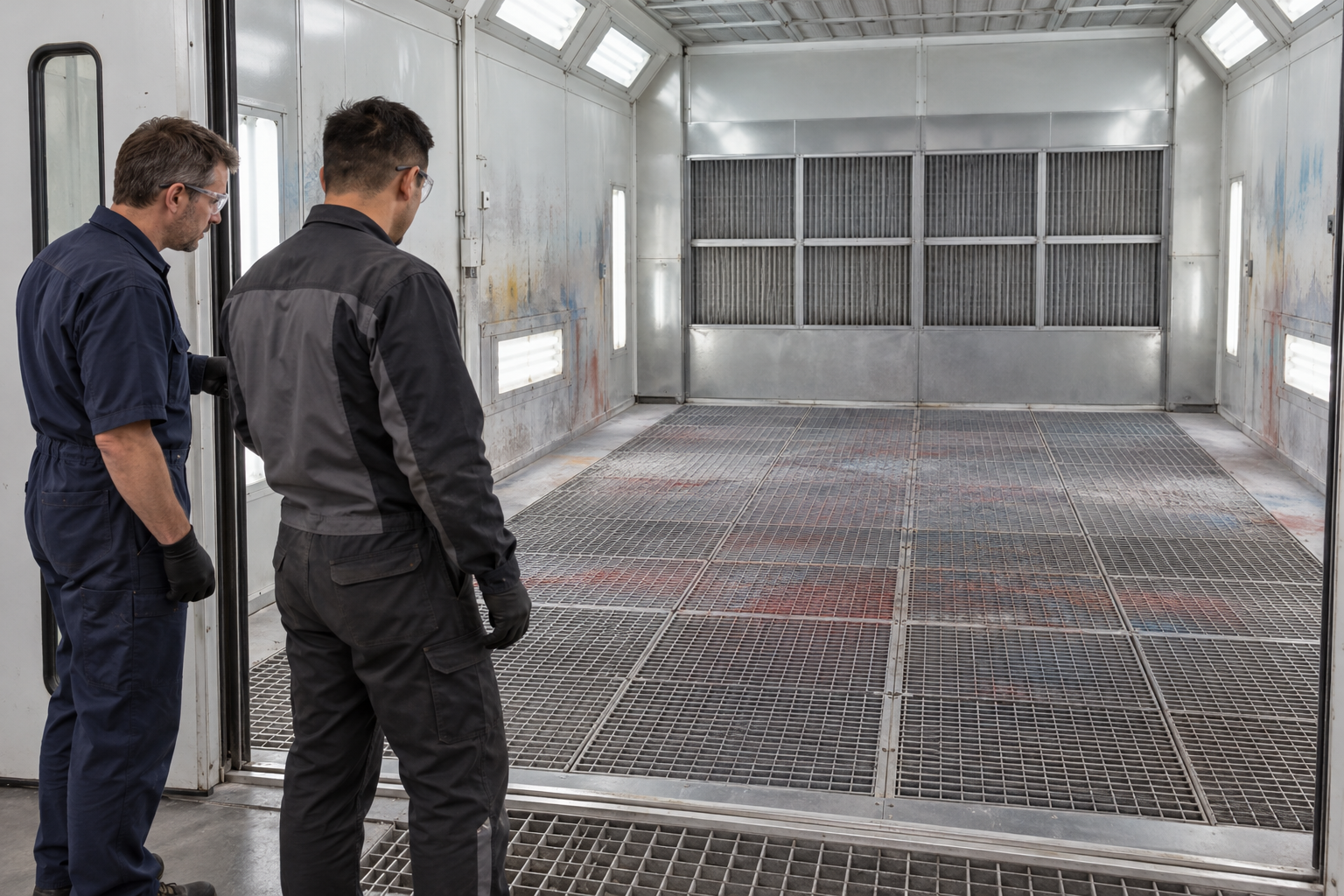
Paint booth housekeeping is not the same job as stripping paint from a finished part. Overspray may build up on floor grating, baffles, wall panels, carriers, and other fixtures, while filters, electrical components, applicators, and exhaust ducts create very different access and contamination risks. Dry ice blasting can be evaluated for selected paint-booth grates, removable baffles, and metal fixtures only after spraying stops, the booth is isolated and ventilated, residue hazards are assessed, and a test patch plus collection plan pass site review. A successful patch qualifies the defined surface and deposit, not the entire booth.
This guide addresses industrial spray-booth maintenance planning. A paint shop must follow its own equipment instructions, coating safety data, fire-protection program, and applicable local rules. In particular, dry ice blasting does not make flammable vapors, combustible residues, or hazardous-area electrical requirements disappear.
Where might dry ice blasting fit in a paint booth?
Start with a map of the overspray, not with a nozzle. An equipment maker’s automotive finishing application page describes paint residue and overspray building up on grilles, conveyor belts, and booth walls. That establishes a real maintenance use case, but it does not show that every coating or surface can be cleaned with the same settings. Record the sprayed material, whether the residue is still tacky or fully cured, its thickness, and the substrate beneath it.
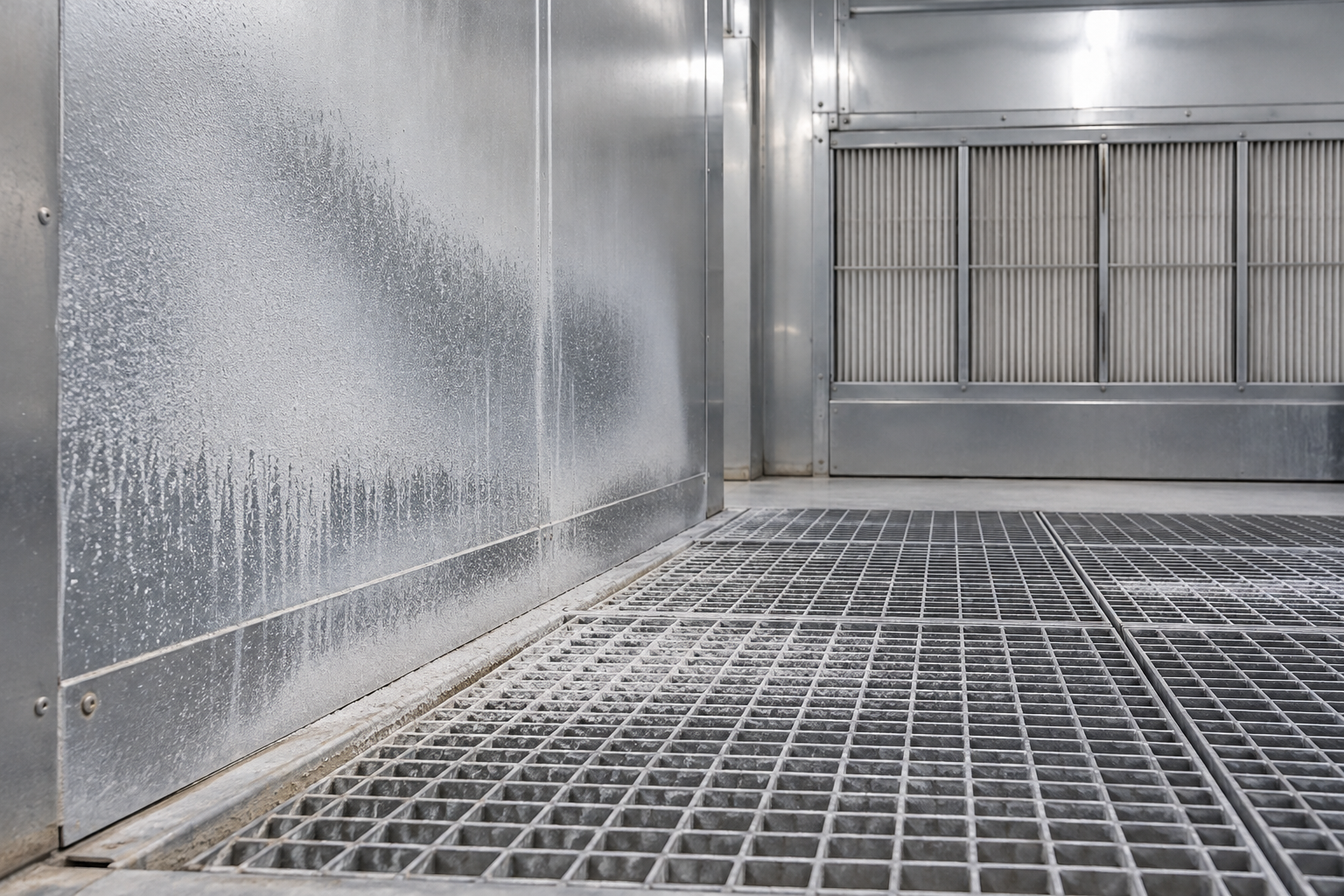
Removable steel grates and baffles can be practical first test locations because they can be inspected on both sides, protected from adjacent equipment, and sometimes cleaned outside the booth. A coated wall panel needs a separate compatibility check: an apparent removal of overspray is a failure if the protective panel coating lifts with it. Treat lenses, filters, sprinkler heads, sensors, applicators, wiring, and exhaust duct interiors as excluded from a general blast trial until the responsible specialist defines a method for them.
The DryIceSys nozzle-selection guide helps frame reach and coverage, but only a representative test establishes suitability. An in-place application photo from any supplier is not evidence that a particular booth can remain assembled, occupied, or in production during cleaning.
What must be checked before the booth is cleaned?
Identify coating chemistry and the likely hazards of its dry residue. The US OSHA spray-finishing standard, 29 CFR 1910.107, applies to covered spray finishing with flammable and combustible materials. It calls for spraying areas to be kept as free of combustible residue accumulation as practical, with cleaning conducted daily if necessary; it also addresses removal and proper disposal of contaminated debris. Those provisions explain why booth cleaning matters, but they do not prescribe dry ice blasting or approve it for every spray area.
Plan the maintenance window with the paint shop’s EHS and operations leads. Stop spraying and prevent a restart. Follow the booth maker’s shutdown and purge sequence while maintaining the ventilation needed to clear vapors and control the work atmosphere. Isolate conveyors, robots, reciprocators, and other hazardous energy sources involved in the task. The OSHA hazardous-energy standard covers servicing and cleaning where unexpected startup or stored energy could injure workers in covered US workplaces. A local stop button is not a substitute for the site’s energy-control procedure.
Check the status of fire protection, bonding and grounding, approved equipment, hazardous-area classification, and permitted tools before bringing a portable blaster, light, or collection device into the booth. Do not assume that a process without added water is automatically safe in a spray area. OSHA’s spray-finishing rule also addresses ignition sources, booth ventilation, filters, and access for cleaning. The site must decide whether the proposed equipment and work method are allowed in the specific booth configuration.
How should a test patch be assessed?
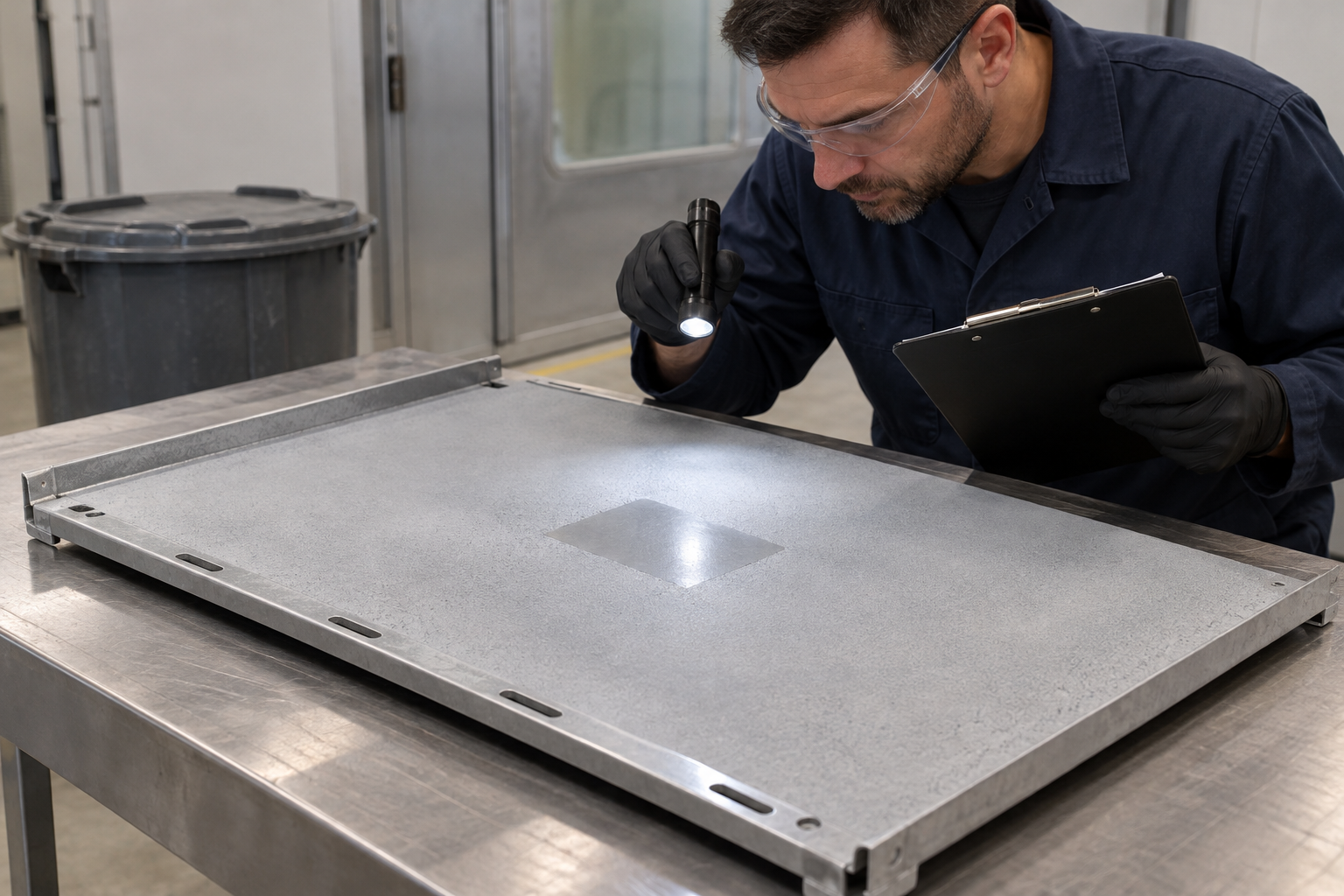
Select a small representative patch on a robust surface with the actual overspray buildup. If a baffle or grate can be removed under the approved procedure and cleaned in a separate controlled area, that may make inspection and residue capture simpler. Photograph the starting condition and note the metal or coating beneath the deposit. Document the nozzle, pellet feed, delivered air pressure, distance, angle, dwell time, collection setup, and the coating material identified from the site’s records.
Begin conservatively within the blaster and substrate manufacturer’s instructions. Stop after a short pass and inspect with adequate light. Look for scratching, substrate-coating loss, exposed corrosion, changed gloss, bent grate sections, displaced seals, and residue carried into nearby filters or joints. Inspect the back of the grate or baffle, not only the face that looks clean. If the deposit resists removal, reassess the coating and method instead of increasing energy indefinitely.
Make the acceptance criterion explicit before extending the trial. For example: the defined overspray is removed from the selected metal area, the underlying finish remains intact, filter media and protected components remain uncontaminated, and all dislodged material is collected. A clean-looking square on a wall does not validate a floor grate, a robot arm, or an exhaust plenum. The DryIceSys site-readiness checklist can help organize the air supply, work area, access, and containment questions before the trial.
How do you handle removed paint and carbon dioxide?
Dry ice pellets sublimate, but dislodged paint and other overspray remain. The OSHA spray-finishing rule requires appropriate removal and disposal of residue debris for covered operations; use the facility’s waste classification and collection procedure rather than assuming the debris is harmless. Protect filters and air paths against re-entrainment. Plan capture and final inspection for floor pits, grated areas, nearby conveyors, and the workbench used for removed parts. Do not blow the residue into exhaust ducts or a neighboring process.
Dry ice also becomes carbon-dioxide gas. The NIOSH carbon-dioxide pocket guide identifies exposure limits and symptoms such as headache, dizziness, and breathing difficulty. Evaluate ventilation, enclosed or low areas, and adjacent occupied spaces; monitor where the site’s assessment requires it. The absence of visible fog is not proof of a safe atmosphere. Cold contact is another handling hazard. The DryIceSys machine-safety guide covers general controls that need to be adapted to this booth and crew.
Do not return the booth to spraying because the blasted patch looks bright. The responsible team should verify that overspray debris is collected, filters and fire-protection components are in their required state, tools are removed, guards and access panels are restored, and the booth passes its normal prestart checks. Cleaning is a maintenance step; it is not a substitute for ventilation testing or product-finish quality control.
A go/no-go table for paint-shop maintenance
| Observation | First decision | Dry ice trial gate |
|---|---|---|
| Light dried overspray on a removable steel baffle | Confirm coating chemistry and removal route | Small patch leaves the base finish intact and debris captured |
| Caked residue on a metal floor grate | Check access, underside, pit, and collection method | Patch can be inspected on both sides without spreading residue |
| Overspray on a coated wall panel | Obtain panel coating and cleaning limits | No protective-coating loss or gloss change |
| Residue on filters, sprinklers, sensors, or wiring | Refer to the responsible specialist and maker | Exclude from a general blast trial |
| Active spraying, inadequate purge, or uncertain vapor state | Stop and follow booth shutdown and ventilation procedure | Do not blast until site safety review clears the work |
| Unknown combustible or hazardous residue | Identify material and disposal route | Pause until controls are defined |
This table is a screening tool, not an operating setting. The plant’s coating system, booth design, substrate, and risk assessment determine whether any dry ice trial proceeds. Verify the DryIceSys cleaning machine’s air requirements against delivered pressure and flow if the method is approved.
Frequently asked questions
Can you dry ice blast a paint booth while spraying continues?
No such assumption should be made. The evaluation described here begins after spraying stops and the booth follows its approved shutdown and purge sequence. The site must manage ventilation, hazardous energy, ignition sources, and exposure for the actual configuration.
Does dry ice blasting remove every kind of cured paint?
No. The coating chemistry, cure state, thickness, and substrate change the result. This article concerns overspray and buildup on selected booth components, not paint stripping from finished parts. Test a defined deposit before making a production claim.
Is there no waste because the pellets disappear?
No. The dry ice becomes gas, but removed coating and other contamination remain. Collect and dispose of them under the facility’s applicable waste procedure.
Does a successful grate test also approve wall panels and filters?
No. Steel grating, coated panels, filter media, and electrical or fire-protection devices have different failure modes. Each needs its own maker guidance and site approval; some should be excluded from blasting entirely.
Sources and scope
The paint-shop application example comes from ASCO’s automotive dry ice cleaning page; it is evidence of a potential use, not proof of universal performance. The US regulatory discussion is grounded in OSHA 29 CFR 1910.107 and OSHA 29 CFR 1910.147 for workplaces where they apply. Carbon-dioxide exposure information comes from the NIOSH pocket guide. The site-specific coating records, equipment manuals, risk assessment, and test result govern the maintenance method.