
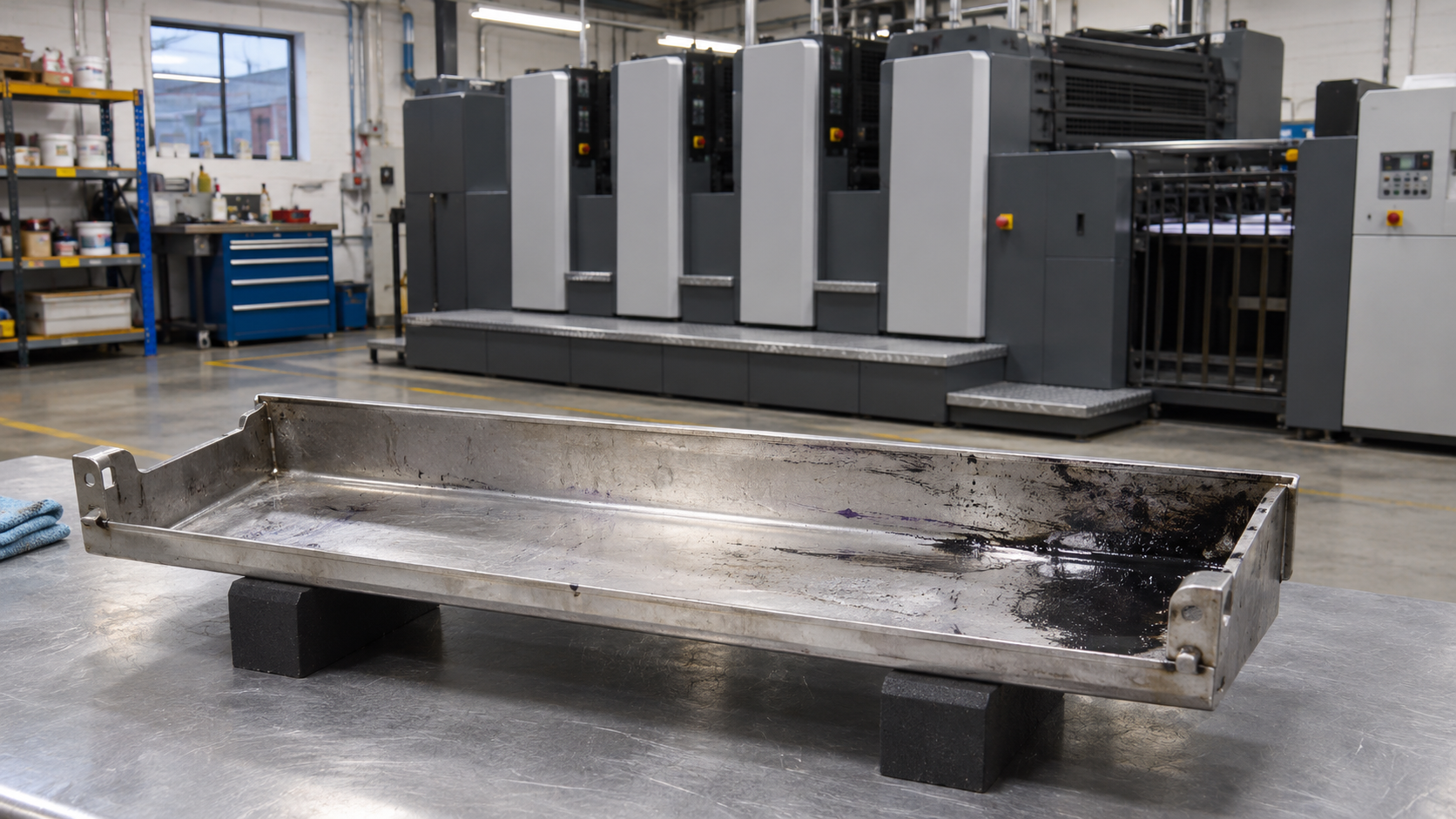
UK Offset Press Ink Tray Cleaning Before Repair
Can a Great Britain print shop use dry ice cleaning on an offset press ink tray before repair?
For a Great Britain offset print shop, dry ice cleaning may be considered for a removed, supported metal ink tray before repair only after the ink and coating are identified, the tray is safely detached, and the shop has assessed ventilation and residue capture. Start with a small approved test patch. Cleaning cannot certify the tray’s coating, fit, sealing or suitability for reuse.
This is a planning guide for a specific detachable metal component, not a report of a customer installation. The images are conceptual. It does not cover cleaning a running press, ink rollers, rubber blankets or UV-curable ink systems. The press maker and the site’s competent maintenance team set the component limits.
Why isolate the tray from the press?
An ink tray can retain a film of dried ink along its lip, corners and fastener seats. That material may obscure corrosion, coating loss or a distorted mating surface. Removing a tray under the manufacturer’s procedure can give the repair team a stable component to inspect and keep blasting away from bearings, rollers, seals, controls and paper path. The tray must be supported so it cannot slip or deform.
The HSE’s guidance on safe systems for cleaning printing presses distinguishes cleaning methods by press task and configuration. It does not endorse dry ice blasting for a particular tray. Before removal, the maintenance lead should identify electrical, pneumatic and mechanical energy, confirm the intended method of access, and document isolation and verification. HSE maintenance guidance calls for plant to be made safe, including isolating power and releasing stored energy. An emergency stop alone is not a removal procedure.
What deposit and surface are actually present?
Record the press model, tray alloy, surface finish and the ink formulation used in the latest run. A conventional ink film, cured UV coating, adhesive and solvent residue are different materials; this guide’s trial applies only to a tray with identified conventional ink. Ask the maker whether the tray’s finish, bonded seals and edge geometry can tolerate a local cleaning trial. If that information is unavailable, do not assume the process is compatible.
HSE’s printing COSHH guidance identifies inks, solvents, adhesives and lacquers as possible exposure sources. Dry ice pellets sublimate, but the displaced ink does not. Set up containment and a suitable capture method for chips, flakes or dust. Protect workers handling the removed deposit and choose disposal according to the actual ink and other chemicals present. The method should not simply spread residue to another bench, machine or air intake.
How should a limited trial be judged?
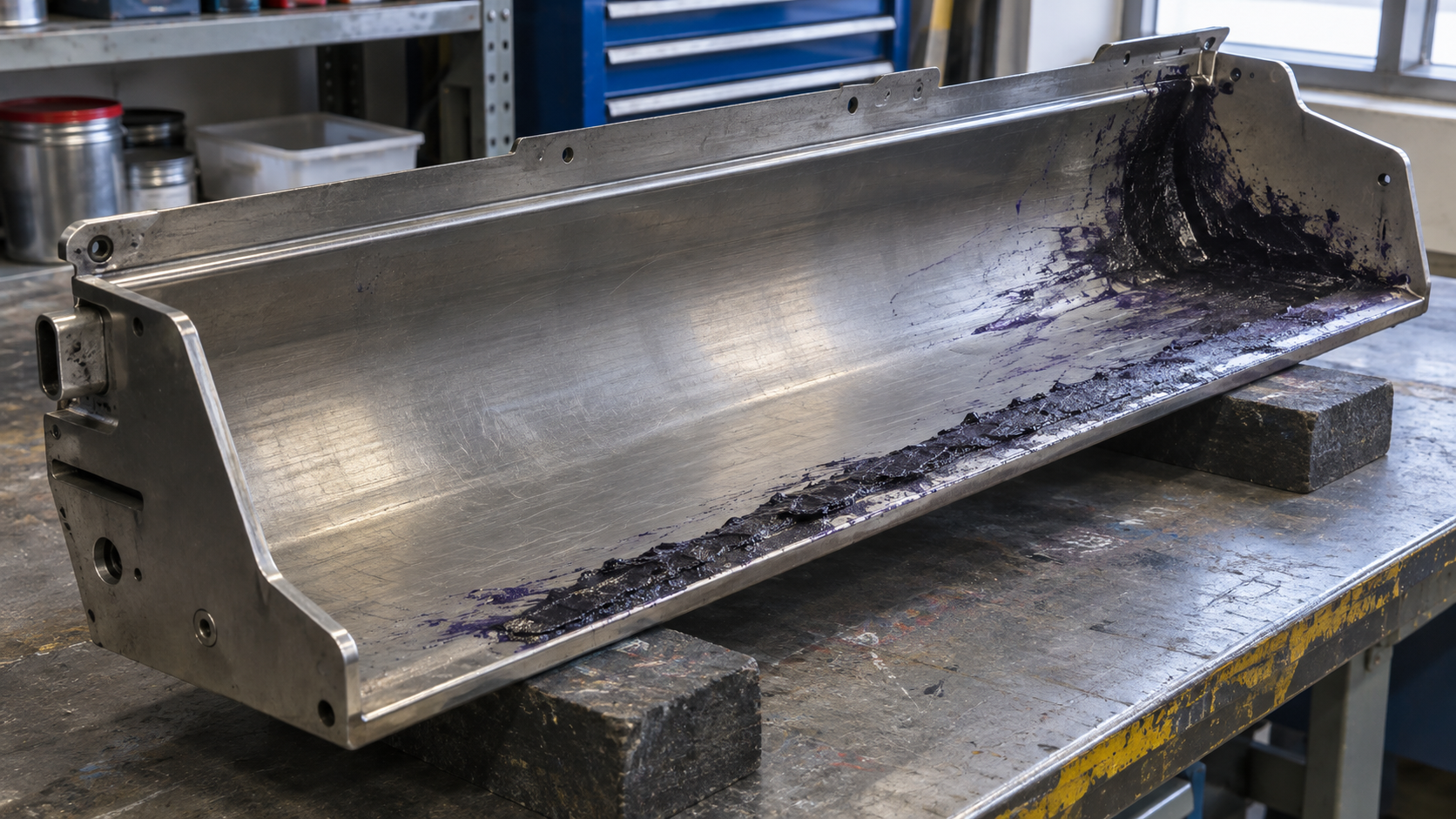
Mark a small, noncritical patch on the supported tray, away from seals, coatings of uncertain adhesion, threads and precision edges. Photograph it before work. Record the ink identity, tray material, nozzle, pressure, stand-off, angle, dwell time, capture method and ventilation arrangement. Use a site-approved conservative setting, then inspect for coating change, pitting, edge damage or embedded residue. If any of these appear, stop and ask the repair lead to reassess. A larger area should not be cleaned merely because the first patch looks brighter.
Dry ice releases carbon dioxide. The HSE’s carbon dioxide hazard guidance explains that elevated CO2 is hard to detect by sight or smell and can accumulate in low or enclosed places. Assess the actual print-room layout, extraction and nearby pits before the trial. A generic office ventilation reading is not a substitute for a task-specific exposure assessment. The site also needs to address noise, flying particles and compressed-air equipment.
What counts as a successful handover?
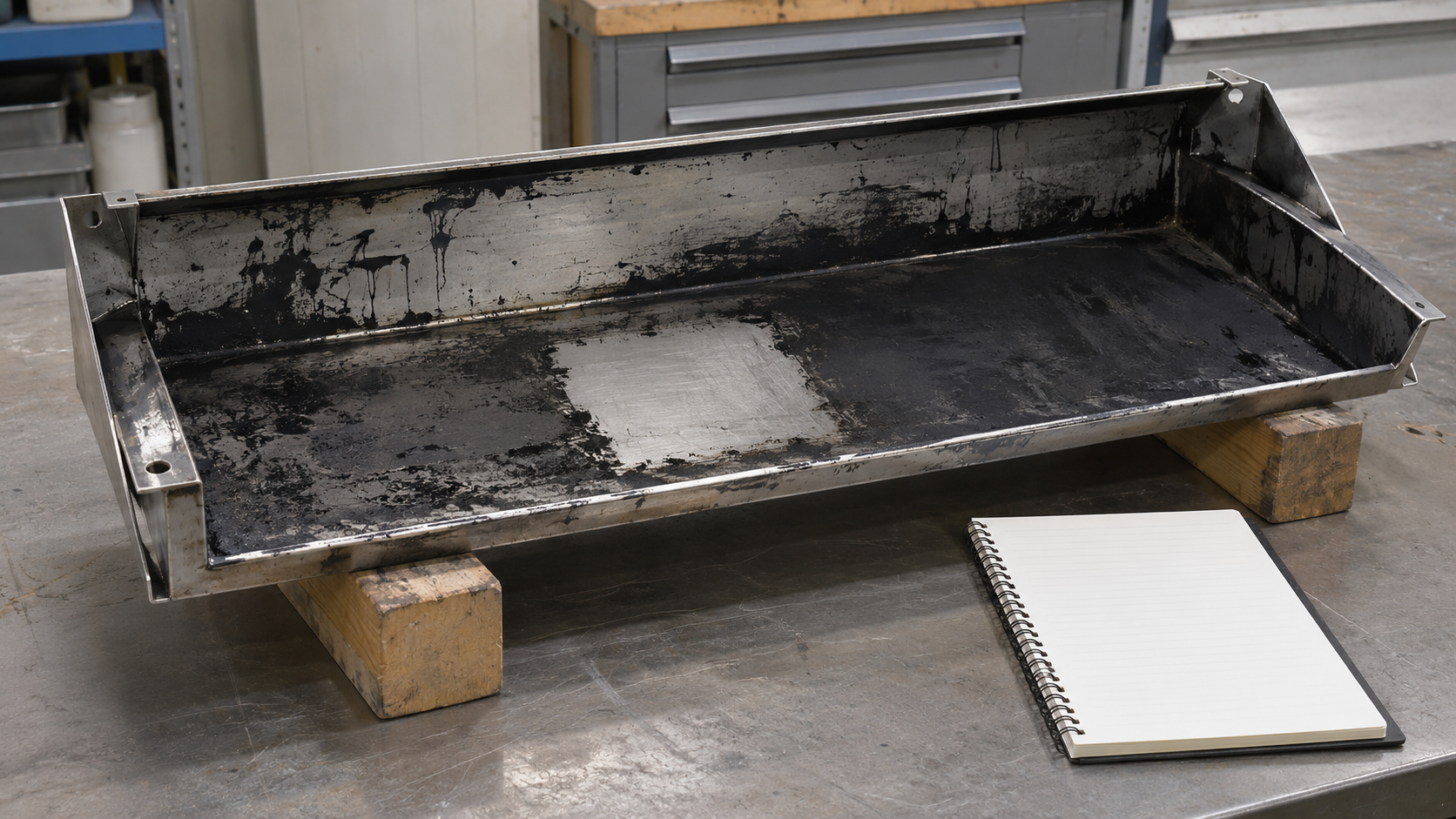
The useful outcome is a documented, accessible surface for the repair team to assess. Compare before-and-after photographs, record remaining contamination and any visible surface change, then let the qualified team inspect coating integrity, straightness, fit and seal condition against the press maker’s criteria. If the tray fails those checks, the next step is repair or replacement, not a cleaning pass certificate. Refit and restart belong to the shop’s separate controlled maintenance process.
For a supplier discussion, send the tray drawing or model, finish specification, ink safety data, photos of the deposit, proposed capture plan and the exact inspection question. DryIceSys’s air-requirements guide, site-readiness checklist and machine overview can help frame an equipment trial after the print shop has set its safety and repair limits.