
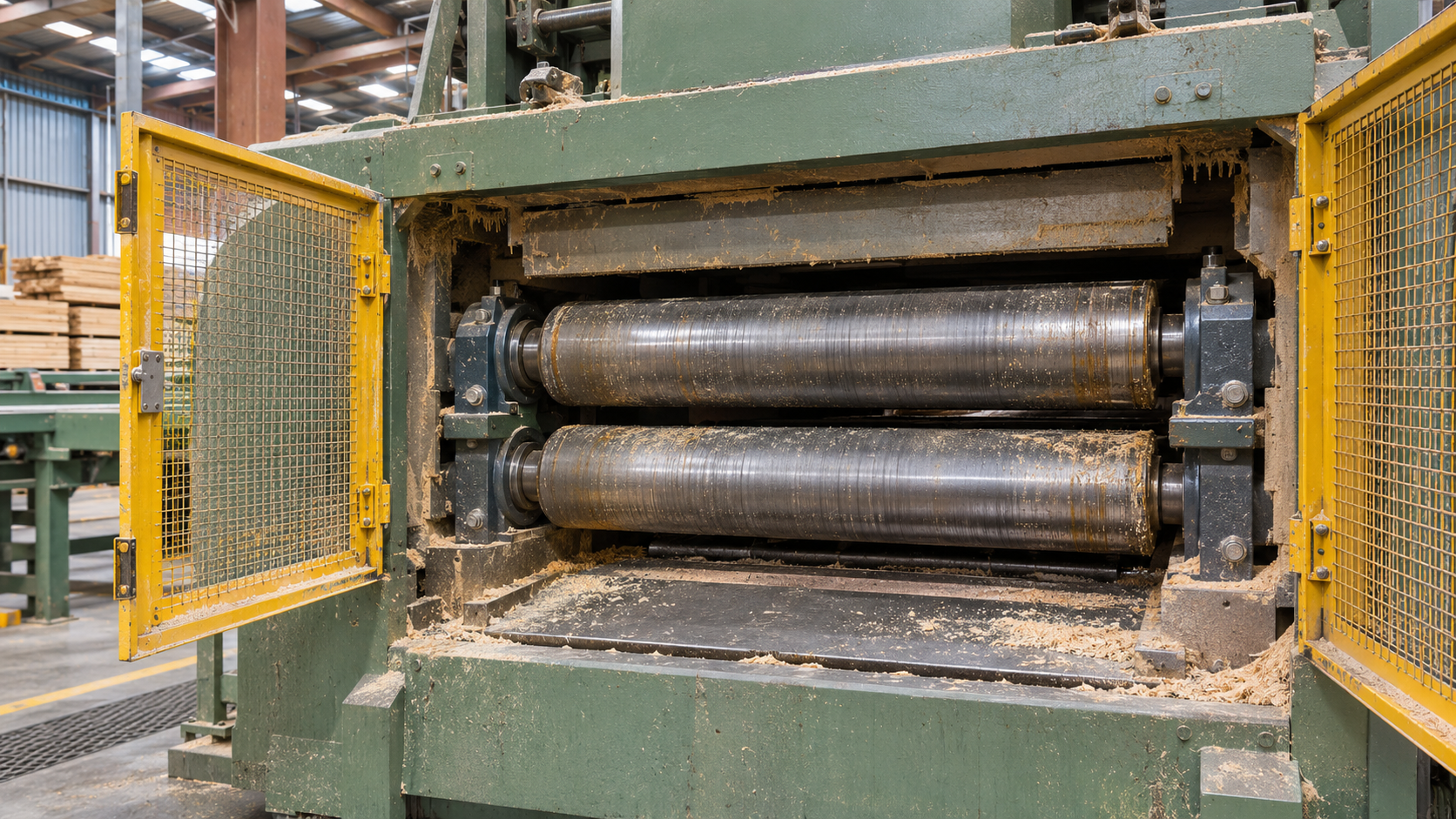
Sawmill Planer Feed Roller Cleaning Before Repair in NZ
Can a New Zealand sawmill use dry ice cleaning on a planer feed roller before repair?
At a New Zealand sawmill, dry ice cleaning may be worth a controlled trial on an isolated planer feed roller only after the site has locked out all energy, identified the wood dust and resin deposit, and arranged effective capture and ventilation. Protect bearings, drive parts and roller coverings. A visibly cleaner roller is not evidence that its grip, alignment or bearings meet the machine maker’s repair criteria.
This guide describes an assessment, not a customer job or an instruction to clean a running machine. The images are conceptual. The sawmill’s competent maintenance team must define the safe access method and the roller manufacturer’s limits before a cleaning trial.
Why clean a feed roller before a repair decision?
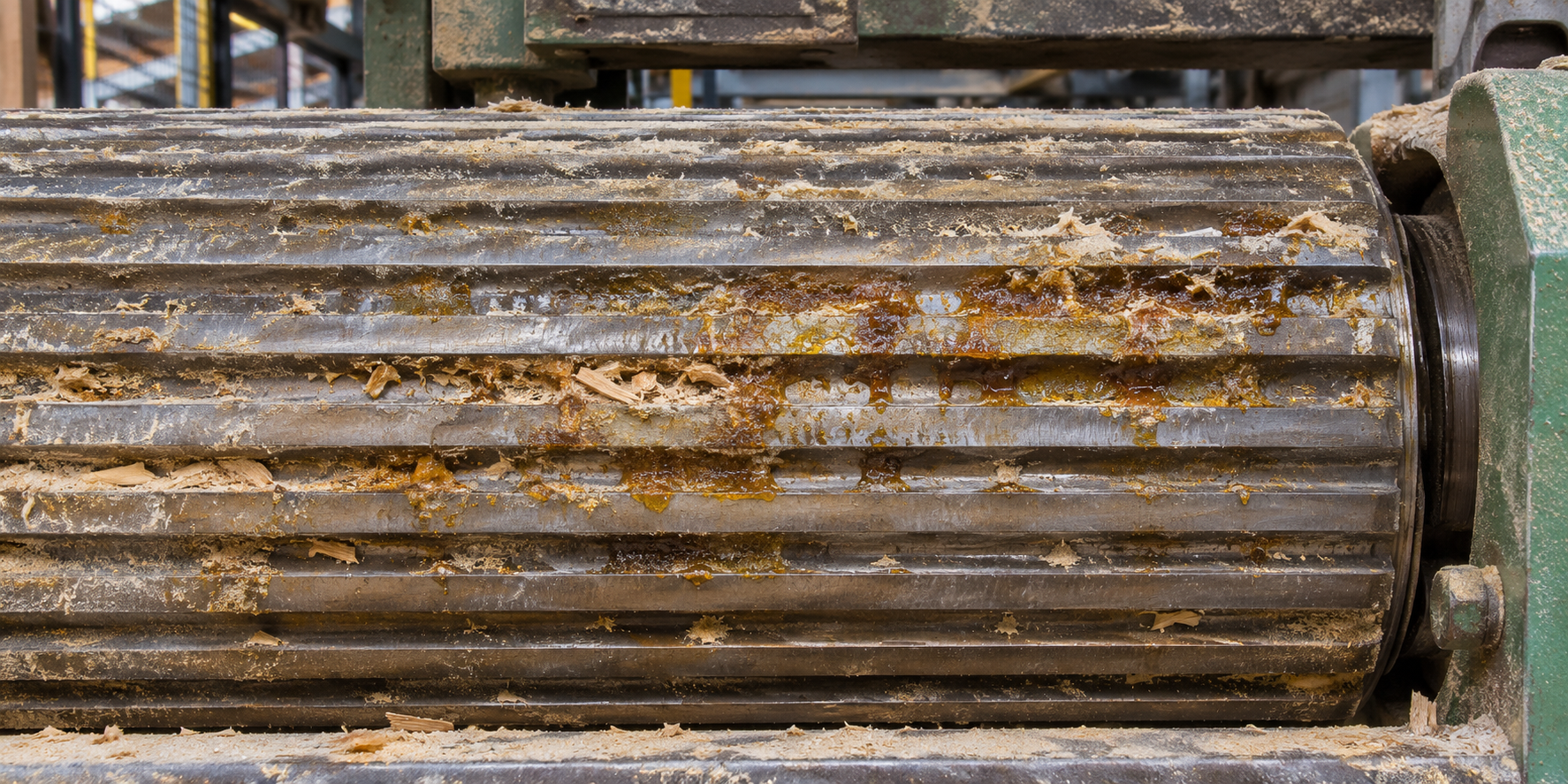
Planer feed rollers contact timber repeatedly. Wood dust, pitch, resin and other deposits can collect on accessible surfaces and make it harder to see the roller covering, wear pattern and edges. A clean patch may let the repair team examine a suspected damaged area and compare it with the as-found condition. It cannot establish traction under load, correct spring force, shaft runout, bearing health or alignment. Those are separate checks under the maker’s maintenance procedure.
Define the question narrowly: is the deposit obscuring a surface that must be examined, and is dry ice appropriate for that particular covering? Photograph the existing condition, identify roller material and coating, then ask the maker or qualified maintenance lead whether a low-impact trial is permitted. A soft rubber covering, adhesive bond or damaged coating may be more vulnerable than a bare metal surface. Stop if the patch shows lifting, roughening or another change to the surface.
Isolation comes before access
A planer may retain electrical, pneumatic, hydraulic, spring and gravity energy even after the motor stops. WorkSafe New Zealand’s machine-lockout guidance treats cleaning as servicing and calls for isolating energy sources and releasing stored energy before work where unexpected movement could harm a worker. Its sawmill lockout information sheet specifically discusses zero energy across sawmill equipment. The site’s written isolation, verification and guard-removal procedure controls access; an emergency stop alone is not isolation.
No worker should reach between rollers or remove a guard under a cleaning-only assumption. The maintenance lead should identify the exact accessible surface, safe approach, supports and any component that must be detached. If safe access cannot be established, the trial does not proceed. A detached roller still needs secure support against rolling or falling.
What happens to the wood dust?
Dry ice pellets sublimate, but dislodged dust and resin do not disappear. WorkSafe’s wood-dust guidance identifies airborne wood dust as a health risk, recommends effective capture such as local exhaust ventilation, and warns against using compressed air to move dust around. A blast trial must therefore have a site-approved way to capture debris close to the work and to prevent a dust cloud reaching other workers or equipment. Check whether the existing extraction arrangement can safely handle the displaced material; do not assume a general shop vacuum is suitable.
Carbon dioxide from dry ice requires a separate ventilation assessment, particularly in pits, enclosed housings and low-lying spaces. WorkSafe’s confined-space guidance describes the need to plan entry and assess changing atmospheres; it does not mean every planer bay is a confined space. The site should assess its actual location and airflow. Noise, flying particles and compressed-air supply also belong in the task assessment.
Trial and handover record
Choose a small marked patch away from seals, bearing openings, drive components, sensors and labels. Record the deposit, roller material, nozzle, pressure, standoff, angle and dwell time, plus capture and ventilation arrangements. Begin at a site-approved conservative setting and examine the patch before expanding the scope. Avoid directing the jet into a bearing, under a roller covering or into a chain or gearbox housing. If the deposit is hardened or the covering changes, stop and reassess the method.
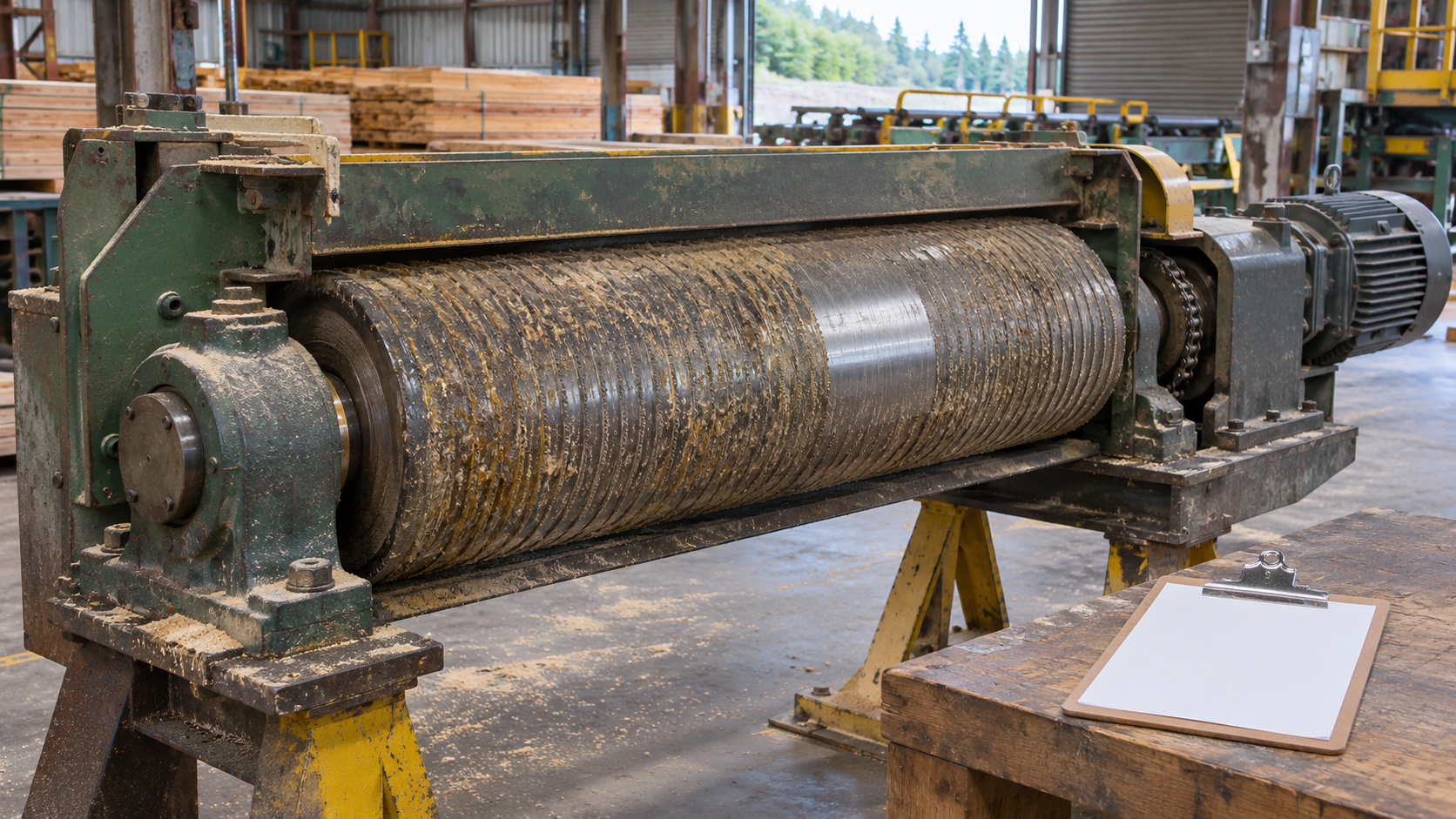
The repair lead should compare before-and-after photos and document whether the intended surface is now visible without new damage. The site’s qualified team then checks the roller to the maker’s criteria, decides whether covering repair, bearing work, alignment checks or replacement are required, and restores guards before controlled restart. Cleaning is preparation for that decision, not a pass certificate.
For a supplier discussion, send the roller model, covering material, deposit photos, safe access plan and required inspection question. DryIceSys’s air-requirements guide, site-readiness checklist and machine overview can help scope a controlled trial after the sawmill has set its safety and repair limits.