
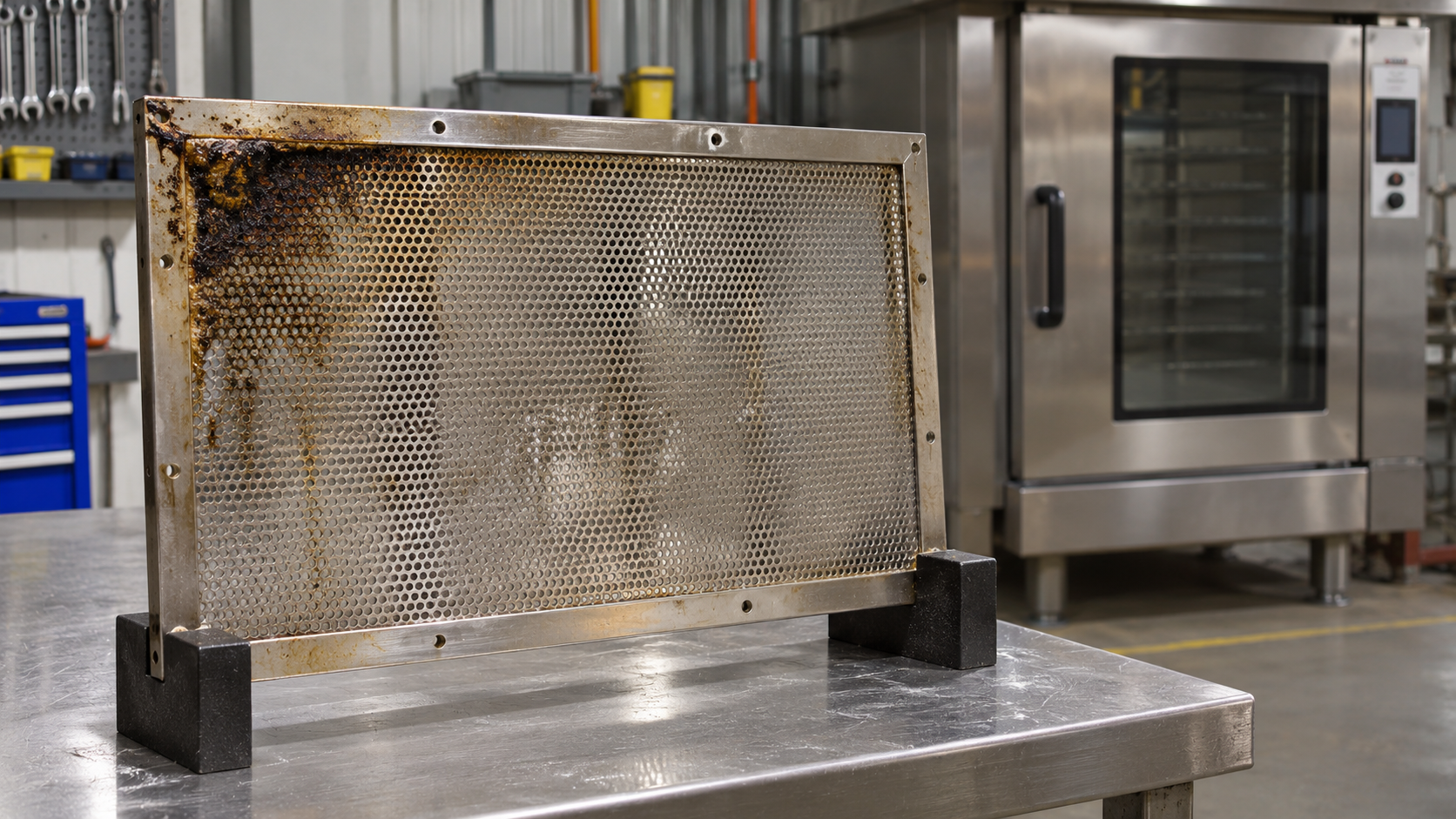
Queensland Bakery Oven Fan Guard Cleaning Before Repair
Can a Queensland bakery trial dry ice cleaning on a removed oven fan guard before repair?
A Queensland bakery can consider a controlled dry ice cleaning trial on a cooled, removed metal oven fan guard with identified baked-on residue before repair inspection. The oven must be isolated under the site’s procedure, the guard securely supported, and ventilation and residue capture assessed. A small test patch can show whether the deposit lifts without visible surface damage. Cleaning does not establish food-contact hygiene, guard integrity or fitness for refitting.
This is a planning guide, not a customer case or a claim of a completed cleaning result. The illustrations are conceptual. It addresses a removable non-food-contact metal guard, not the fan motor, bearings, heating elements, food-contact surfaces or a running oven. The oven maker and bakery maintenance team determine the actual limits and acceptance criteria.
Why remove and support the guard?
Baked-on flour dust, fat or other deposits can obscure cracks, corrosion, loose fasteners and distorted edges. A detached guard gives the repair team controlled access to both sides and helps keep dislodged material away from the fan, electrical enclosure and product path. First record the guard material, coating, fastener positions and the actual deposit. Support the guard on a stable bench without bending its mesh or frame.
Heat and moving parts add separate hazards. Allow the oven to cool under the maker’s procedure, isolate its electrical and other energy sources, and verify the isolation before removal. WorkSafe Queensland’s machinery-isolation guidance describes shutting down, locking out, releasing stored energy and checking that the equipment cannot restart. The Queensland plant code of practice says guards removed for maintenance or cleaning should be replaced before normal operation. A control-panel stop button is not a substitute for the bakery’s isolation procedure.
What must a trial establish?
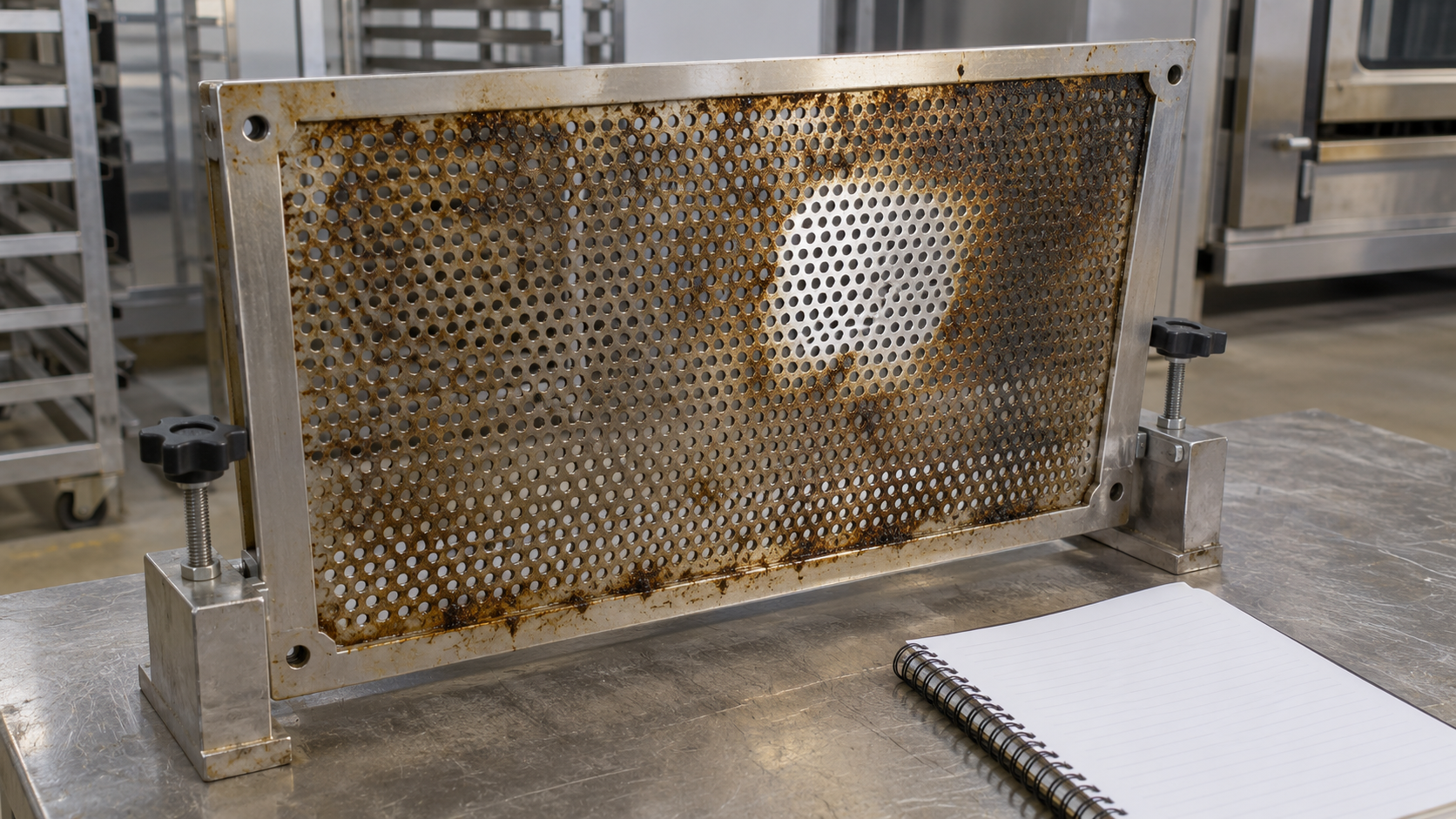
The trial question is narrow: can an identified deposit be removed from a representative, noncritical section of the guard without visibly changing the metal, coating, welds or openings? Photograph the patch first. Document the deposit and surface specification, nozzle, pressure, stand-off, angle, dwell time, extraction method and observations. Keep the jet away from fragile mesh edges, labels and any attached seals. Stop if the coating flakes, the frame moves, or the mesh deforms. The maker or repair lead should decide whether further cleaning is acceptable.
Dry ice pellets turn into carbon dioxide, but displaced fat, carbon and flour residue remain. Provide capture and a disposal route based on the actual material. WorkSafe Queensland’s blasting guidance discusses airborne particles, noise and hose controls and identifies dry ice blasting among alternative surface-preparation methods. Its abrasive-blasting controls are a useful risk-assessment reference, not an automatic approval of this oven-guard application.
How should the bakery control CO2 and residue?
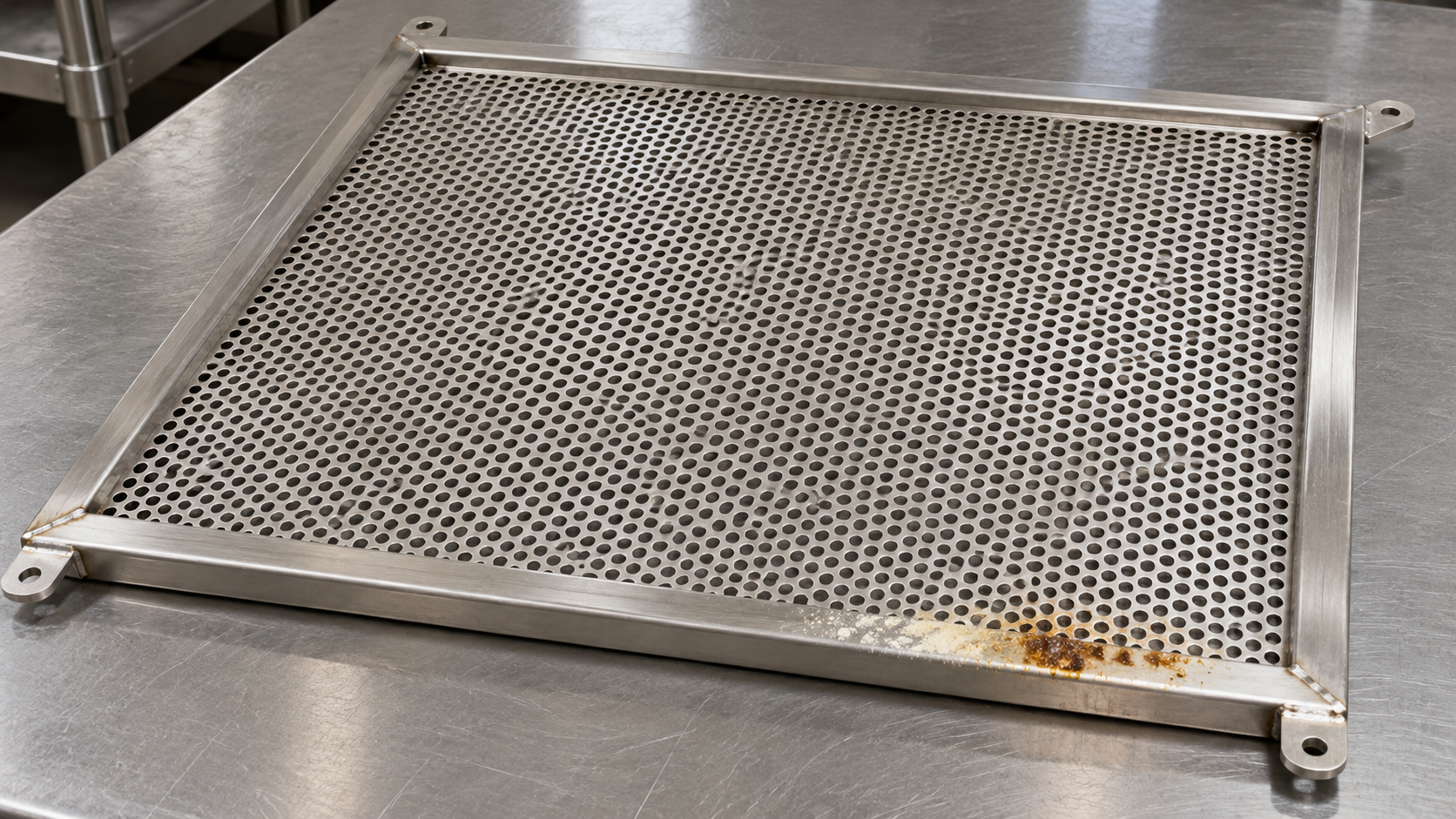
Assess the actual workshop ventilation, low spots and nearby enclosed spaces before a trial. The Queensland workplace chemical-labelling code uses dry ice as an example and notes its handling and storage hazards, including asphyxiation and the need for a well-ventilated area. The bakery should set task-specific controls for CO2, flying particles, noise and compressed air, and keep people outside the work area. Do not treat an open doorway alone as proof of adequate ventilation.
After the trial, inspect and collect the displaced deposit rather than blowing it into the bakery. WorkSafe Queensland’s compressed-air guidance explains why blowing dust around a work area creates exposure and injury risks. Confirm the capture equipment and cleaning route with the site’s safety and hygiene teams.
What is the repair handover?
Record the before-and-after patch photographs, remaining residue, surface observations and any rejected areas. A competent person then checks mesh openings, welds, frame straightness, attachment points and coating against the oven maker’s criteria. A visually clean guard is not evidence that these checks passed. Refit the guard only under the bakery’s maintenance and hygiene procedures, then complete the separate restart checks.
For an equipment discussion, send the guard drawing or oven model, metal and coating details, deposit information, photographs, ventilation and capture plan, and the exact inspection question. DryIceSys’s air-requirements guide, site-readiness checklist and machine overview can help scope a controlled trial once the bakery has set its limits.