
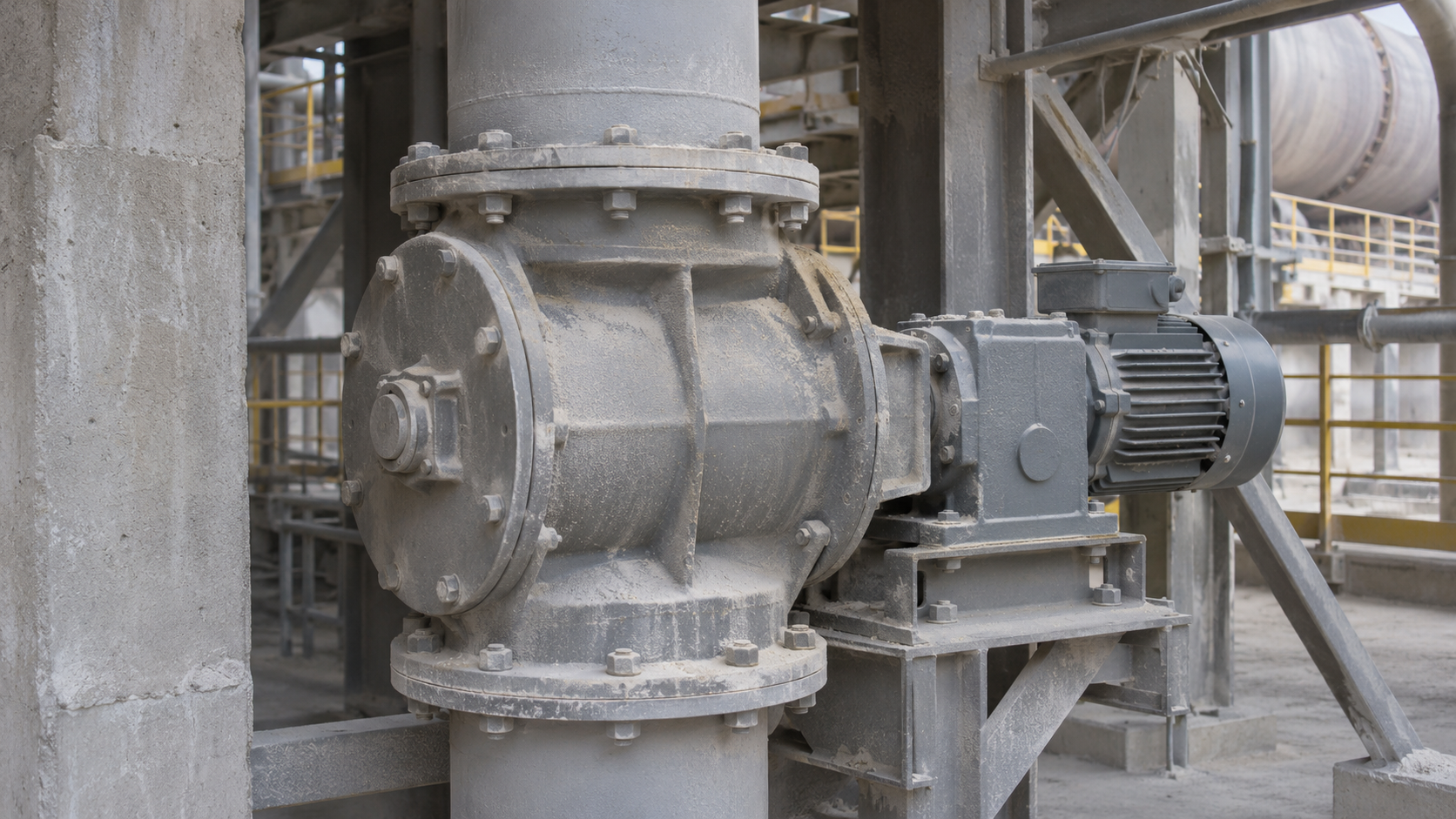
Cement Airlock Exterior Cleaning Before US Plant Inspection
Can a US cement plant use dry ice cleaning on a rotary airlock before inspection?
For a US cement plant, consider dry ice cleaning only on an isolated rotary airlock exterior after the site identifies the deposit, verifies hazardous-energy isolation, and controls airborne dust and carbon dioxide. Protect seals, bearings, motor, labels and flange joints; trial a small accessible area and collect displaced material. A cleaner casing does not prove the rotor, clearances or valve are fit for service.
This is a planning guide for a site-approved maintenance trial, not a customer case or a live-equipment cleaning instruction. The images are conceptual. A plant’s written procedures, the airlock manufacturer’s limits and the authorized inspector’s criteria govern the job.
What inspection question does exterior cleaning answer?
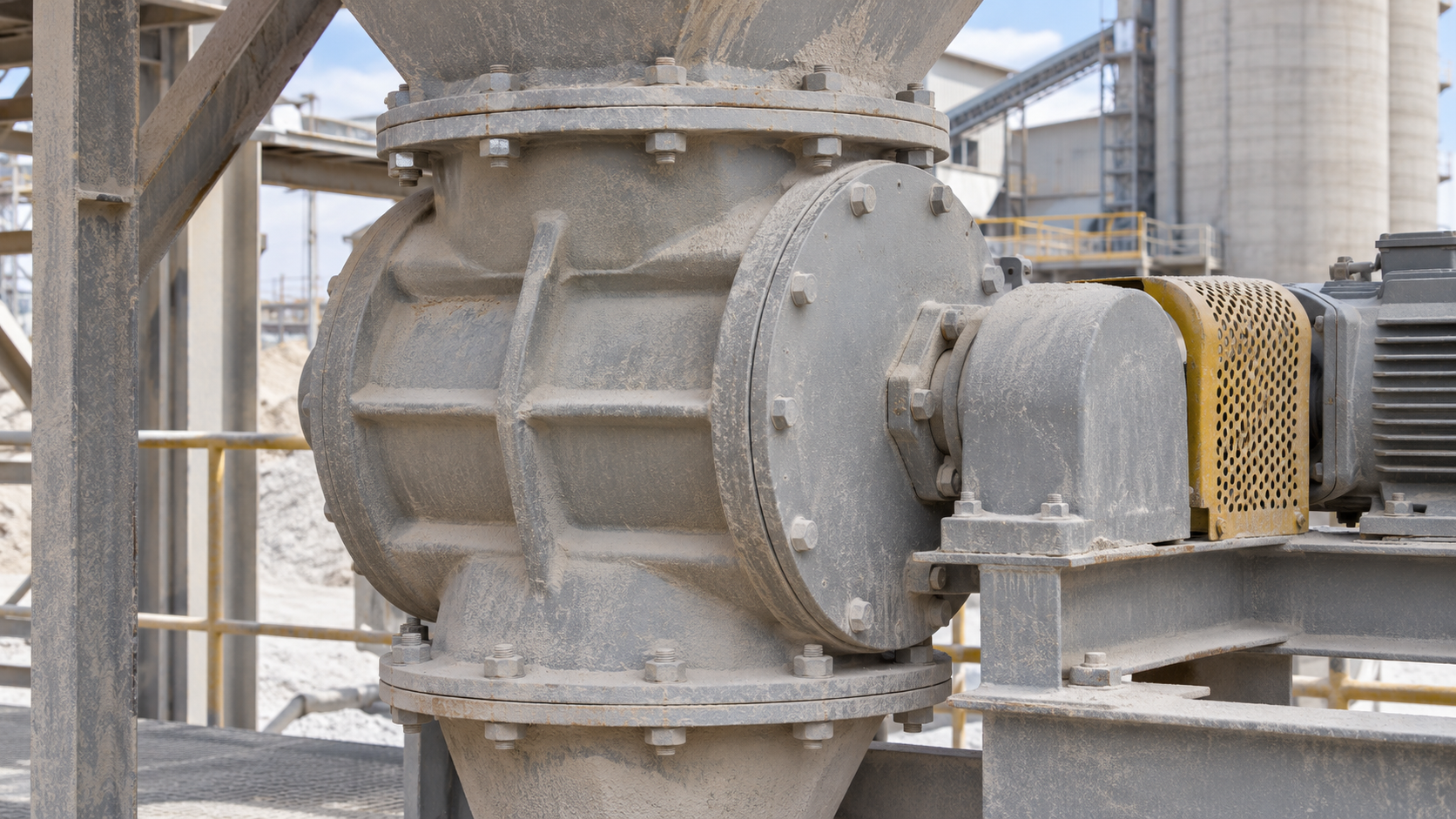
A rotary airlock under a cement silo or dust collector can accumulate a pale layer on its housing, flanges and fasteners. That layer may obscure a casing crack, a leaking joint or a missing fastener. Cleaning can improve exterior visibility; it does not reveal internal rotor wear, measure tip clearance, test bearings or establish that a pressure boundary is sound. Define the exact area and the defect the maintenance team intends to look for before selecting a cleaning method.
The first decision is whether the plant can isolate the feeder, upstream material flow, downstream equipment, pneumatic lines and stored energy as its procedure requires. OSHA’s general-industry hazardous-energy standard addresses servicing where unexpected energization or stored-energy release could injure employees and requires verification of isolation before work. A stopped rotor or a local switch position is not proof of safe access. Do not remove a guard or reach into an inlet or outlet under an exterior-cleaning scope.
How should the trial control dust and protect components?
Identify whether the residue is loose cement powder, hardened cement, oil-bound dust or a coating defect. The response to each may differ. Photograph the as-found casing, name a small test patch away from seals and electrical components, and confirm the casing finish and any manufacturer restrictions. Protect shaft seals, bearing housings, motor cooling openings, instrumentation, nameplates and flange gaskets. Do not direct the jet into a joint, bearing or motor. Stop if the coating lifts or if the test exposes a defect that needs an inspector rather than more cleaning.
Dry ice pellets sublimate, but cement dust and any other dislodged contamination remain in the work area. Specify localized collection, containment and housekeeping before work starts. OSHA’s concrete manufacturing guidance identifies cement dust as an eye and respiratory irritant and calls out silica hazards in concrete production. The plant should assess the actual material and exposure, rather than assume all deposited dust is harmless or that dry ice eliminates it. Keep the collection method compatible with site dust controls and any combustible or other process material present.
Carbon dioxide needs its own assessment. NIOSH’s carbon-dioxide pocket guide describes the gas as colorless and odorless and gives occupational exposure information. Review ventilation and possible low-lying or enclosed accumulation points at the real work position. Nozzle noise, compressed-air supply and flying particles also belong in the task assessment. A dry-looking process is not automatically a low-exposure process.
What belongs in the handover record?
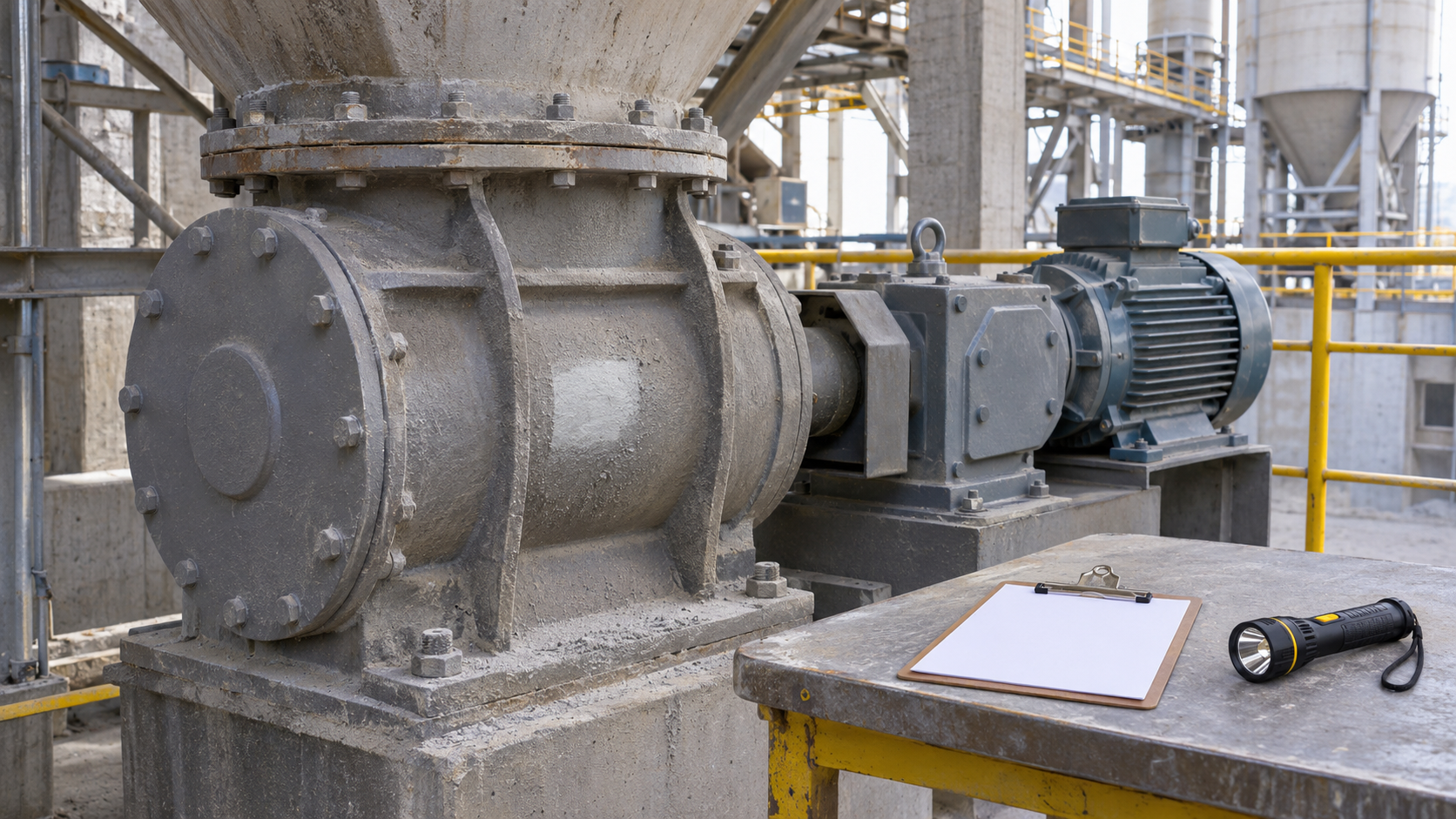
Record the airlock model and casing material, deposit, protected features, nozzle, pressure, standoff, angle, dwell time, dry ice supply, air quality, ventilation and containment approach. Take comparable before-and-after photographs of the marked test patch. Note whether the surface finish, gasket edges, seal area and labels changed. The authorized inspector should then assess the exposed exterior against the plant’s maintenance criteria and decide whether separate testing, repair, disassembly or replacement is needed. Cleaning is an input to that decision, not the decision itself.
Before handover, remove captured debris and masking, account for tools, restore guards, and follow the plant’s controlled restart process. A supplier discussion should include photos of the identified deposit, available access, utilities, protected components and the inspection question. DryIceSys’s air-requirements guide, site-readiness checklist and machine range can help scope a trial after the plant’s safety and inspection requirements are clear.