
Dry ice cleaning appears in many industry lists, but an industry name is not an application specification. Two tasks in the same factory may have completely different results. One may involve brittle carbon on a durable metal tool; the other may involve a soft coating, delicate seal or residue that should not become airborne.
The useful question is therefore not simply, “Does this industry use dry ice cleaning?” It is, “Does this contaminant, on this substrate, in this production environment, respond well to a controlled dry ice cleaning process?”
What makes an application a realistic candidate?
A promising task usually has a clearly defined unwanted layer, a substrate that must be preserved and a business reason to reduce water, solvents, abrasive media, disassembly or downtime. The part must also be accessible to a nozzle, and the site must provide adequate compressed air, ventilation and residue control.
Before considering equipment size, record six facts: contaminant, substrate, part geometry, required finish, available air and acceptable cleaning time. These facts are more useful than a broad sector label.
1–3: Automotive, molds and food-processing lines
1. Automotive cleaning
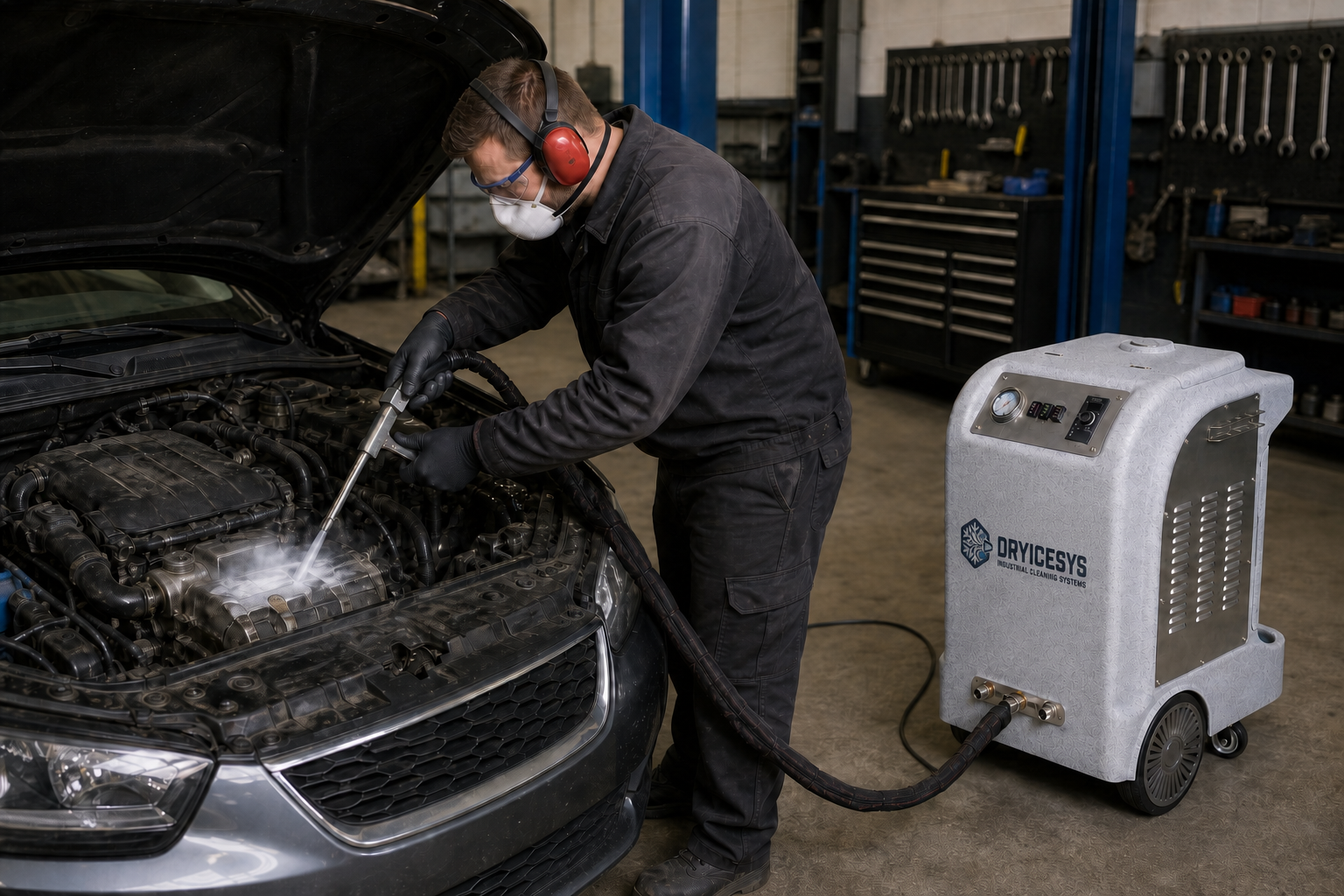
Automotive work can include engine and component cleaning, adhesive or sealant removal, production tooling and maintenance tasks. The attraction is targeted cleaning without adding water to the work area. The limitation is access: connectors, fragile plastics, sensors and open passages may need protection, and oily residue still needs collection.
2. Mold industry
Dry ice cleaning is frequently evaluated for release agents, rubber residue, carbon and production buildup on molds. It may reduce the need to remove a mold from the machine when access and safety procedures permit cleaning in place. Surface texture, vents, parting lines and coatings should be included in the trial.
3. Food-processing lines
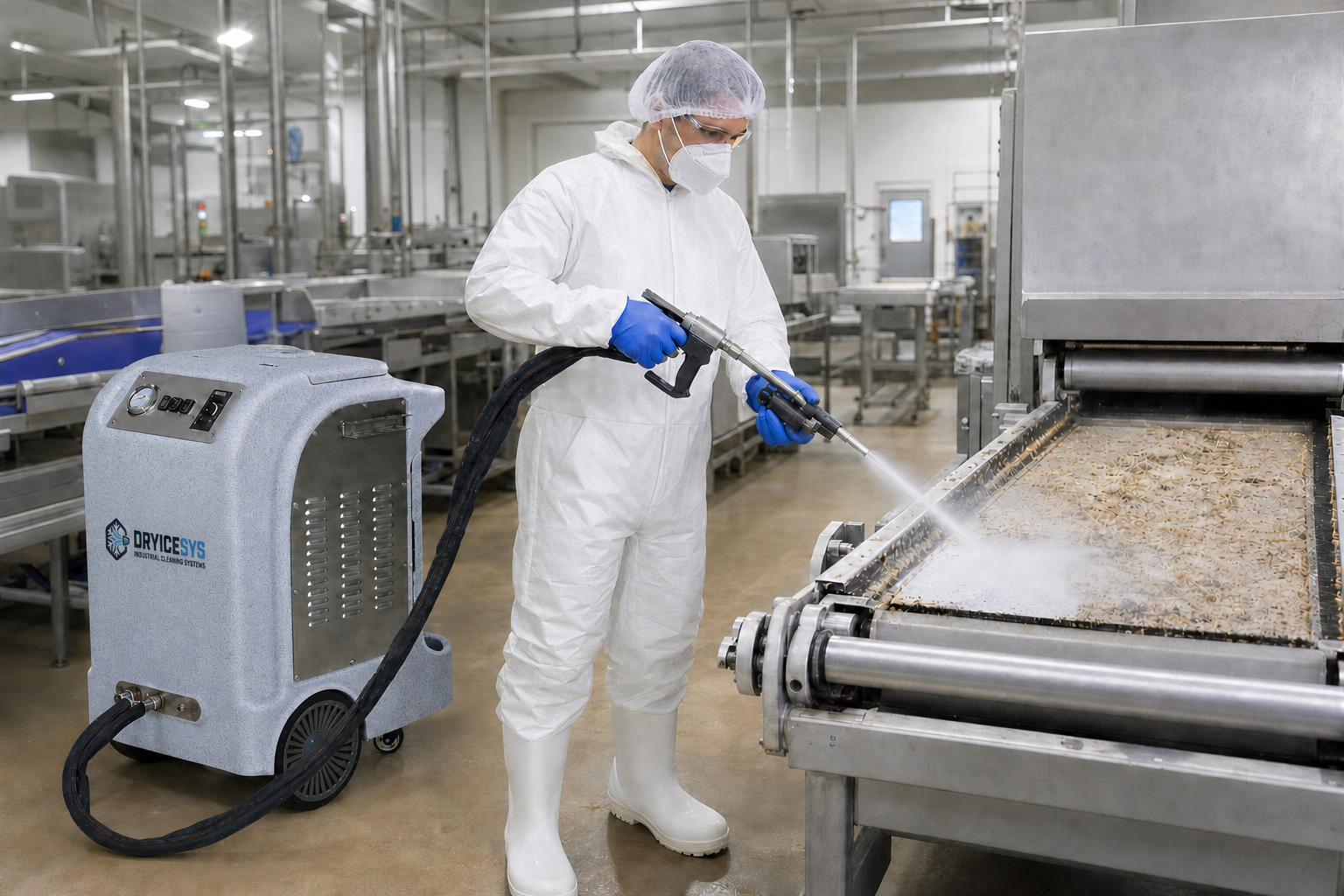
Production lines may contain baked-on residue, grease or deposits on conveyors, ovens and tooling. Dry ice can be useful where reducing added water is valuable, but it does not replace hygiene procedures, allergen controls or plant-specific sanitation validation. Removed food residue must still be captured and the equipment returned to its required sanitary condition.
4–6: Electrical, printing and foundry equipment
4. Electrical maintenance
Because dry ice media sublimates and the process adds no cleaning water, it is considered for some electrical maintenance tasks. “Non-conductive media” does not mean every energized-cleaning task is automatically safe. Isolation rules, arc-flash requirements, component ratings, contamination and site procedures remain controlling conditions.
5. Printing equipment
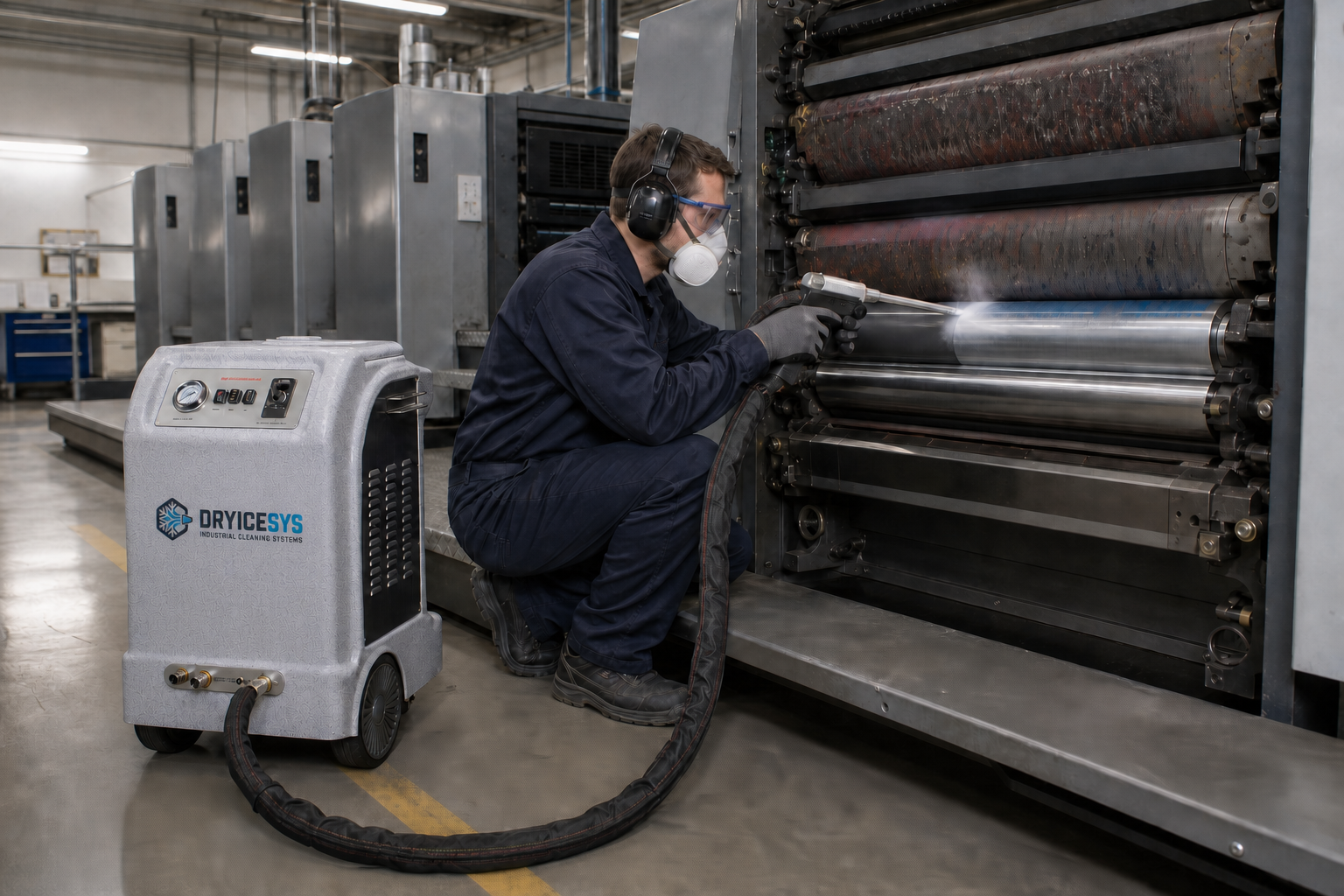
Printing presses and converting lines can accumulate ink, coating, adhesive and paper dust. Nozzle access and controlled settings are important around rollers, bearings, sensors and finished surfaces. A representative trial should confirm that the desired residue is removed without changing roller finish or driving debris into protected areas.
6. Foundry and casting
Foundry equipment presents heavy contamination, heat, dust and difficult geometry. Dry ice cleaning may be evaluated for molds, core boxes, die-casting equipment and maintenance areas. The trial should focus on cleaning rate, access, air demand and management of the dislodged sand, carbon or release residue.
7–9: Metalworking, plastics and pharmaceutical production
7. Metal and machinery manufacturing
CNC machines, fixtures, welding cells and production tooling can accumulate oil, chips, carbon and process residue. Dry ice can reach complex shapes, but loose metal chips and oily debris remain physical waste. Bearings, guideways and sensitive measurement systems may require masking or a controlled cleaning direction.
8. Plastics and packaging
Packaging jaws, rollers, molds and extrusion equipment may carry adhesive, polymer buildup or ink. Temperature sensitivity and surface finish are decisive. Test the actual polymer and tool surface rather than assuming that all plastics respond alike.
9. Pharmaceutical and cosmetics equipment
Dry ice cleaning may be considered for production equipment where water control or disassembly reduction is important. It does not by itself establish a validated cleaning process. Material compatibility, cross-contamination controls, documentation and the facility’s quality system determine whether the method is acceptable.
10–12: Paper, woodworking and public facilities
10. Paper production
Paper machines and converting equipment can accumulate fiber, coating, adhesive and deposits on rollers. Cleaning direction, dust extraction and access around moving components are central to a safe trial.
11. Woodworking equipment
Wood resin, adhesive and compacted dust can build up on presses, cutters and conveying equipment. Dry ice cleaning may reduce added moisture, but combustible dust controls and ignition-risk assessment remain mandatory.
12. Public facilities cleaning
Stone, metal and durable public surfaces may carry chewing gum, soot, coatings or localized contamination. Substrate porosity, historic finishes, noise, pedestrian control and collection of removed material should be evaluated before work begins.
Where screening commonly fails
Dry ice cleaning is not automatically the best choice when the substrate is extremely fragile, the contamination must be dissolved rather than fractured, the work area cannot be ventilated, compressed-air capacity is inadequate or airborne residue cannot be controlled. It may also be uneconomic when a simpler manual or aqueous method already meets the required result safely and quickly.
Build a useful cleaning trial
A supplier can give a better recommendation when the trial brief includes:
- clear photographs of the part and contamination;
- substrate and coating information;
- the current cleaning method and its main problem;
- available compressed-air pressure, flow and connection size;
- target cleaning time and acceptance criterion;
- work-area dimensions and ventilation conditions;
- expected production quantity or cleaning frequency;
- any restrictions on noise, dust, shutdown or residue collection.
Select one representative task, define a measurable result and record the operating conditions. That is the shortest route from a broad industry application to a defensible equipment decision. DryIceSys supports the twelve application groups above and can review a specific task through the project enquiry form.