Buying a private-label dry ice cleaning machine involves more than placing a different logo on the cabinet. A market-ready project can also affect electrical configuration, hoses and nozzles, documentation, packaging, spare parts, validation and after-sales responsibilities.
DryIceSys provides factory-direct OEM and ODM dry ice cleaning machine projects from Wuxi, China. The most efficient projects begin with a written specification and acceptance plan rather than a general request for “customization.”
OEM and ODM: the practical difference
For this type of equipment, OEM normally means manufacturing a buyer-specified or private-label configuration. The core product platform may already exist, while brand presentation and selected specifications are adapted for the buyer.
ODM goes further. The manufacturer contributes design adaptation for a target market, application or distribution model. That may involve a different combination of controls, accessories, electrical requirements, packaging or system integration.
The boundary is not always identical between suppliers. Buyers should therefore define the required deliverables instead of relying on the label alone.
Six workstreams to define before production
1. Target application and performance
Start with the work the machine must perform. State the contaminant, substrate, part geometry, cleaning frequency and required finish. Include the available compressed-air pressure and flow. These inputs determine whether the project needs a portable configuration, a heavier-duty setup, a particular hose length, specialized nozzles or automation support.
Avoid specifying performance with a single cleaning-rate number unless the test conditions are defined. Cleaning time and dry ice consumption vary with the surface, contamination and operating setup.
2. Electrical and control configuration
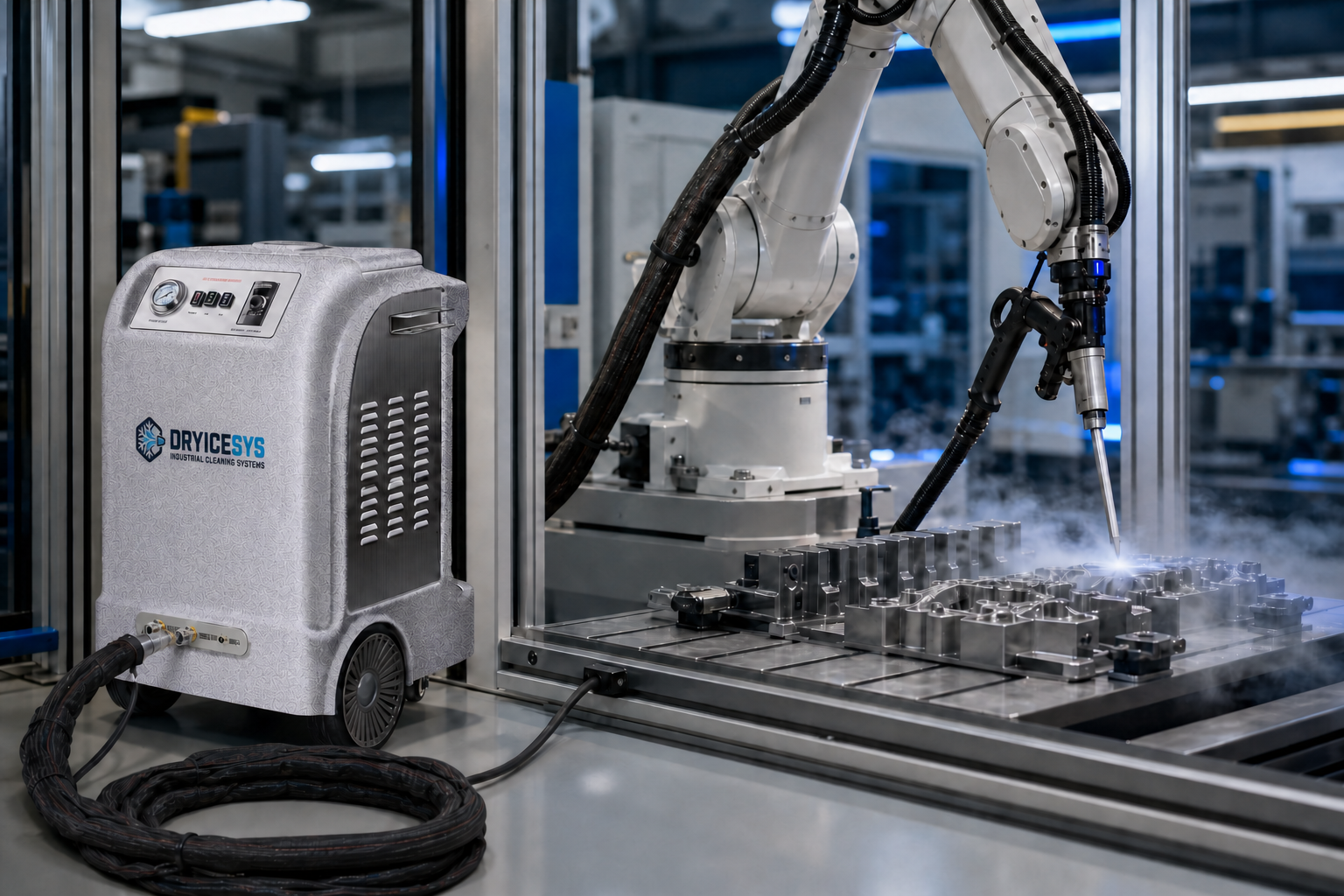
Specify destination voltage, frequency, plug or connector standard, control language and any required interface with other equipment. For automated projects, define signals, interlocks, emergency-stop logic and the boundary between the dry ice system and the customer’s robot or production line.
3. Brand and physical presentation
Provide production-ready logo artwork, color references, model naming and label requirements. Decide which information belongs on the machine, packaging, manual and rating plate. A branding approval sample should be reviewed before the volume run.
Brand placement must not obscure ventilation, controls, warnings, connection labels or service access. The machine still needs to be understandable and maintainable after visual customization.
4. Hoses, guns, nozzles and spare parts
An accessory package should match the target applications rather than maximize the number of parts. Define hose length, blasting gun type, nozzle shapes, compressed-air connection and the expected spare-parts package. Confirm that the lower connection panel, hose couplings and gun assembly match the approved configuration.
5. Documentation and compliance scope
List required manual languages, wiring diagrams, parts lists, maintenance instructions and packaging marks. If a market requires specific conformity work or third-party approval, define the exact standard, responsible party, evidence and acceptance criteria before quotation. Do not assume that a generic certificate covers every customized configuration or destination.
6. Packaging, inspection and delivery
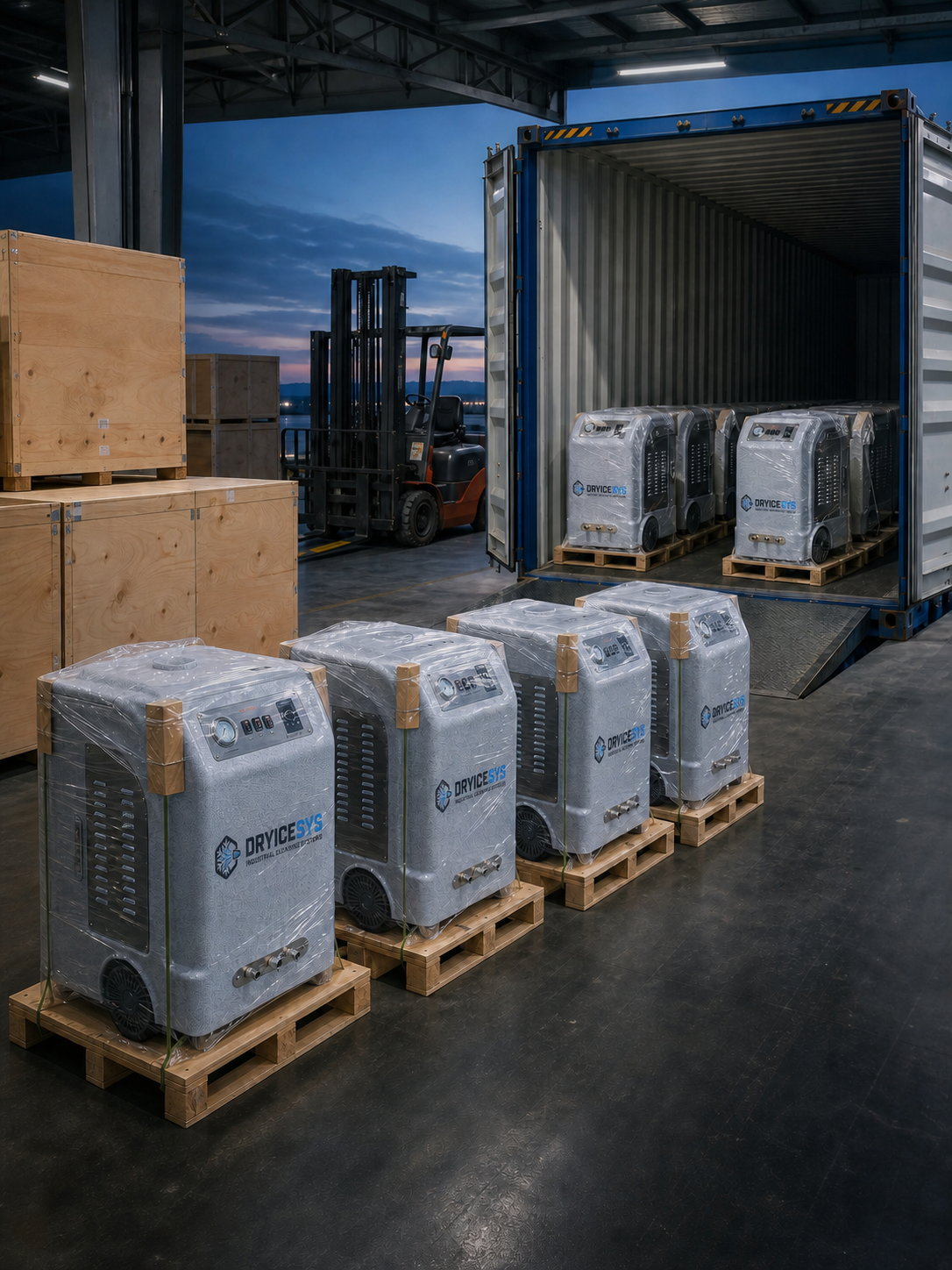
Agree on packing method, pallet or crate requirements, moisture protection, accessory layout, spare-parts identification and shipment marks. The inspection plan should cover appearance, functional testing, electrical configuration, accessory count, documentation and packaging condition.
DryIceSys commercial baseline
The current DryIceSys website states a minimum order quantity of 10 units and a starting price of US$2,000 per unit. Final pricing varies by configuration, accessories, documentation, packaging and order requirements.
That means a reliable quotation needs more than a quantity. A project that changes only branding has a different cost and validation burden from an ODM project involving electrical adaptation, new accessories or automation interfaces.
The starting price should therefore be treated as a commercial entry point, not as a fixed price for every private-label project.
Send a brief that engineering can use
A useful OEM or ODM enquiry should include:
- Buyer profile: distributor, cleaning-service provider, equipment integrator or end user.
- Target market: country, sales territory and customer industries.
- Applications: cleaning target, contaminant, substrate and required result.
- Utilities: available compressed-air pressure and flow, voltage and frequency.
- Product scope: expected quantity, machine platform, accessories and spare parts.
- Customization: logo, colors, labels, control language and documentation.
- Compliance: destination requirements and responsible approval party.
- Packaging and logistics: shipment method, marks, pallet or crate requirements and delivery destination.
- Acceptance: sample approval, functional tests, inspection records and defect-handling process.
The safest sequence is specification, engineering review, commercial confirmation, sample or pilot approval, and then volume production. It prevents a visual branding decision from hiding a technical mismatch.
DryIceSys reviews OEM and ODM requests through the project enquiry form. Include the destination country, market coverage, target applications, expected quantity and compressed-air conditions so the first response can address both commercial and engineering scope.