
Dry ice blasting is usually the better first candidate when added water, drainage or drying would create a problem. Pressure washing is usually the better first candidate when the asset tolerates water and the cleaning plan already provides a controlled route for wash water. Neither method is universally better. The correct choice starts with the required clean-and-dry release condition for each part of the asset.
That last phrase matters: each part. A machine can have a washable frame, moisture-sensitive bearings, open cavities, electrical enclosures and a coated guard in the same work area. Selecting one method for the entire asset can turn a simple cleaning decision into a water-ingress, surface-damage or incomplete-cleaning problem.
Choose the Release Condition, Not the Machine
Write the acceptance statement before requesting a demonstration. It should answer five questions:
- What must be removed: loose soil, oil, grease, adhesive, soot, coating or corrosion product?
- What must remain: base material, dimensions, retained coating, labels, seals or lubricant?
- Which zones may get wet, and which cavities, bearings, connectors or materials must stay dry?
- Where will removed contamination and any process water go?
- What inspection, dryness or surface condition releases the asset back to service?
OSHA’s surface-preparation guidance begins from the material being removed, the evaluated space and surface, and a hazard assessment. That is a stronger selection model than asking which machine cleans “better.”
Compare What Reaches and Leaves the Surface
Dry ice blasting
A dry ice cleaning machine accelerates solid carbon-dioxide particles with compressed air. Impact, localized cooling and sublimation help break the bond between contamination and the surface. The dry ice becomes gas, so it does not remain as spent blast medium. Removed oil, paint, soil or debris does remain and needs collection or containment.
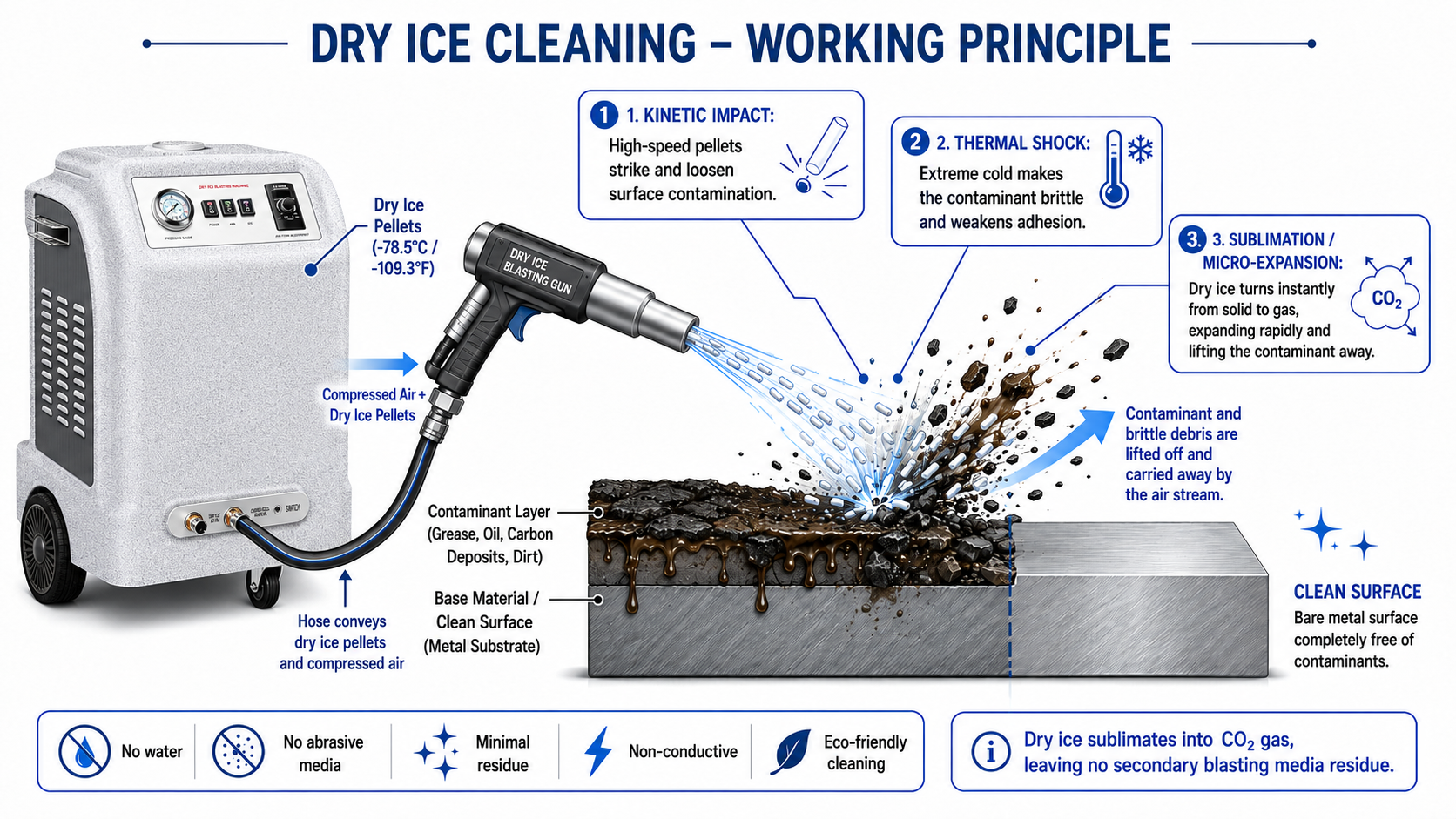
The water-free process boundary is valuable where added moisture would extend drying, enter inaccessible spaces or conflict with the release condition. It does not establish that the setup is harmless to every substrate. Nozzle, air delivery, media condition, distance, angle and dwell still need validation.
Pressure washing
Pressure washing delivers water at velocity and may combine it with heat or cleaning chemistry. It can rinse broad, water-tolerant surfaces and carry loosened material away from the point of impact. That transport function can be useful when drainage, collection and drying are designed into the job.
It also expands the process boundary. The plan must include water supply, overspray, shielding, drains, capture, discharge and the time required to reach the specified dry condition. If chemistry is used, concentration, compatibility and rinse acceptance become additional variables.
Use Zones Instead of a Universal Winner
| Asset condition | Better first candidate | Required verification |
|---|---|---|
| Open, washable surface with controlled drainage | Pressure washing | Confirm runoff capture, surface tolerance and drying time |
| Cavities or interfaces where retained moisture is unacceptable | Dry ice blasting | Confirm debris can be collected and the surface remains within tolerance |
| Heavy loose soil that can be rinsed to an approved collection point | Pressure washing | Confirm the water does not drive contamination into adjacent zones |
| Localized residue around complex geometry | Dry ice blasting | Confirm nozzle access, air demand and containment of dislodged debris |
| Coating-preparation job with a specified final surface | Trial both only if each can meet the specification | Measure cleanliness, soluble contamination or profile as required |
| Mixed asset with wet and dry zones | Zoned or sequenced process | Define isolation and release criteria for every zone |
AMPP’s surface-preparation scope includes high- and ultrahigh-pressure waterjetting, testing for nonvisible contaminants and evaluating surface profile. Visual cleanliness alone may therefore be an incomplete release criterion for coating work.
A Practitioner Test Produced Two Winners
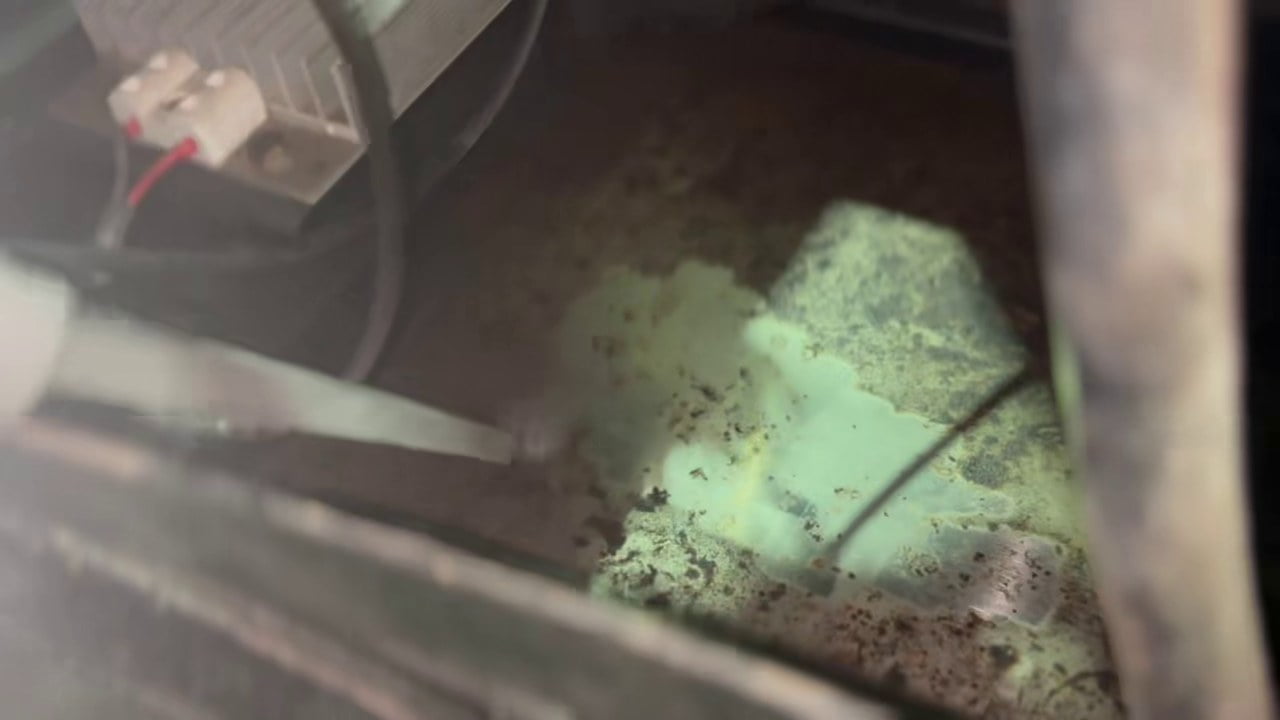
A useful counterexample comes from AMMO NYC’s Porsche comparison. In that test, the dry ice setup performed better on suspension components, while the pressure-wash method performed better on a sensitive undertray. The author explicitly described the comparison as not scientifically measurable.
The value of the example is not its timing or cost. Those figures belong to one setup. The useful result is structural: the preferred method changed when the component and acceptance boundary changed. A facility should expect the same possibility across guards, frames, molds, conveyors and enclosures.
Compare the Complete Cleaning System
Machine price and nozzle-on time are incomplete comparisons. Record the full boundary for each candidate:
- equipment, utilities, hose routing and setup;
- dry ice supply and storage, or water, heat and chemistry;
- masking, isolation, containment and collection;
- debris or wastewater handling;
- inspection, drying and return-to-service time;
- rejected work, re-cleaning and surface repair.
A water-free blast medium can reduce one waste stream, but it does not make contamination disappear. The EPA’s industrial stormwater guidance notes that runoff contacting equipment maintenance and cleaning activities can pick up pollutants. The exact capture, treatment and discharge route is site-specific and must be checked with the facility’s environmental requirements.
Do not compare a supplier’s dry-ice cleaning time with a pressure-wash cycle unless both include the same preparation, collection, drying and inspection boundary. Compare accepted output, not tool runtime.
Keep the Safety Cases Separate
Dry ice blasting controls
Dry ice is solid carbon dioxide. NIOSH’s carbon-dioxide guidance identifies inhalation, asphyxia and frostbite hazards. The work plan must address ventilation, exposure assessment, insulated handling, noise, compressed-air energy, flying debris and hazards in the removed material. “Non-conductive media” is not authorization for energized work; the equipment owner controls isolation and return to service.
Pressure washing controls
High-pressure water can cause severe fluid-injection injuries. The WaterJet Technology Association safety section treats current procedures, training, equipment care and medical-alert information as core controls. The plan should define operator competence, hose and coupling inspection, nozzle control, an exclusion zone, PPE and an emergency response.
Water also changes the target-equipment hazard case. Isolate energy, protect incompatible components and do not assume a sealed appearance proves water ingress is acceptable. Site wastewater and stormwater requirements remain separate from operator protection.
Run One Trial Against One Release Standard
Use a representative asset with normal contamination. Divide it into zones before testing. For each candidate, record the machine, utility conditions, nozzle, pressure and flow at the operating point, media or chemistry, standoff, angle, dwell, masking, containment and collection method.
Then apply the same gates:
- Did the process meet the defined cleanliness endpoint?
- Did retained coatings, dimensions, seals and sensitive components remain acceptable?
- Did moisture-sensitive zones stay within the specified condition?
- Were debris, wash water and carbon dioxide controlled by the approved work plan?
- Did inspection and drying support the planned return-to-service time?
Stop if cleaning is not progressing, the surface changes beyond tolerance, water enters a prohibited zone, drainage or containment fails, or exposure controls cannot hold the approved condition. A change in nozzle, pressure, chemistry, media or zone boundary creates a new setup and requires review.
The Decision Rule
Choose pressure washing to test broad, water-tolerant surfaces when drainage, capture and drying are already controlled. Choose dry ice blasting to test zones where added water is the limiting constraint and dislodged contamination can still be contained. If one asset contains both conditions, specify a zoned or sequenced process instead of forcing one machine to win everywhere.
The purchase decision should follow an accepted surface, a recorded setup and a complete process boundary—not a universal comparison claim.
Sources
- OSHA: Ship Repair Surface Preparation
- AMPP: Standards Committee—SC 05 Surface Preparation
- EPA: Stormwater Discharges from Industrial Activities
- NIOSH: Carbon Dioxide
- WaterJet Technology Association: Safety Section
- Cold Jet: Dry Ice Blasting Solutions
- AMMO NYC: Dry Ice Blasting Vs Pressure Wash Detailing on Porsche 930 Turbo