

A stopped loom, carding line, or textile finishing machine may have two very different cleaning problems: loose fiber fly that should be collected and a bonded residue that may need a controlled removal method. For textile machinery, use controlled dry ice blasting only for a defined adherent residue after the machine is isolated and loose fiber has been captured; assess cotton-dust exposure, carbon dioxide, and debris migration before a representative test patch. Treat the result on one component as evidence for that component, not a blanket approval for a complete line.
This guide is for maintenance planning on industrial textile equipment. It does not replace the machinery manufacturer’s instructions, the mill’s dust-control program, or local safety requirements. A dry ice blaster can be one tool in the cleaning sequence; it is not a reason to blow accumulated lint around the room.
Separate loose fiber from bonded soil
First identify what is actually on the machine. Fiber fly and loose lint may collect around guides, guards, rollers, bearings, and frame pockets. Other deposits can include wax, oil, sizing, adhesive, latex, dye, or polymer buildup. The materials differ in how they adhere and in what cleaning endpoint matters. A vacuum and suitable hand tools may remove loose fiber without adding high-velocity air. A bonded residue on a robust, accessible metal part may justify a small blasting trial.
Cold Jet’s textile application page lists carding machines, looms, reeds, rollers, tenter frames, and finishing equipment as dry ice cleaning candidates. That establishes real application interest, but its case examples do not prove a universal cleaning time or zero surface wear. A wire-wrapped roller, precision reed, coated guide, and removable steel plate need different acceptance tests.
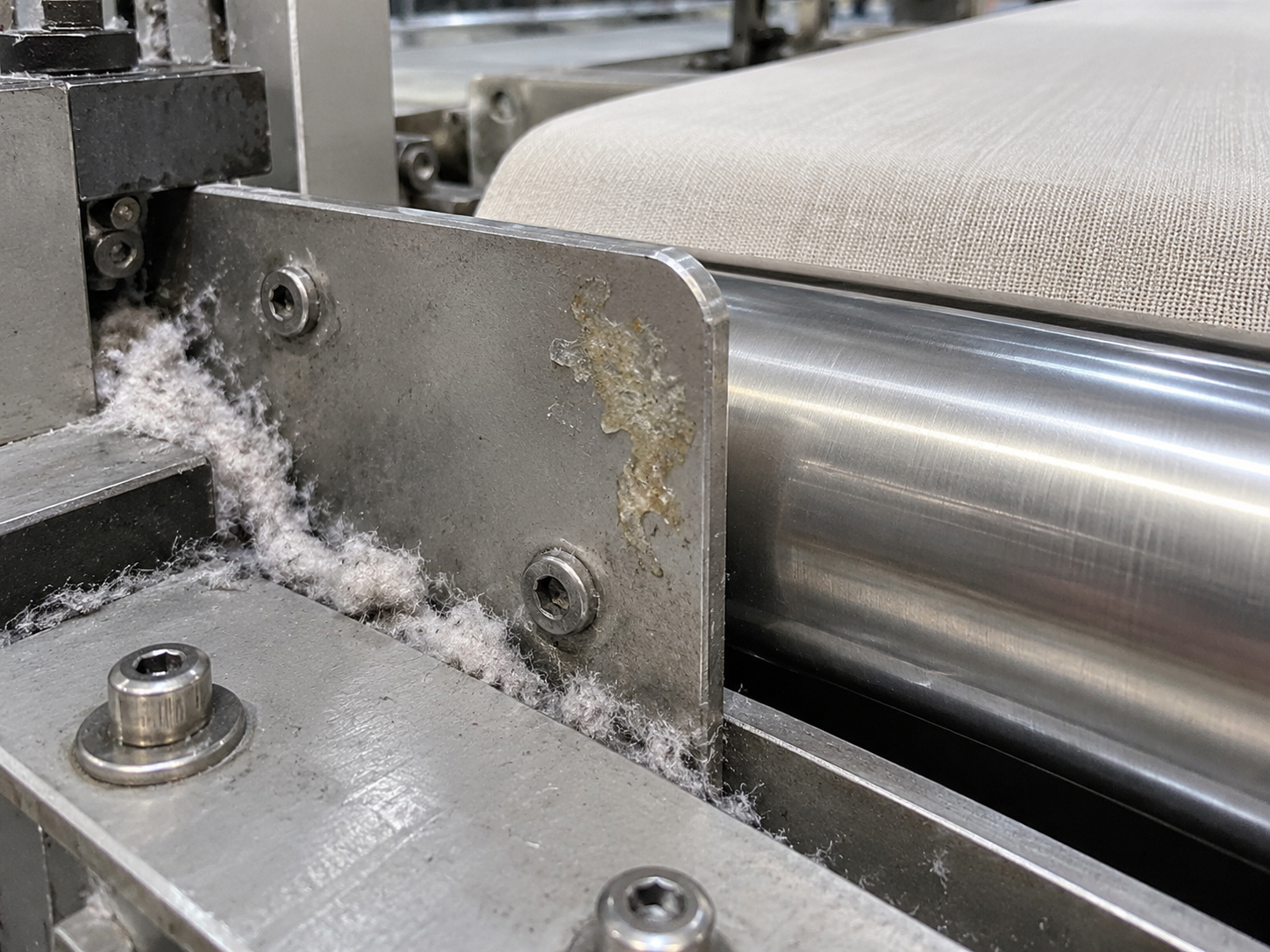
Record the substrate, coating, deposit, and nearby exclusions before any test. Mark labels, seals, sensors, lubricated bearings, open ports, and delicate textile-contact surfaces. If a deposit’s composition is unknown, identify it before selecting an exposure control or waste route. Our site-readiness checklist gives the general work-area gates; the textile-specific decision starts with the type of fiber and soil.
Why dust controls come before a blast trial
Dry ice pellets sublimate after impact, but the dislodged fiber and soil remain. A high-velocity jet can make fine material airborne or drive it deeper into a machine. This is especially important in cotton processing. The NIOSH pocket guide for raw cotton dust identifies respiratory effects associated with exposure. The exact dust and legal requirements depend on the fiber, process, and jurisdiction.
For covered US textile operations, OSHA’s cotton-dust standard requires a written work-practice program to minimize exposure. It restricts compressed-air blow-down where alternatives are feasible, requires suitable respirators for specified blow-down or blow-off work, and prohibits cleaning clothing or floors with compressed air. A dry ice blaster also uses compressed air, so a mill should have its EHS lead review whether and how the proposed task fits that standard before proceeding. Do not assume a tool marketed for textile use creates an exemption.
The practical sequence is to collect loose material with the mill’s approved vacuum or other low-dispersal method, isolate the target, then trial the smallest area needed for adherent residue. Position capture or barriers so removed material cannot settle on adjacent fabric, enter ventilation ducts, or return to a bearing. If the amount of lint is large or the collection route is uncertain, stop and improve containment instead of increasing nozzle pressure.
Isolate the machine and define a safe work window
Textile machinery contains moving belts, rollers, drives, pneumatic actuators, and sometimes hot finishing sections. A stopped display or emergency-stop button is not the same as verified energy isolation. Where cleaning could expose workers to unexpected startup or stored energy, the OSHA hazardous-energy standard includes cleaning within servicing and maintenance. Use the equipment-specific procedure and verify isolation before opening guards or entering a nip-point area. Rules outside the United States may differ, but the physical hazard remains.
Do not import a vendor’s “clean while running” or “at operating temperature” example into another mill. The exposure, access, product-contamination, and fire or thermal risks must be assessed for the specific asset. Schedule a maintenance window that allows inspection, collection, cleaning, and a controlled restart. If a part can be removed and cleaned on a bench, that may make masking and inspection easier than working inside the line.
The dry ice system requires a verified compressed-air supply and suitable pellets. Check the selected DryIceSys cleaning machine against the available air, electrical supply, nozzle, and media. Our air-requirements guide explains why compressor capacity must be checked at the machine under actual flow, not inferred from a nameplate. Keep the blast hose away from moving equipment and production fabric.
Run a small, documented test patch
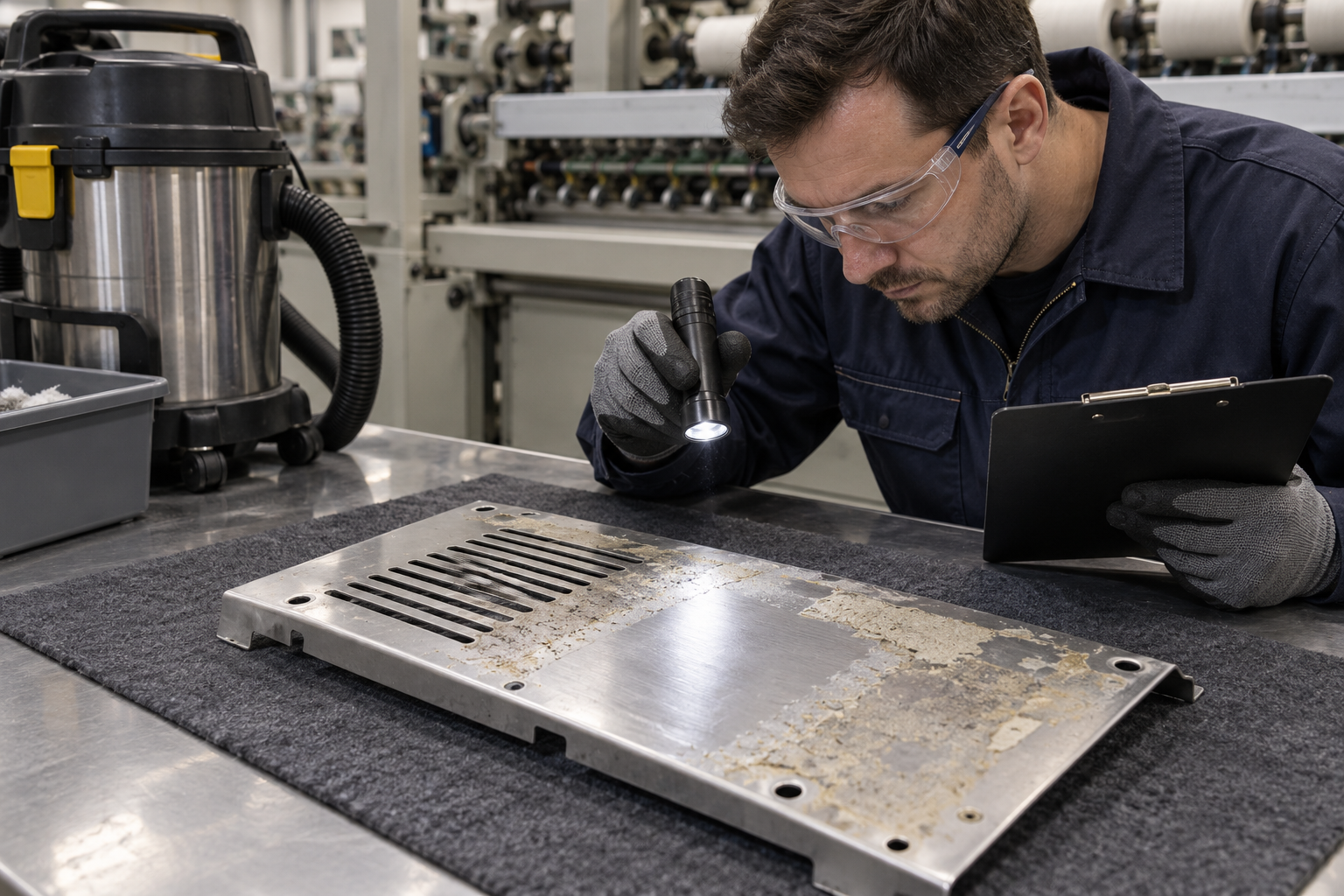
Select a representative surface with the exact deposit the crew intends to remove. A removable metal guard plate with adhesive is a different test from a delicate roller or card clothing. Photograph the starting condition and the protected parts. Record nozzle, pellet type, air setting, distance, angle, dwell time, and collection setup. The DryIceSys nozzle guide helps frame access and coverage choices, but only the trial establishes suitability for this part.
Begin conservatively and stop to inspect after a short pass. Look for coating lift, marking loss, roughness, corrosion exposure, seal disturbance, and movement of fiber into areas that were previously clean. Inspect the back side of any perforated guard or roller assembly, not just the face in the operator’s view. If residue remains, change one parameter at a time within the equipment instructions; if the part starts to change, stop rather than chasing a perfectly bright surface.
Use a release criterion that operations can verify: the defined residue is gone, the component remains within its finish and dimensional tolerance, no fiber has migrated to protected locations, and the work area has been collected. If the plant needs a cleanliness standard for a product-contact part, apply that separate standard after cleaning. Dry ice blasting is not, by itself, a sanitation or sterilization claim.
Control carbon dioxide and the removed material
The pellets become carbon-dioxide gas. The NIOSH carbon-dioxide reference lists exposure limits and symptoms of overexposure. Evaluate ventilation, low points, enclosures, and adjacent occupied areas; use monitoring where the site assessment calls for it. An absence of visible fog does not show that the atmosphere is safe. Handling dry ice also calls for cold-protective measures. The DryIceSys machine safety guide covers general operator controls that must be adapted to the mill.
Collect the dislodged lint, coating fragments, oil, adhesive, or dye residue. If the material is combustible, contaminated, or otherwise regulated, use the facility’s waste and dust-control procedures. Do not sweep or blow material into floor drains or other production zones. Before restoring power, verify that guards, sensors, and tools are in their correct state and that the work area is clear.
A decision table for a textile maintenance planner
| Condition | Sensible first action | Dry ice trial decision |
|---|---|---|
| Loose lint on an accessible frame | Collect with the approved low-dispersal method | Usually unnecessary unless bonded soil remains |
| Adhesive or resin on a robust removable plate | Identify deposit and protect adjacent parts | Trial on the plate with containment and inspection |
| Precision roller or wire-wrapped surface | Ask the OEM for material and finish limits | Trial only if acceptance criteria detect subtle damage |
| Cotton dust where blow-down rules apply | Follow the mill’s written exposure-control program | EHS review before any compressed-air blasting task |
| Unknown deposit near sensors or bearings | Identify material and map migration paths | Pause until masking and collection are defined |
| Enclosed or poorly ventilated work zone | Assess CO2 and ventilation | Pause if exposure cannot be controlled |
The table is a triage aid, not a machine setting. The answer can change with fiber type, deposit, substrate, machine geometry, and local law.
Frequently asked questions
Can dry ice blasting replace vacuuming textile lint?
It should not be assumed to. Loose lint is often better collected with an approved low-dispersal method before any high-velocity trial. Blasting may move fine material into the air or deeper into machinery. Assess the actual work practice against the mill’s dust-control requirements.
Is dry ice safe for precision textile rollers?
No process is universally safe for every roller. Check the OEM’s surface and coating limits and run a small test that can detect marking, roughness, or wire damage. A successful result on a steel guard does not qualify a roller.
Does sublimation mean there is no cleanup?
No. The dry ice medium disappears as gas, but the removed fiber, adhesive, oil, and other soil remain. Plan capture and disposal before work starts.
Can the line be cleaned while operating?
Do not assume so. A supplier may describe a specific online application, but access to moving parts, unexpected startup, fabric contamination, and the mill’s energy-control procedure determine whether a particular task may proceed. This guide assumes an isolated, stationary trial.
Sources and scope
The textile equipment examples come from Cold Jet’s application page. Dust and work-practice discussion uses the OSHA cotton-dust standard and NIOSH raw-cotton-dust reference; their exact scope should be checked for the facility. Isolation and carbon-dioxide guidance comes from OSHA’s hazardous-energy standard and NIOSH’s CO2 reference. The proposed test patch determines suitability for the actual deposit and component.