
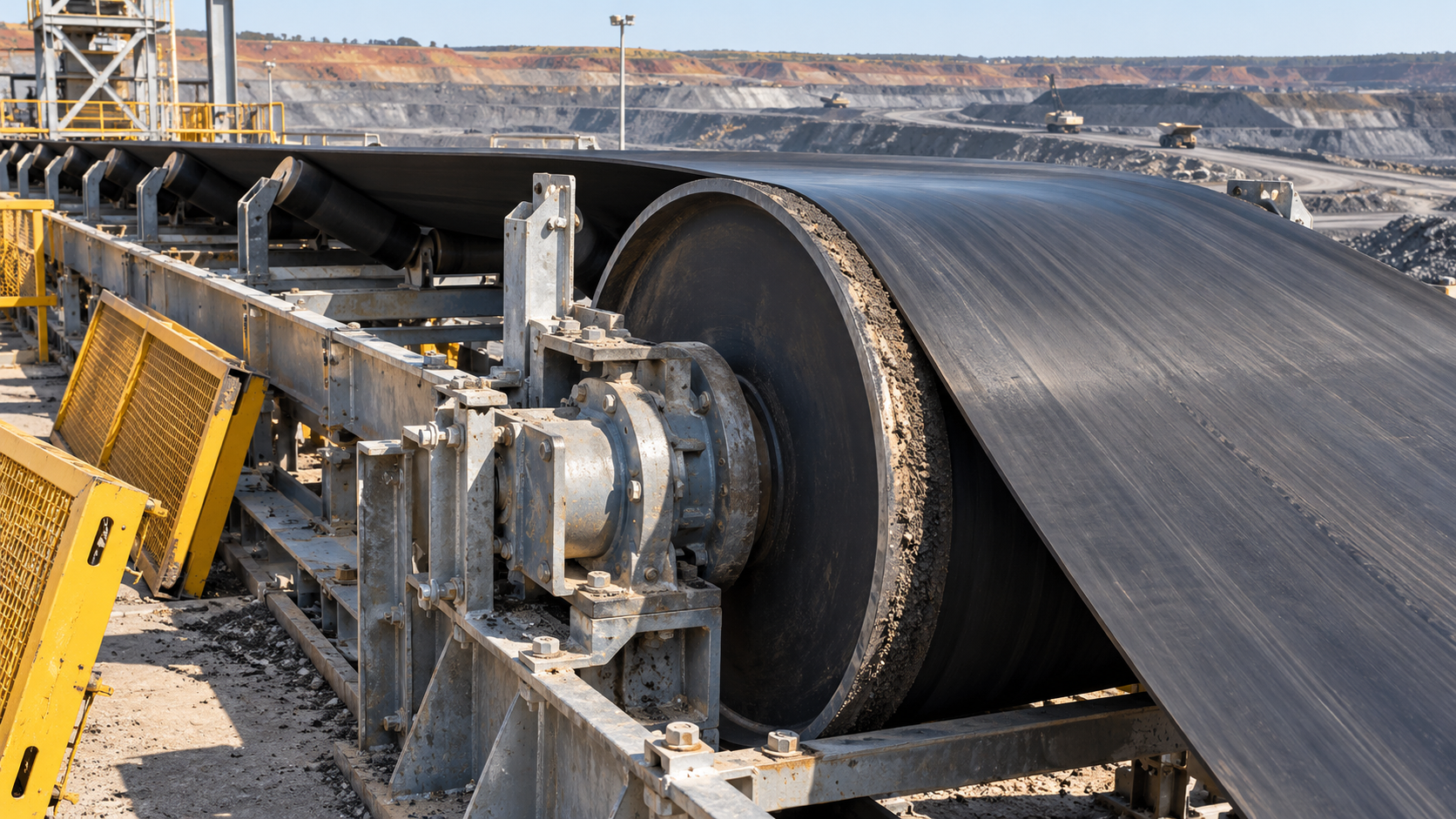
Conveyor Pulley Cleaning Before Inspection: Queensland Trial
Can a Queensland mine trial dry ice cleaning on a conveyor pulley before an inspection?
For a Queensland mine conveyor, trial dry ice cleaning on an identified, stationary pulley surface only after the mine has isolated and verified every relevant energy source, controlled belt tension and counterweight movement, and authorized access. Define the deposit, protect bearings and lagging, capture dislodged material, and inspect a small test area. Cleaning alone does not certify the pulley, belt, lagging or guarding for return to service.
This is a planning guide for a site-approved shutdown, not a live-belt cleaning procedure or a customer case study. The images are conceptual illustrations. A mine’s own isolation, inspection and restart procedures take priority.
Why does isolation come before selecting a nozzle?
The attraction of cleaning a pulley is visibility: adhered fines, oil or carryback can hide the condition of a metal shell, lagging edge or fastener. But the belt, drive and take-up system create hazards independent of the deposit. Resources Safety & Health Queensland’s conveyor isolation alert describes a case in which a local isolator was locked in the ON position and no effective test of isolation was made. Treat a lock or tag as one step in the mine’s verified isolation process, not as proof that the pulley cannot move.
The same regulator’s stored-energy bulletin specifically lists conveyor counterweights and calls for stored energy to be released or contained and then proven so. Before anyone accesses the pulley, the authorized team should account for electrical drive, belt tension, gravity, take-up movement and adjacent equipment. Define who controls any removed guard and how it will be restored. WorkSafe Queensland’s conveyor incident alert reinforces the need to isolate plant before maintenance or cleaning and to manage nip points and guarding.
What should a small cleaning trial establish?
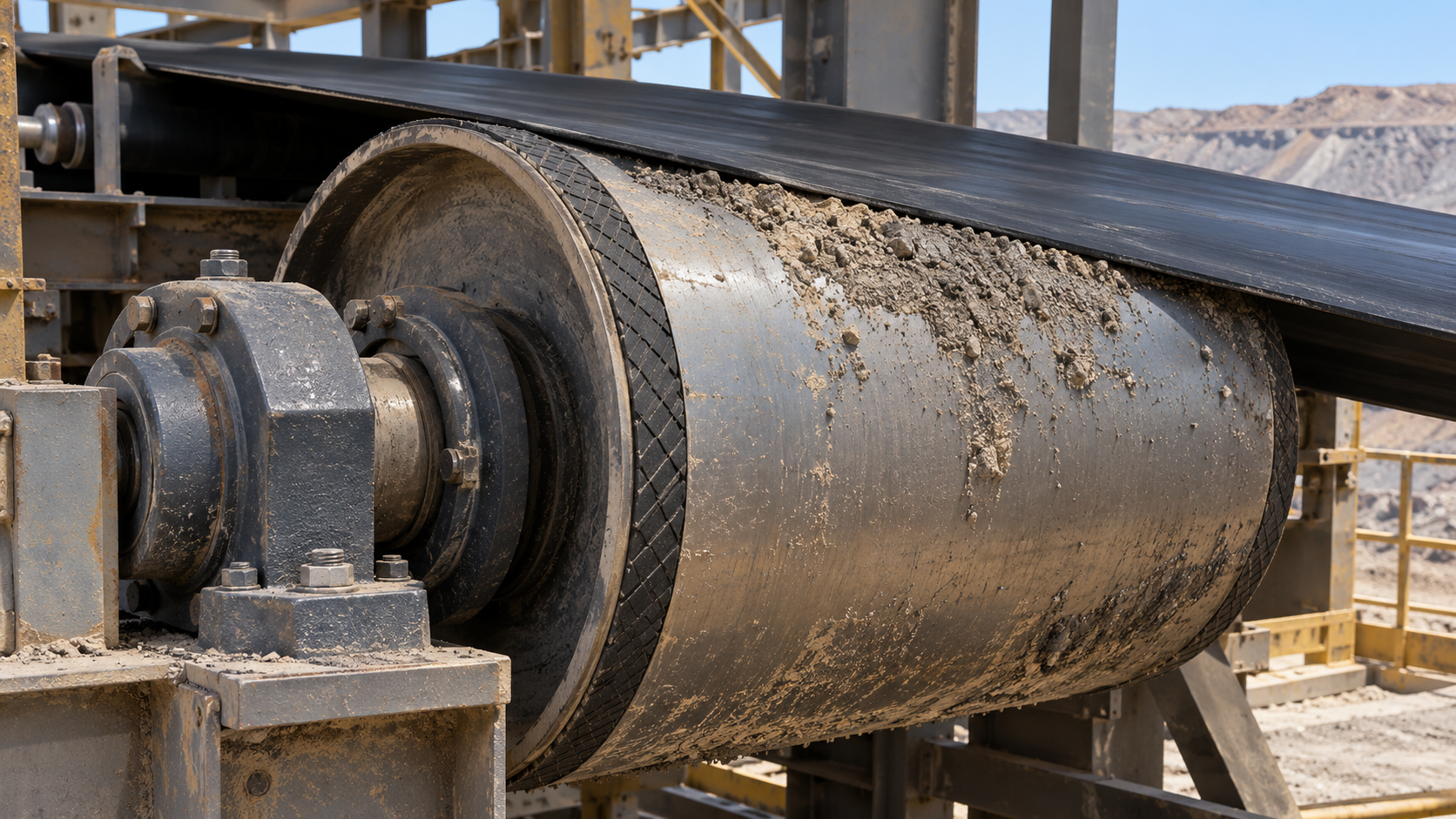
Mark a limited area on the accessible, stationary pulley shell. Record whether the deposit is mineral fines, rubber transfer, grease or another material; identify the shell coating, lagging material, adhesive bond and any sensor or bearing housing nearby. Photograph the as-found condition before removal. Mask or exclude bearings, seals, labels, sensors and vulnerable lagging edges. A test on metal shell is not automatically suitable for rubber lagging or adhesive, so seek the pulley manufacturer’s limits and the mine’s maintenance authority before extending the scope.
The trial record should include the nozzle, pressure, standoff, angle, dwell time, pellet supply, compressed-air quality and observation of coating or lagging changes. Stop for delamination, exposed reinforcement, changed surface texture or uncontrolled debris. Capture released solids and liquids under the site’s waste plan. Dry ice does not make those contaminants disappear. Assess CO2 accumulation, ventilation, noise and projectile risks for the actual work position, especially around a recessed conveyor structure. The WorkSafe Queensland abrasive blasting code lists carbon-dioxide dry ice blasting among alternative removal methods while stressing that other risks still require assessment; it is general guidance, not a blanket approval for a particular mine or pulley.
Who decides whether the conveyor can restart?
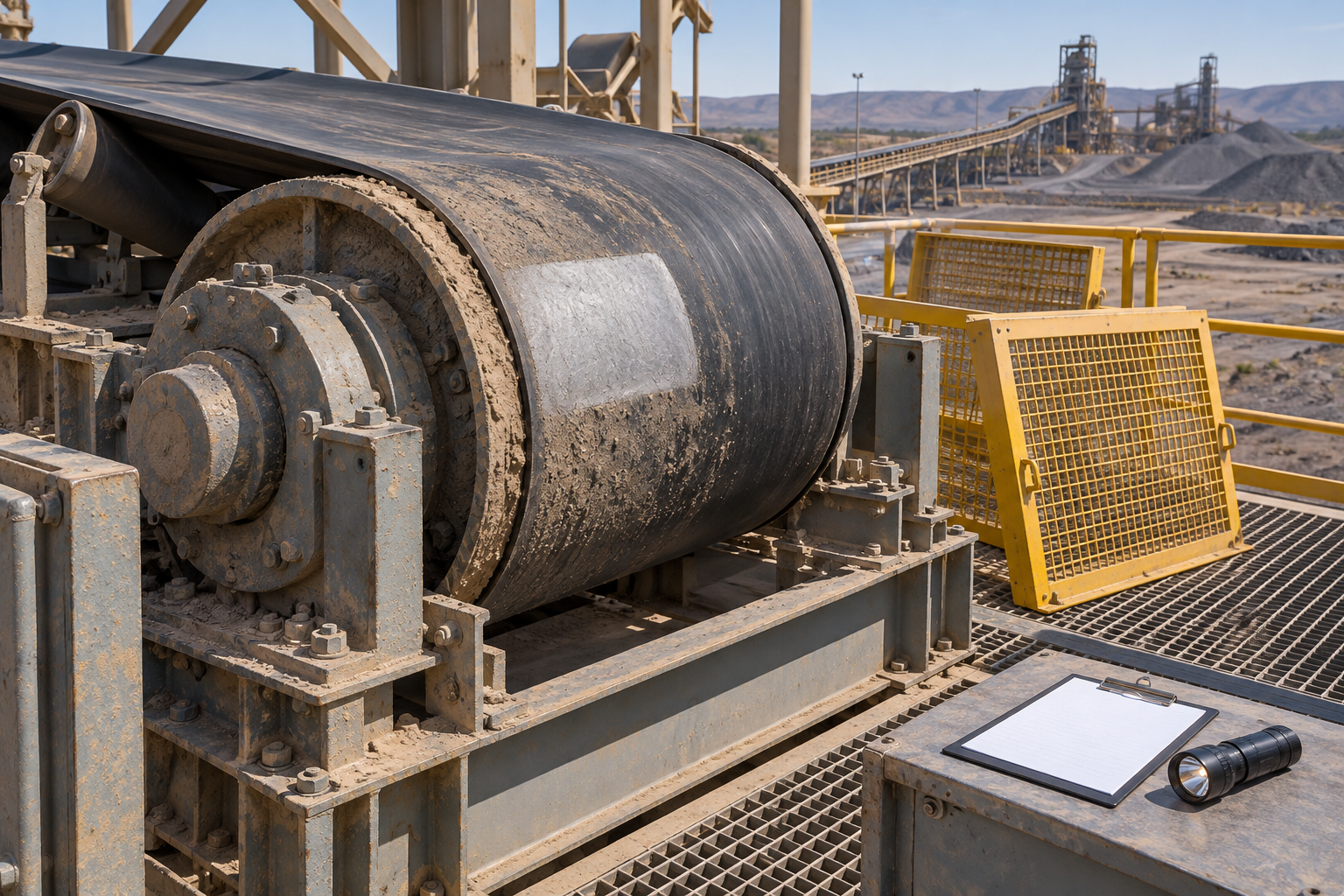
After the test, the designated inspector should compare the cleaned area with the mine’s pulley criteria: shell damage, lagging bond and wear, fasteners, bearings, alignment and belt condition as relevant. A cleaning result is only an input to that inspection. Document any coating repair or follow-up work, remove masking and collected debris, account for tools, reinstall and check guards, then follow the site’s controlled handover and restart process. Do not describe a visually cleaner pulley as a passed mechanical inspection.
For a supplier trial, send photographs of the deposit and the pulley assembly, shell and lagging materials, protected features, access and ventilation constraints, available air supply and the inspection question the mine needs answered. DryIceSys’s air-requirements guide, site-readiness checklist and machine range can help frame the equipment discussion after the site’s safety and inspection scope are set.