
Construction Steel Supply: Cleaning and Receiving Checks
Cleaning can support construction-steel receiving inspection by exposing an agreed examination area while preserving product identity and specified finishes. It cannot prove material grade, restore missing traceability or replace required product documentation, dimensional checks and project acceptance. Any dry ice trial should therefore follow the receiving plan and the supplier-approved surface requirements.
A reliable building-material supply chain delivers more than an attractive surface. The customer needs the specified product, the correct quantity, useful documentation and material that can move into fabrication or installation without avoidable uncertainty. Cleaning is one supporting activity within that process.
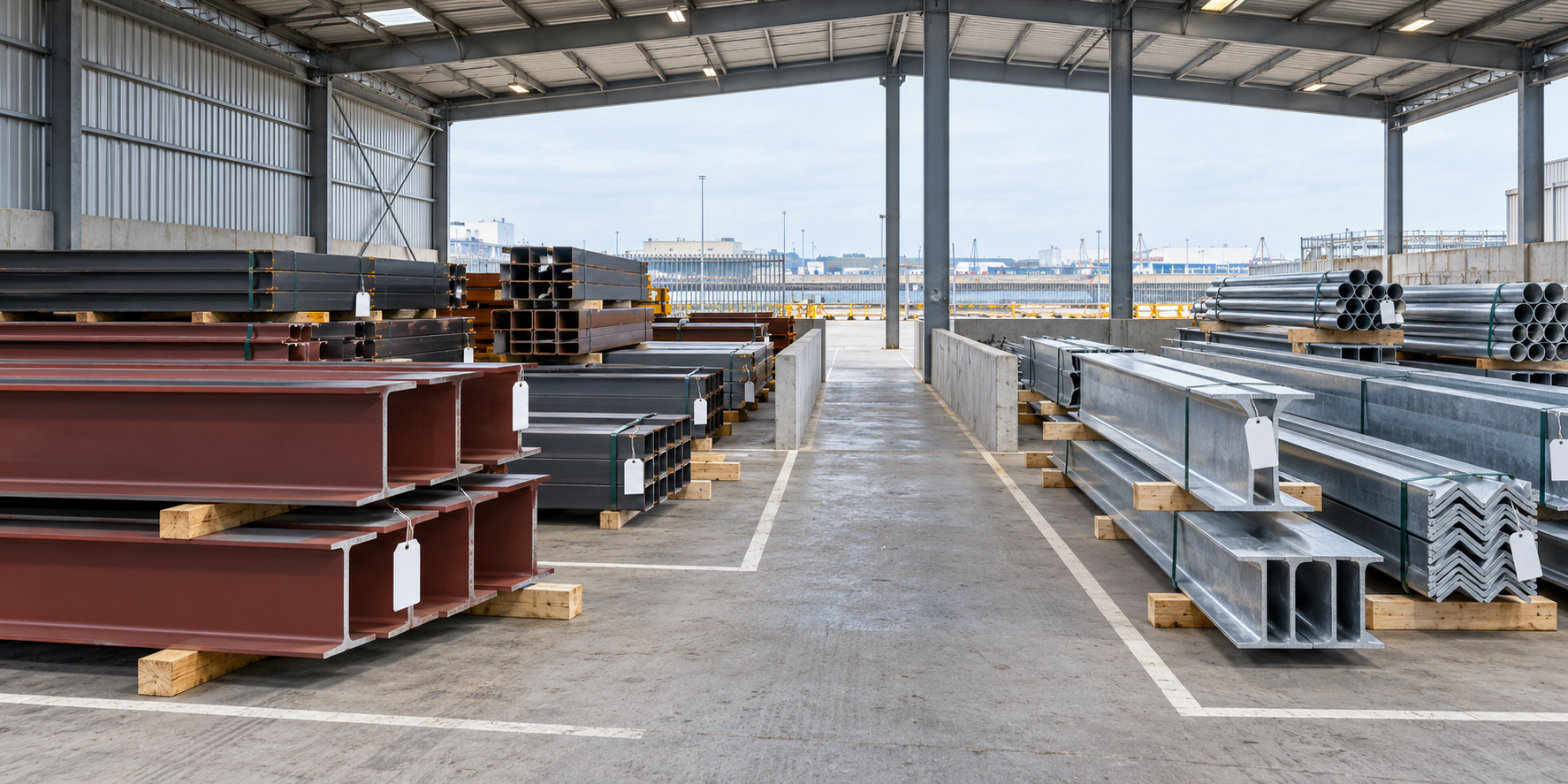
This guide uses steel components received in Great Britain as a concrete example. It does not claim that one inspection plan covers cement, aggregates, timber, insulation and every other traded construction product. Each material needs its own specification and acceptance route.
Turn “premium quality” into a receiving specification
Before placing the order, connect each product description to its intended use. Define grade or product designation, dimensions, finish, quantity, delivery sequence and required records. Identify who can approve substitutions and what happens if a delivery arrives with incomplete documentation.
For products within its scope, the UK government’s construction-products guidance explains the Great Britain regulatory framework. The applicable documentation depends on the product and its route to market. Do not treat a general supplier certificate or an attractive cleaning result as a substitute for checking the requirements of the actual item.
For relevant government procurement, PPN 022 on procuring steel provides a separate public-sector reference. It should be reviewed for contracts within its scope, rather than presented as a universal rule for private material trading.
Match the delivery to its records before cleaning
Establish a receiving area where accepted, held and rejected stock remain identifiable. Check the purchase order, delivery note and product markings together. Photograph labels and identification before any activity that could obscure them. Preserve the link between the physical item, its batch or heat identification where applicable, and the supporting records.
Record damage or contamination as received. Examples to assess include displaced packing, damaged protective coatings, visible corrosion, oily contamination and evidence of poor storage. Describe the location and extent rather than assigning an unverified cause. A supplier needs a traceable discrepancy report, not a photograph of an unidentified cleaned beam.
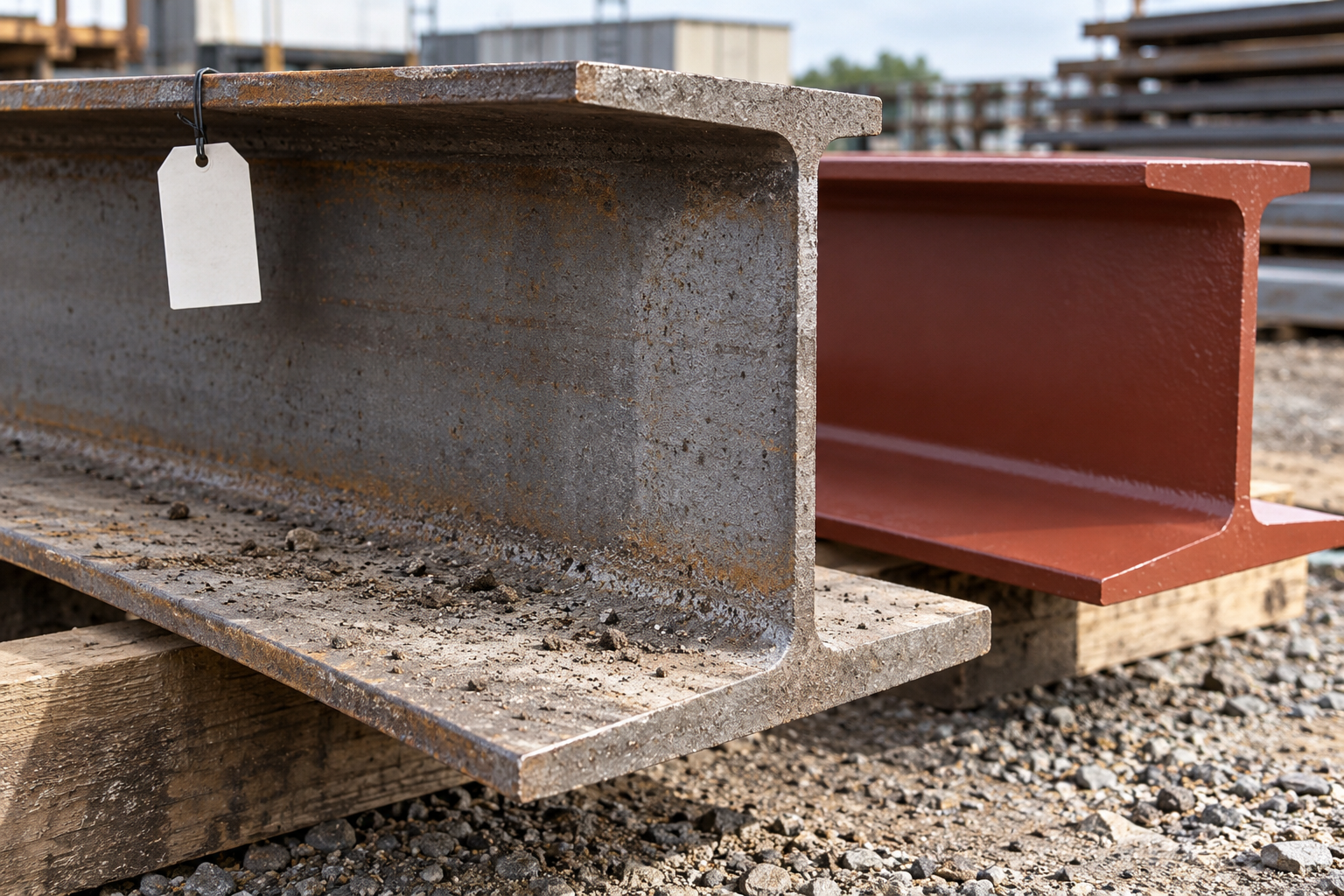
If identification is missing, put the item on hold under the receiving procedure. Cleaning an unidentifiable surface does not recreate its origin. Any proposed re-identification or additional testing belongs with the responsible quality and engineering personnel.
When might a dry ice cleaning trial help?
An agreed local trial may be useful when removable external contamination prevents examination of an otherwise identified component. The first questions concern the substrate, existing coating or preservation system, contamination and next operation. Obtain the required permission before removing a protective film or exposing an inspection area.
Keep this scope distinct from rust removal and coating preparation. TWI’s surface-preparation overview distinguishes cleaning and degreasing from roughening and other treatments. A surface that looks cleaner has not automatically acquired the profile or cleanliness required for painting, joining or another production process.
Use an approved sample or small area. Record the settings and compare the result with an untreated reference. Inspect for coating changes, damage to identification and residual contamination. Stop if the process compromises the specified finish or cannot achieve the agreed examination condition. Do not extend a successful bare-steel trial to galvanized, painted or otherwise protected stock without a separate assessment.
Keep material acceptance separate from cleaning acceptance
The cleaning record should answer a narrow question: did the approved process prepare the defined area without an unacceptable change? The material receiving record must answer a broader one: does this delivery meet the purchase and project requirements?
A useful receiving checklist covers:
- Product identity and its connection to supporting records.
- Quantity, dimensions and visible condition against the order.
- Specified coating, preservation and packaging condition.
- Required examinations or tests and their acceptance criteria.
- Open discrepancies, hold status and the authorized release decision.
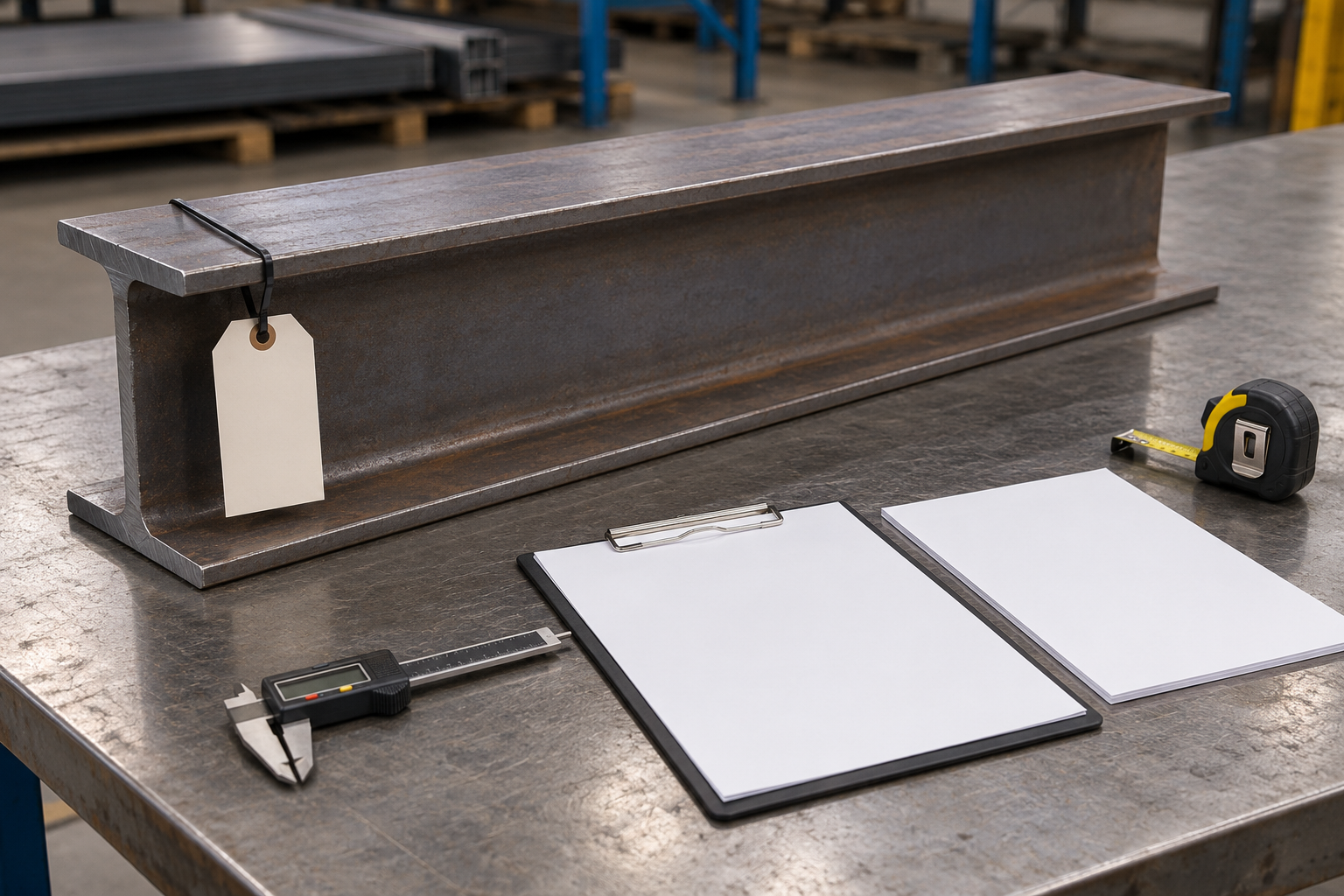
Where a measurement or test is required, name the method and responsible party. Avoid vague statements such as “tested quality” without a report, item reference and defined result. Cleaning personnel should not sign a material-conformity declaration solely because they prepared the surface.
Include handling and preservation in the supply package
After inspection, restore protection where required by the approved procedure. Arrange storage and packing so the accepted surface condition is maintained until the next operation. If transport damage or contamination recurs, review the handling process rather than repeatedly treating the symptom.
For a dry ice trial, confirm access, residue collection and the air supply before committing to a delivery schedule. The DryIceSys site-readiness checklist and air-requirements guide help structure that preparation. Review the equipment safety guide with the site’s own work controls.
An effective supplier inquiry includes the steel specification, finish, contamination photographs, receiving criteria and intended next operation. This makes it possible to discuss an appropriate cleaning trial while keeping the customer’s main objective in view: documented, usable material delivered in the required condition.
Images are AI-generated editorial illustrations, not customer-site photographs or evidence of a completed inspection or cleaning result. The pictured steel pieces are separate examples, not a before-and-after comparison.