
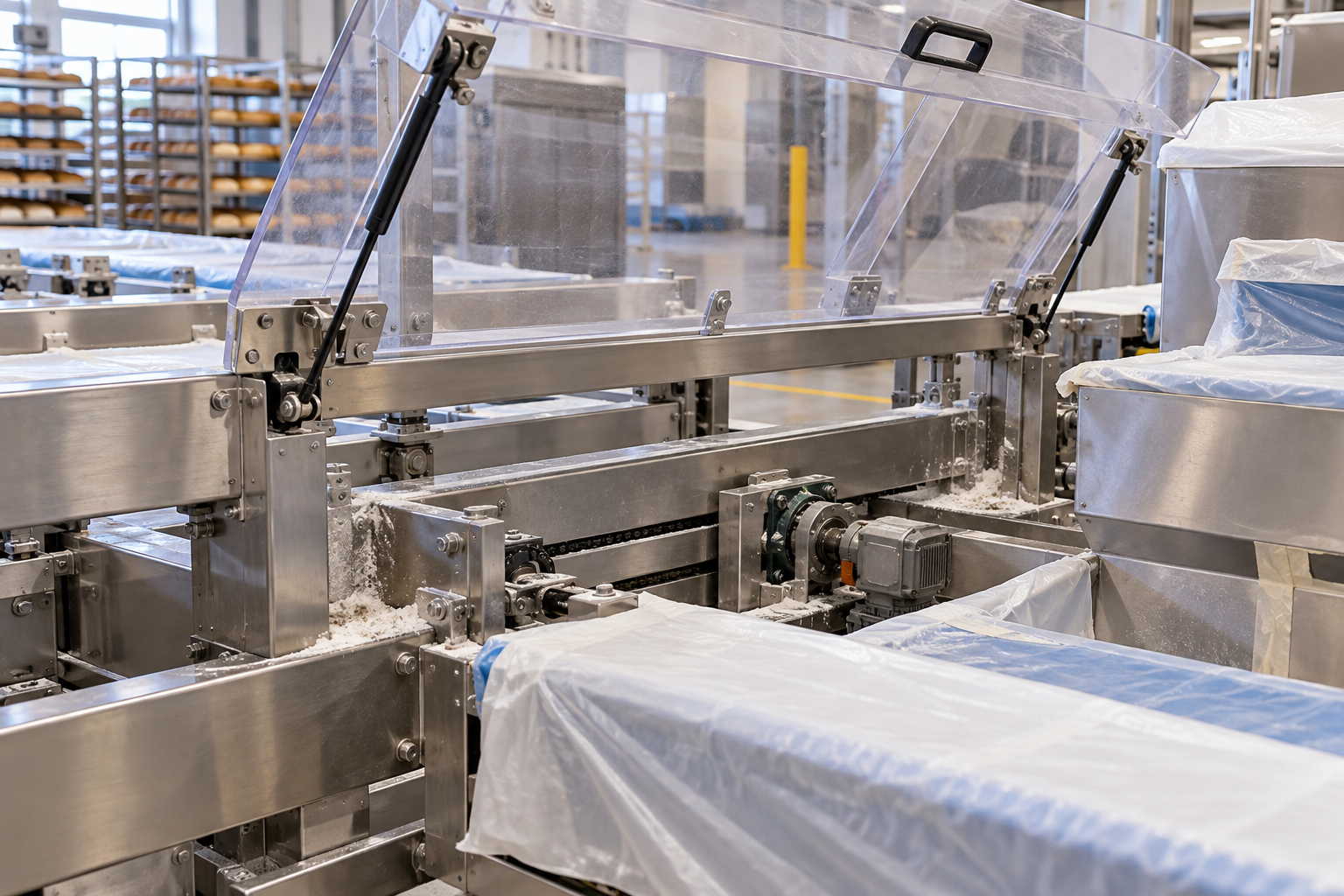
Canadian Bakery Packaging Guards: A Dry Ice Trial Boundary
Can a Canadian bakery use dry ice blasting on packaging-line guards during an allergen changeover?
A Canadian bakery may evaluate dry ice blasting for accessible non-food-contact guards or frames during a controlled stop, but it must keep that maintenance step separate from its validated allergen-cleaning and sanitation program. Approval depends on isolating the line, protecting food and contact surfaces, capturing dislodged residue, and verifying the changeover under the bakery’s preventive controls.
This is an equipment-selection framework, not a claim that dry ice blasting removes allergens to a validated level. The proposed target is the outside of a guard or frame; the product-contact belt, sealing jaws, and food-contact tooling remain under the bakery’s approved cleaning procedure. The Canadian Food Inspection Agency (CFIA) guidance on cleaning and sanitation programs distinguishes cleaning from sanitizing and calls for procedures that fit the equipment, soil and operation.
Which surfaces belong in the trial?
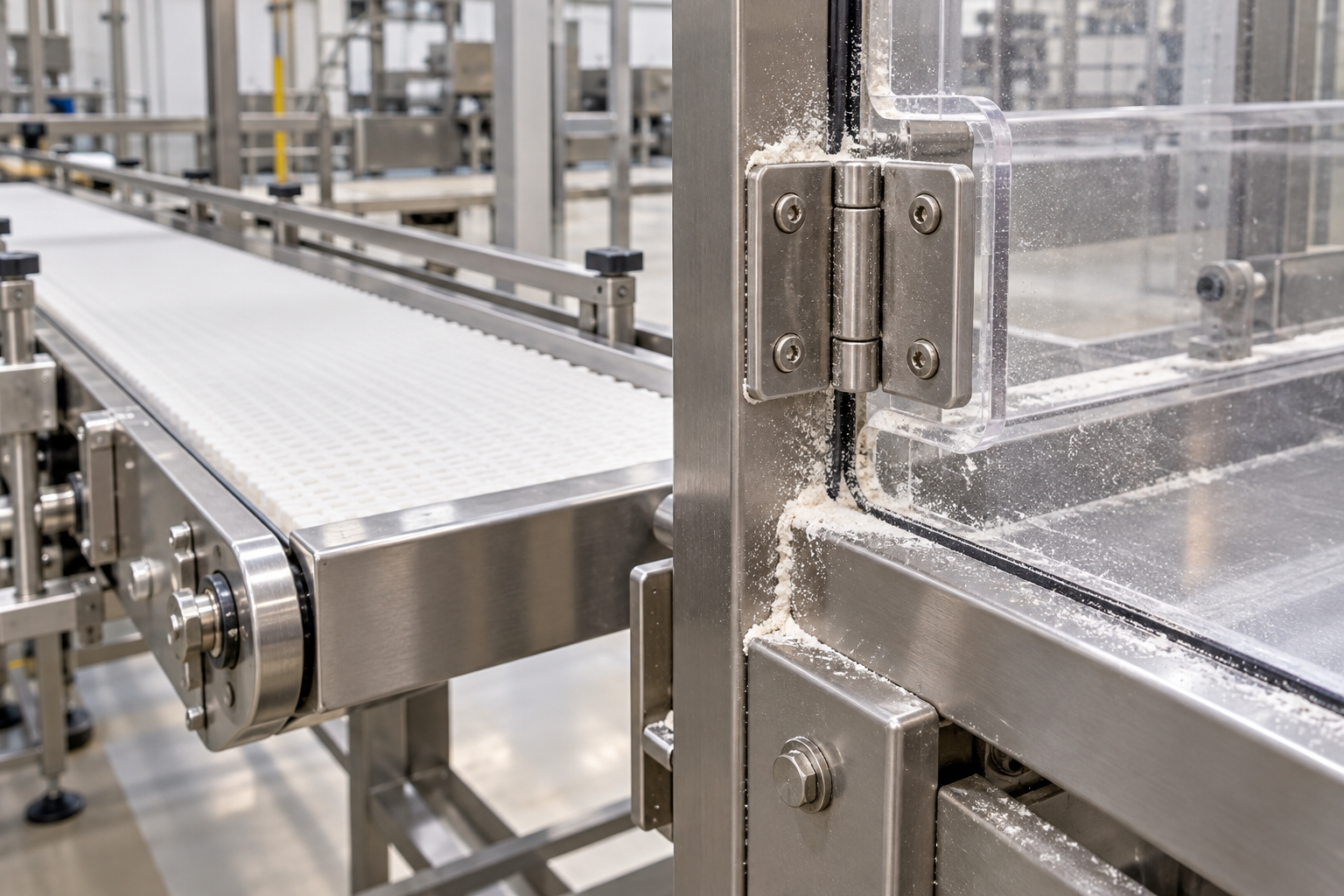
Start with a marked drawing or photographs of one empty, stopped packaging station. Identify the removable or accessible outer guards, hinge brackets and support frame. Mark the product path, belt, sealing zone, open packaging and any sensitive electrical or optical components as excluded. A visible dust deposit at a guard hinge may be a practical trial target; a food-contact sealing jaw is a different decision with a different evidence burden.
The CFIA preventive-control requirements require cleaning and sanitizing activities to avoid contamination of food, packaging materials and food-contact surfaces. Shielding and residue capture should therefore be defined before a trial, with the downstream path empty and closed off. The team should document where dislodged flour or crumb goes; dry ice pellets may sublimate, but displaced soil does not disappear.
How does an allergen changeover alter the decision?
Treat the guard-cleaning trial as a maintenance operation within the changeover, never as proof of allergen clearance. The CFIA allergen-control guidance discusses cross-contact prevention and validation of cleaning methods. A bakery moving between recipes must use its own hazard analysis, defined sampling locations and acceptance criteria for the relevant allergens. Visual inspection of a blasted guard cannot replace that validation.
A useful sequence is: stop and isolate the line; remove exposed product and packaging; cover the food-contact path; perform the small non-contact trial; collect loosened residue; inspect the guard and adjacent areas; then conduct the bakery’s established food-safety cleaning, sanitation where required, and changeover verification. The work order should identify who releases the line and what happens if residue is found behind the guard.
What should the buyer test before choosing equipment?
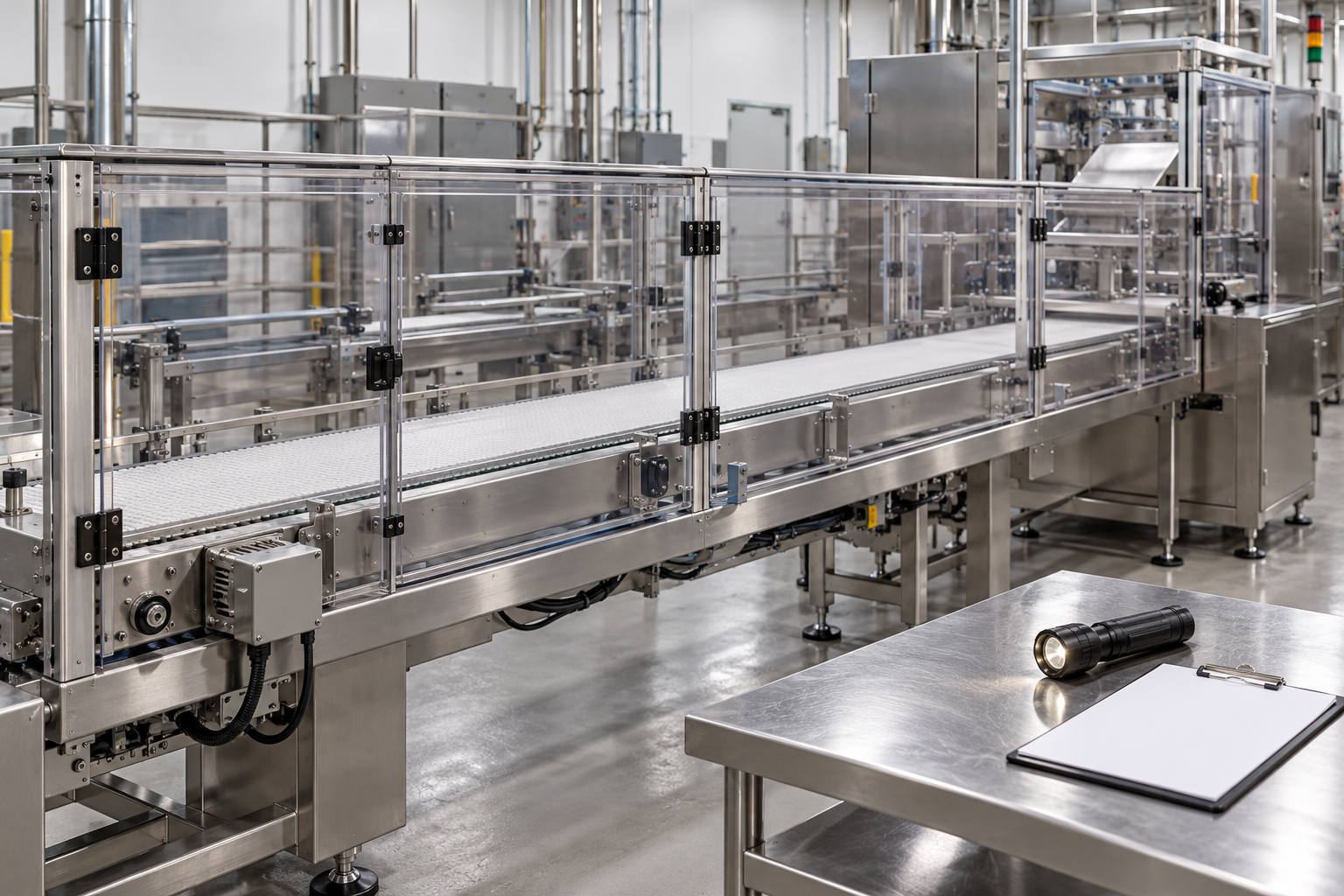
Use a representative guard material and soil deposit. Record access angle, treatment time, compressed-air demand, pellet supply, noise, shielding and residue collection. Check for scratches, crazing or deformation on clear guards and coated parts. Do not assume one setting fits polycarbonate, stainless steel and painted frame surfaces. For supply planning, compare the proposed setup with the DryIceSys air-requirements guide and record the actual compressor capacity available at the line.
The maintenance team should control hazardous energy under its site procedure. The Canadian Centre for Occupational Health and Safety lockout guidance explains isolation and control of energy during servicing. Review ventilation and carbon-dioxide accumulation, especially around recessed packaging stations; the DryIceSys machine-safety overview is a planning aid, not a substitute for the local risk assessment.
What counts as a successful trial?
A defensible acceptance record separates three outcomes: the non-contact guard is free of the target deposit without material damage; the adjacent product path has no migrated residue; and the bakery’s existing allergen and sanitation checks independently pass. Record failures as carefully as successes. A procurement decision should also include site readiness, recurring access time and a realistic residue-capture method. This makes the equipment trial answer a specific maintenance question while preserving the bakery’s food-safety controls.
Images are AI-generated editorial illustrations, not photographs of a customer facility or evidence of a validated cleaning result.