
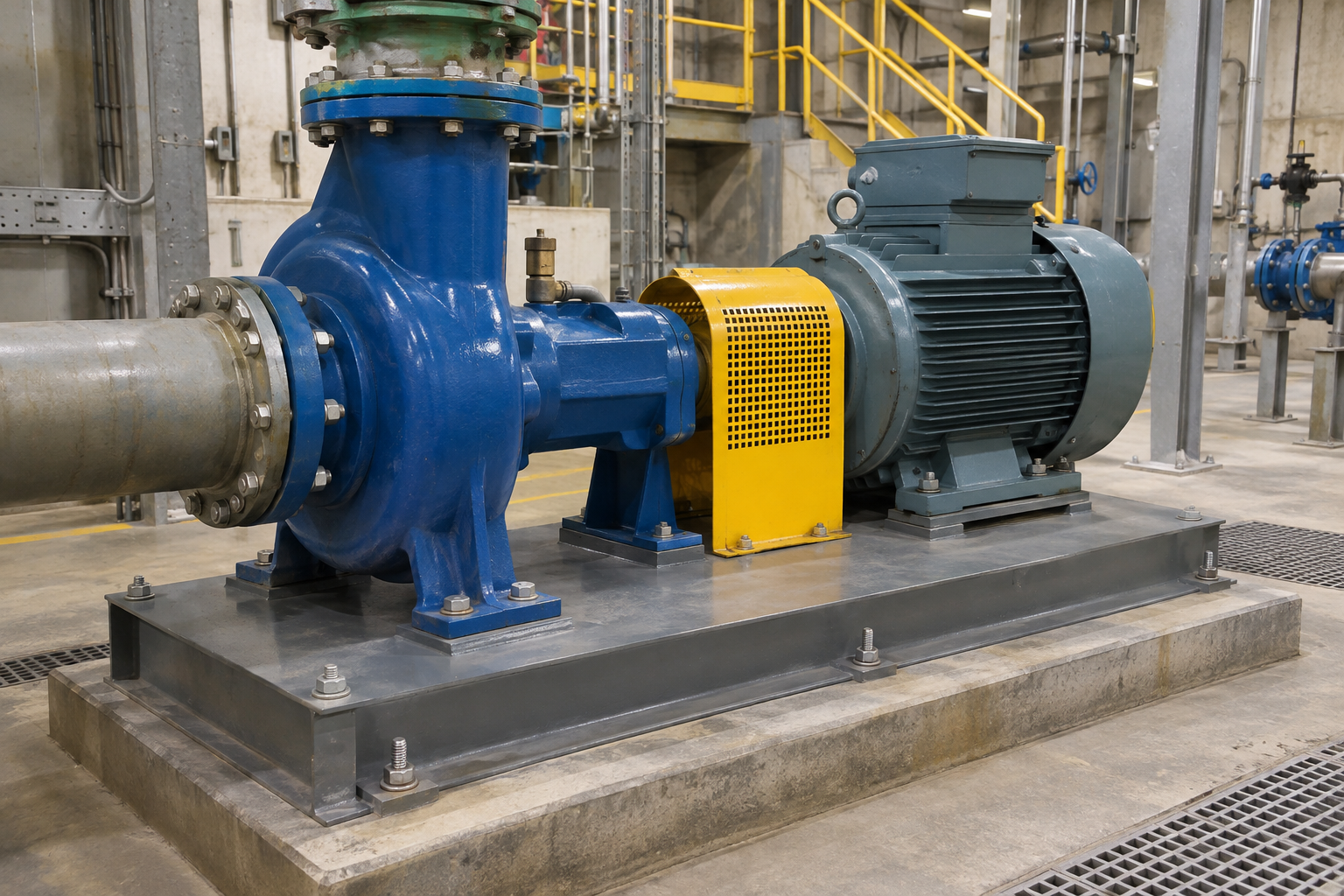
Australian Pump Baseplate Cleaning Before Inspection
Can an Australian water utility trial dry ice cleaning on a pump baseplate before an anchor-bolt inspection?
An Australian water utility can consider a small, controlled dry ice cleaning trial on accessible, coated metal of an isolated pump baseplate before an anchor-bolt and grout-edge inspection. First identify the deposit and coating, confirm the pump is drained and secured under the site’s procedure, protect bearings, seals and instruments, and assess ventilation and displaced debris. The cleaned patch can improve visual access for a separate competent inspection; it cannot establish bolt tension, grout integrity or fitness to restart.
This is a planning guide, not a customer case or a claim of cleaning performance. The illustrations are conceptual. The proposed scope is the accessible upper and side metal of one stationary pump baseplate in an Australian water utility plant. It excludes grout, exposed bolt threads requiring preserved condition, seals, electrical equipment and any surface the pump or coating maker prohibits cleaning by this method.
What must the inspection team see?
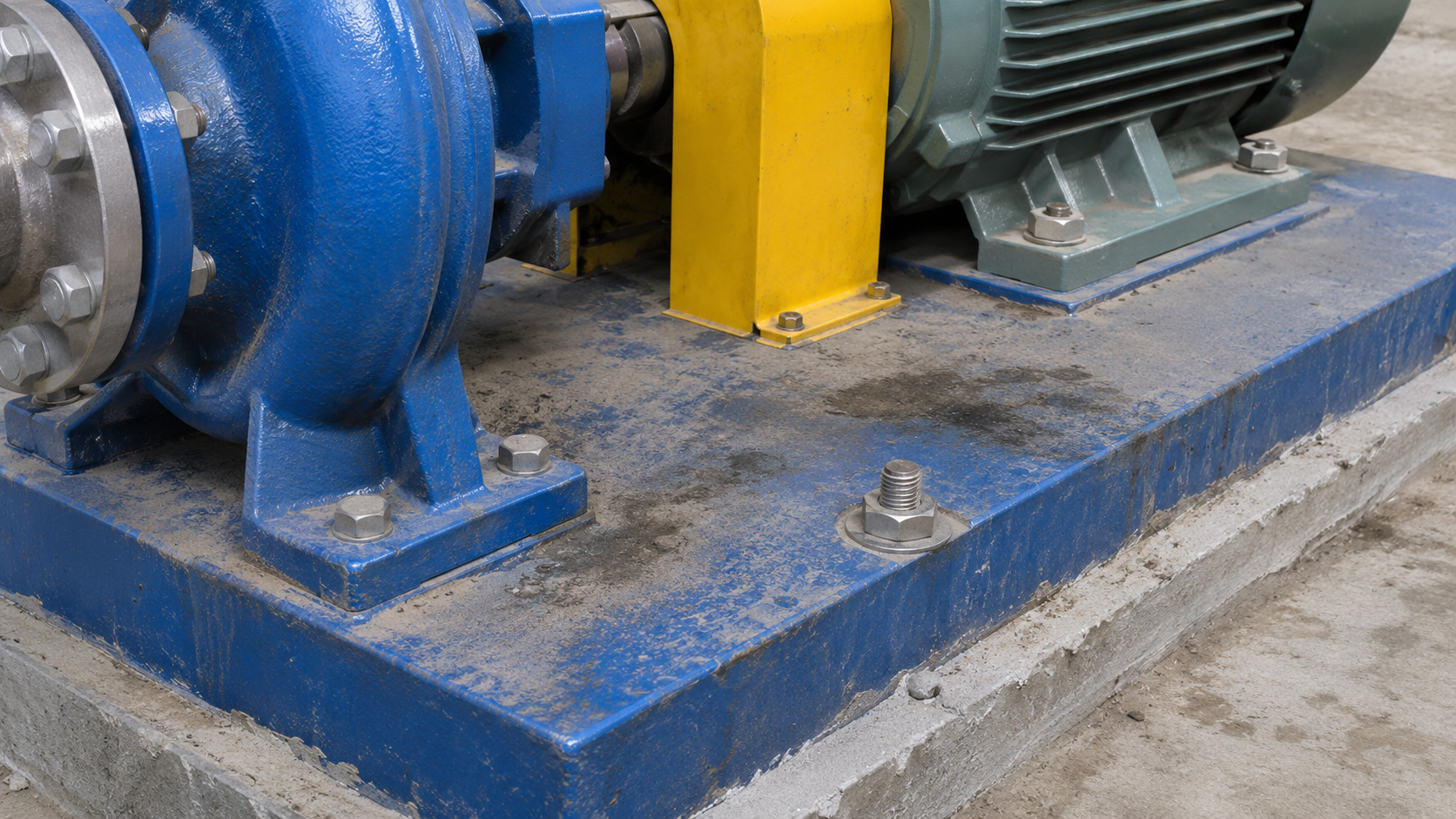
An anchor-bolt inspection may need a clear view of washers, nuts, corrosion, cracked coating and the visible boundary between baseplate and grout. Identify the exact surfaces before ordering a cleaning trial. Photograph the present condition, mark the inspection points, and record the suspected soil: dust, grease, process residue or loose paint may call for different controls. Do not blast away evidence the inspector needs to assess.
Safe Work Australia’s model code for managing plant risks addresses isolation before maintenance and cleaning, manufacturer specifications and restart coordination. It is national model guidance; the utility must apply the law, approved code and site procedures in its own state or territory.
How should a limited trial be controlled?
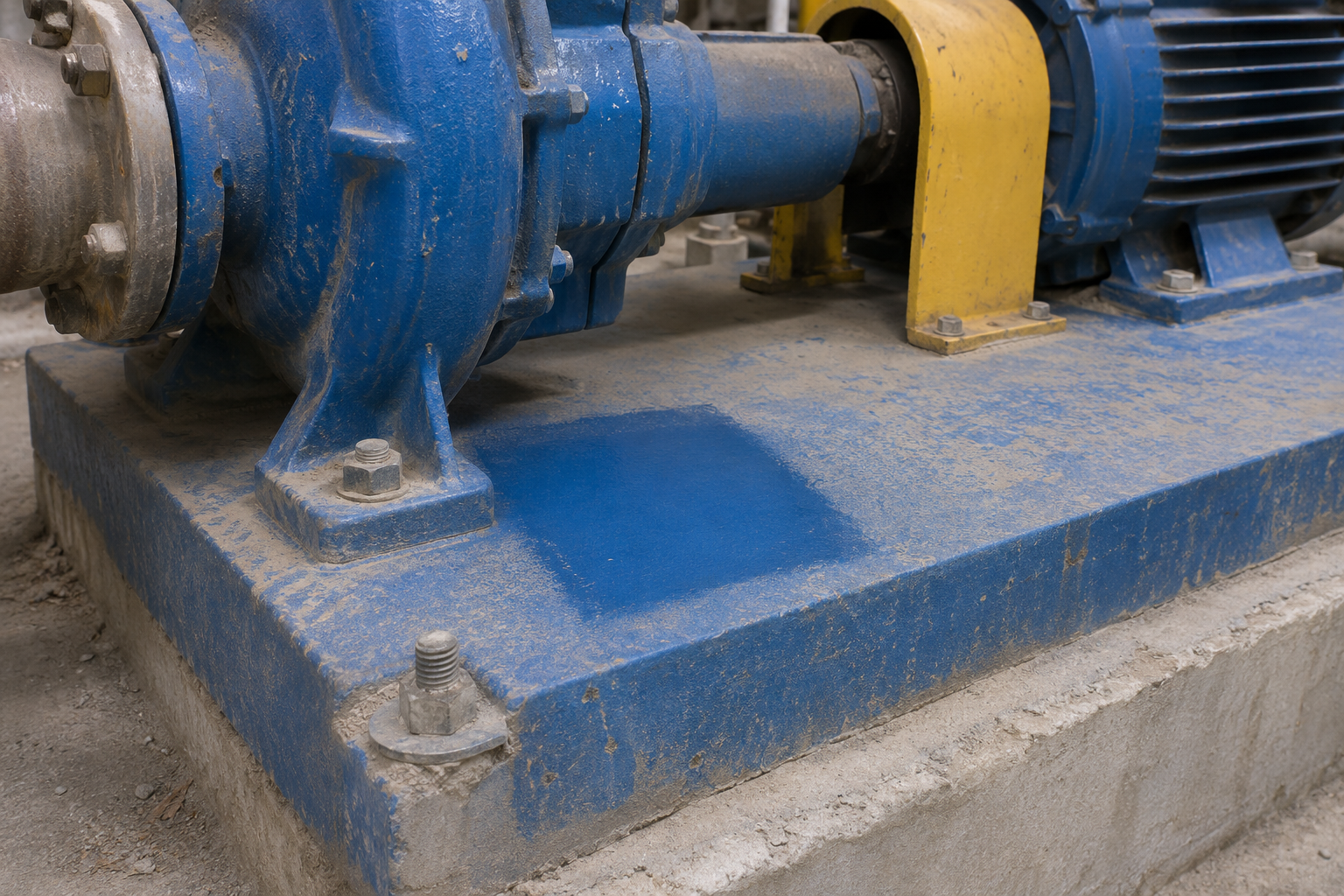
Select a small accessible metal patch away from the grout edge, seals, bearings, cable glands and instruments. Confirm the coating and substrate are suitable for a trial. Record nozzle choice, compressed-air conditions, stand-off distance, angle, exposure time and the method used to collect displaced material. Stop if coating lifts, the substrate changes or debris migrates toward the pump or drain. A cleaning jet should not be used as a way to test anchor-bolt tightness or grout soundness.
Dry ice sublimates to carbon dioxide, but the removed soil remains. Evaluate the actual room’s ventilation and potential low areas where gas could accumulate. Safe Work Australia’s carbon dioxide exposure entry informs exposure assessment; it is not a substitute for the utility’s monitoring and control plan. If a pump pit or adjacent work area is classified as a confined space, the utility must use the applicable entry system; Safe Work Australia’s confined-space guidance describes atmospheric hazards and monitoring considerations. Do not assume every pump room is a confined space.
What should the buyer and inspector record?
Record photographs before and after the patch, the exact area treated, the remaining soil, coating changes, collected waste and the process settings. A competent inspector should then assess bolt condition, visible grout edges and any further testing under the utility’s acceptance criteria. A clean surface alone is not an acceptance result.
For equipment selection, share the baseplate material, coating, soil photographs, access dimensions, isolation and ventilation plan, available compressed air, and the inspection objective. Compare those details with the DryIceSys machine overview, air-requirements guide and site-readiness checklist before arranging a trial.