
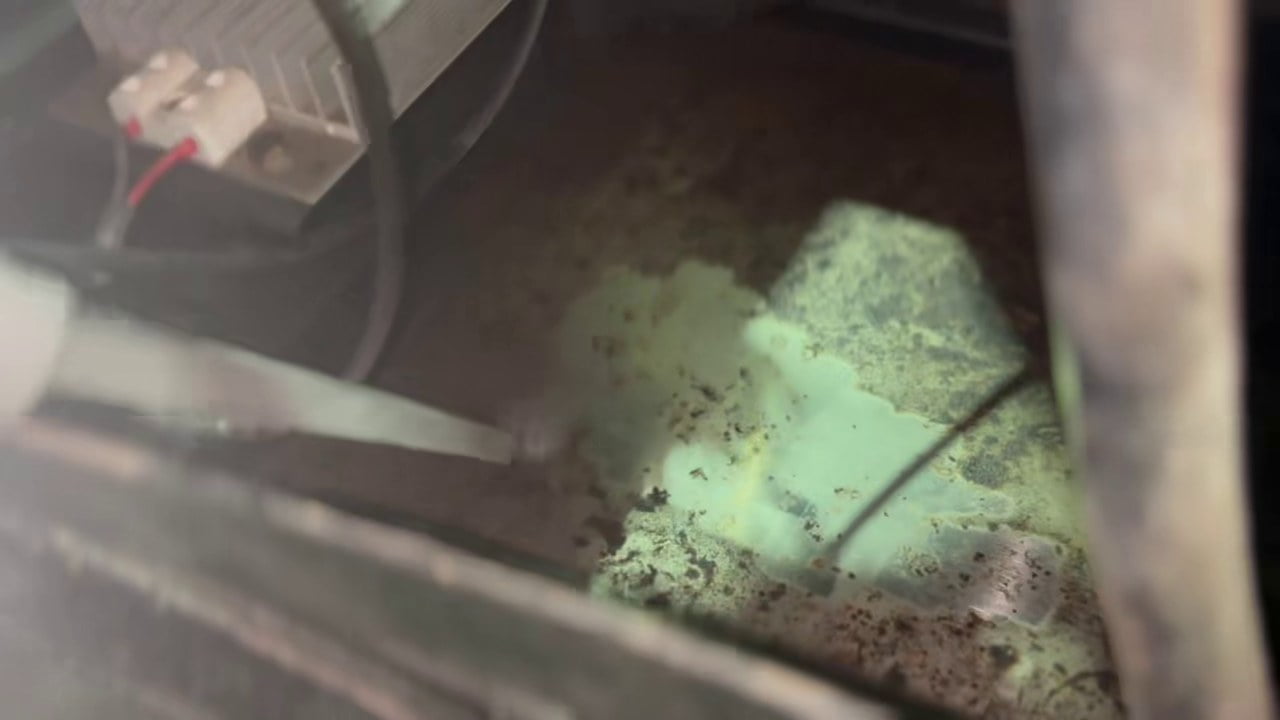
Dry ice blasting can remove visible mold contamination and staining from some accessible, sound surfaces. It is not a complete mold remediation process by itself. The decision should begin with the remediation endpoint: correct the moisture source, determine what can be cleaned and what must be removed, contain the work, complete the cleanup, and verify the result.
That boundary matters because the current search results often treat the blast effect as the outcome. A nozzle can leave timber looking clean while hidden growth, wet materials, contaminated debris, or the original leak remains. A percentage attached to “mold removal” does not answer whether the building is ready for use.
Start with the remediation endpoint
The US Environmental Protection Agency places moisture control at the center of mold remediation. Its guidance calls for assessing the affected area and materials, fixing the water or humidity problem, selecting containment and personal protective equipment, cleaning or removing contaminated materials, and checking for recurrence.
Dry ice blasting can occupy one box in that process: surface cleaning. It cannot diagnose a roof leak, dry a wall cavity, expose every hidden surface, decide whether weakened material is structurally sound, or prove that a space is ready to reoccupy.
“Killing” mold is also the wrong invariant. EPA guidance notes that dead mold can remain allergenic and that contamination must be removed. Indoor environments cannot be made free of every mold spore. The useful objective is a dry, clean, stable building with the moisture cause corrected, not a claim of sterilization.
Where dry ice blasting can fit
Dry ice blasting is worth a controlled trial when the affected surface is accessible, the material is expected to remain in place, and the job benefits from a dry cleaning process. Manufacturer and supplier pages emphasize two practical features: the process adds no liquid water, and a nozzle can reach irregular geometry around framing, fasteners, and services.
Those features can be useful on sound structural timber or other durable surfaces after the remediation manager has defined the material-disposition plan. They do not establish compatibility. The complete machine, air supply, nozzle, pellet feed, technique, substrate condition, coating, and contamination layer determine the result.
| Condition | What dry ice blasting may do | What it cannot decide |
|---|---|---|
| Accessible, sound framing | Remove surface contamination and staining in a controlled trial | Whether hidden faces or cavities are clean |
| Irregular geometry | Direct cleaning around edges and fasteners | Whether all contaminated material is reachable |
| A moisture-sensitive job | Clean without adding liquid water | Whether the material is already dry enough to retain |
| Porous or damaged material | Possibly clean an exposed surface | Whether infiltration or structural damage requires removal |
| Suspected HVAC contamination | Disturb deposits if used without a system plan | Whether the system can be operated or safely cleaned |
Reject the blast step when the moisture source is still active, affected material is unsalvageable, hidden growth has not been assessed, the substrate changes outside the written limit, or containment cannot control the debris. If extensive damage may have reduced building integrity, involve an appropriate building professional before treating the problem as a cleaning task.
No spent ice does not mean no contaminated waste
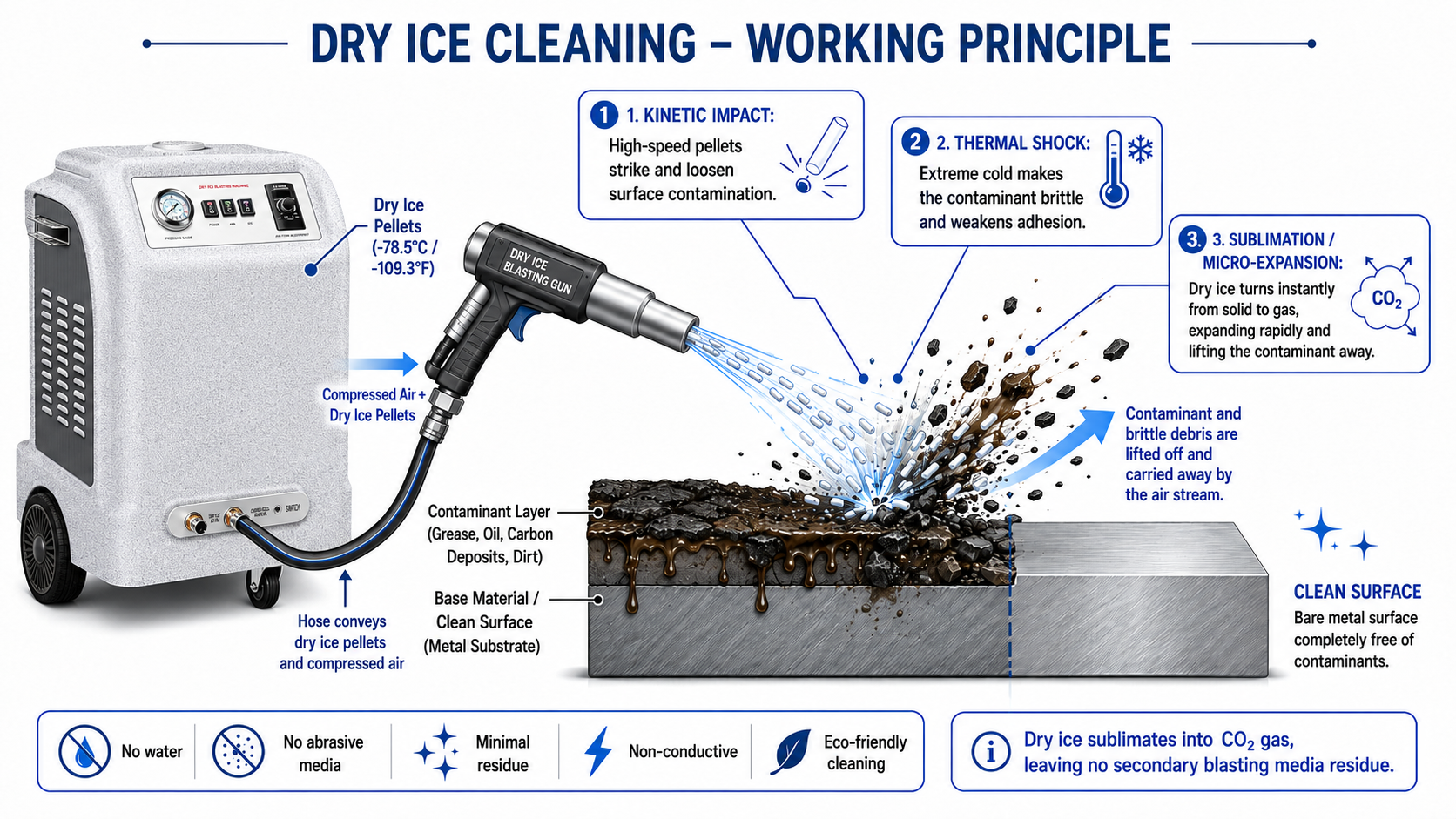
Dry ice pellets sublimate, so the blast medium does not accumulate like sand, soda, or another solid abrasive. That is a real process distinction. It is often compressed into the phrase “no secondary waste,” which is too broad for mold remediation.
The removed mold, dust, paint flakes, insulation fragments, and damaged building material do not sublimate. They remain contaminants. Blasting can suspend fine material or move it onto nearby surfaces. The plan therefore still needs containment, capture, final cleaning, and disposal appropriate to the affected material and local requirements.
EPA recommends HEPA vacuuming for final cleanup after contaminated materials have been removed and the area has been thoroughly dried. It also warns against dispersing mold-laden dust into occupied or unaffected areas. A remediation estimate should include that work. Comparing only nozzle time hides a material part of the job.
Containment and safety are separate control systems
Containment should be designed for the contamination and exposure risk, not copied from a generic blasting setup. Define the work zone, protect or isolate adjacent spaces, control air movement, collect settled debris, and prevent the building ventilation system from distributing contamination. If hidden mold or a larger affected area is discovered, stop and revise the plan.
The Centers for Disease Control and Prevention identifies respiratory, eye, and skin protection as core mold-cleanup controls and advises that some susceptible people should not participate. The exact respirator program, protective clothing, decontamination method, and containment level depend on the job, jurisdiction, and competent remediation assessment.
Dry ice adds a separate hazard: it becomes carbon dioxide gas. OSHA identifies carbon dioxide as colorless and odorless and publishes workplace exposure limits and monitoring methods. Ventilation and any required exposure monitoring must address the actual pellet rate, room volume, enclosure, occupancy, and air movement. Mold containment must not create an unassessed carbon-dioxide accumulation zone.
Machine hazards remain as well. The site procedure must cover cold contact, noise, flying debris, hose control, compressed air, visibility, and isolation of equipment or services near the work. A remediation plan does not replace the machine manual, and the machine manual does not replace the remediation plan.
Run one controlled representative trial
A trial should answer whether the entire cleaning operation can meet the remediation endpoint without damaging material or losing containment. Choose a representative area rather than the easiest visible patch. Record the material and its condition, moisture status, machine and nozzle, delivered air, pellet feed, standoff, angle, pass method, containment arrangement, and debris-capture method.
Before starting, define acceptance and stop criteria:
- The moisture source has been corrected and the test material is suitable to retain.
- The selected setup removes the specified visible contamination or staining.
- Wood fibers, coatings, fasteners, wiring, seals, and adjacent materials remain within written condition limits.
- Air movement and cleanup controls keep debris inside the work zone.
- Visibility, carbon-dioxide controls, and worker protection remain effective.
- Final HEPA cleanup can remove deposited contamination without spreading it.
- Hidden damage, an unexpected material change, unstable pellet flow, inadequate ventilation, or containment loss triggers a stop and reassessment.
Use the same settings and inspection method when expanding from the trial. A faster or more aggressive setup is a new configuration and requires its own acceptance, not an informal adjustment during production.
Accept the remediation endpoint, not the blast effect
EPA’s completion guidance is deliberately broader than surface appearance. The water or moisture problem should be fixed. Visible mold, mold-damaged material, and moldy odors should not remain. Cleaned areas should be dry, final cleanup should be complete, and a follow-up visit should find no renewed water damage or mold growth. If sampling is part of the project, interpret it within the agreed plan; EPA notes that there is no simple universal airborne mold threshold that replaces professional judgment.
This produces a clean decision hierarchy. The remediation plan defines success. The material assessment decides what stays. The trial decides whether dry ice blasting is a suitable cleaning step. Containment and safety controls govern execution. Final inspection and follow-up decide whether the work is complete.
DryIceSys can help define a machine configuration for a representative cleaning trial through the project enquiry form. The remediation manager remains responsible for moisture correction, material disposition, exposure controls, cleanup, and clearance.