
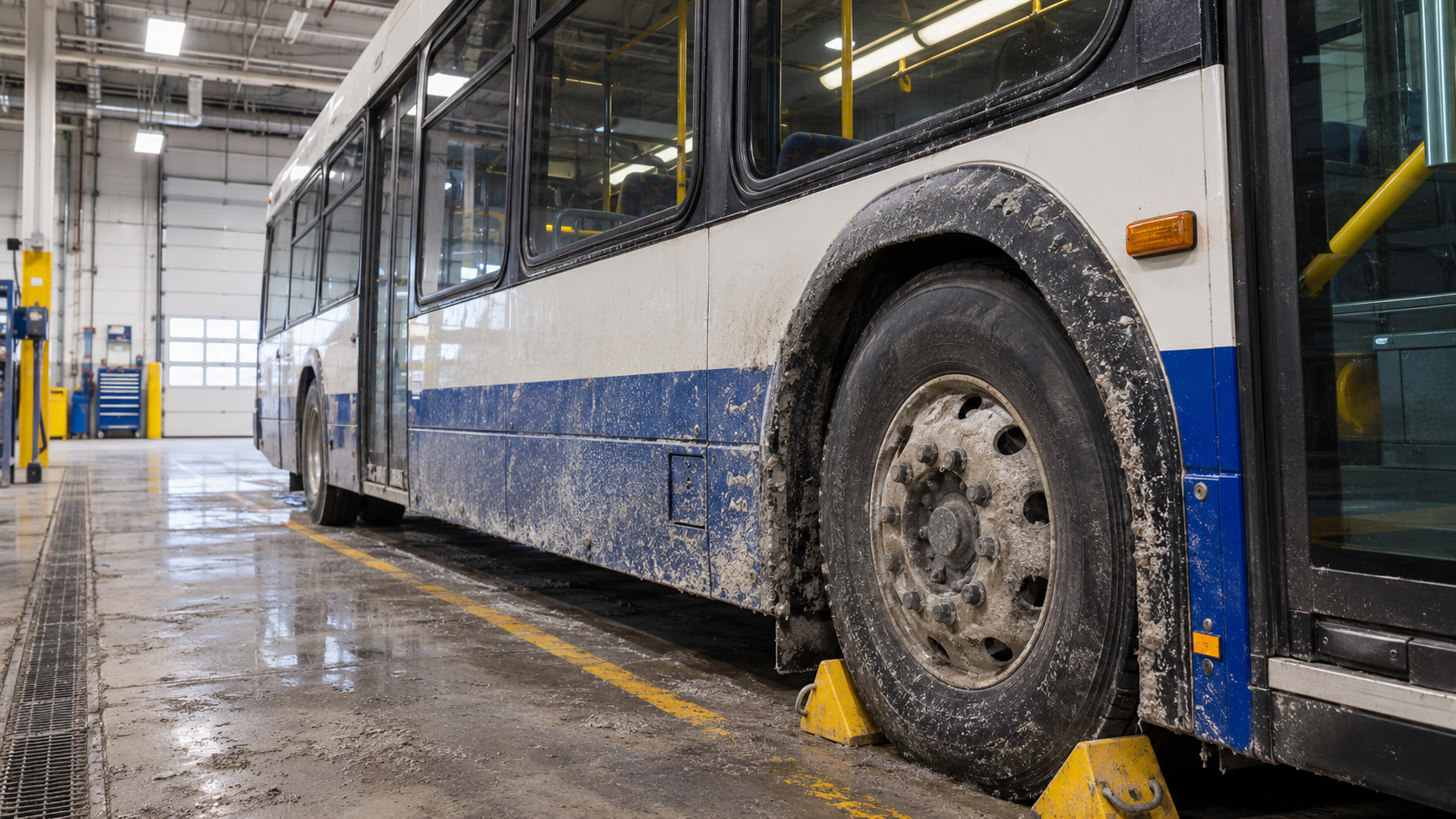
Canada Transit Bus Wheel Arch Cleaning Before Inspection
Can a Canadian transit maintenance shop trial dry ice cleaning on a bus wheel arch before a corrosion inspection?
A Canadian transit maintenance shop can consider a small, controlled dry ice cleaning trial on accessible exterior metal in an out-of-service bus wheel arch after identifying the road grit, salt deposits, coating and inspection target. Secure and isolate the vehicle under the shop’s procedure, keep the jet away from brakes, tires, wiring, seals and hidden cavities, and plan for carbon dioxide ventilation and collection of displaced dirt. A clean patch may improve visibility for a separate corrosion assessment; it does not prove structural soundness or return-to-service readiness.
This is a planning guide, not a customer case or evidence of cleaning performance. The illustrations are conceptual. The scope is an accessible exterior metal patch on a stationary bus, not brake components, suspension joints, underbody cavities, energized systems or structural repair. The bus maker and responsible maintenance team decide whether the coating and surface can tolerate a trial and what inspection is required.
Why does a wheel arch need a narrow cleaning scope?
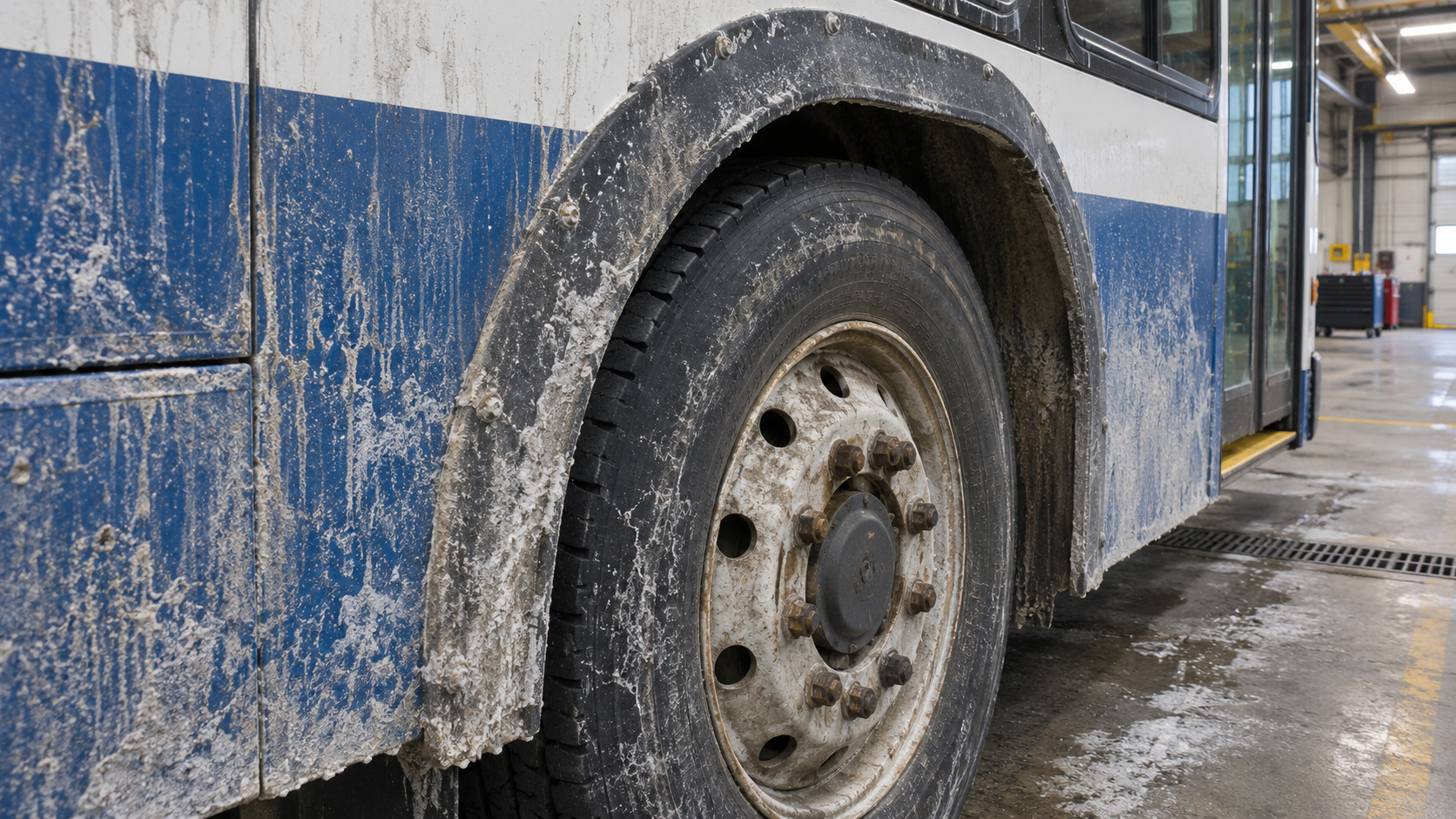
Winter road grit and salt can obscure coating edges, seams and fasteners. A maintenance team may need to see a defined area before deciding whether more inspection is warranted. Start with photographs, the vehicle’s service history, coating information and the exact question the inspector must answer. Do not describe a cleaner surface as corrosion-free: deposits can conceal defects and cleaning can expose pre-existing coating damage.
The Canadian Centre for Occupational Health and Safety (CCOHS) garage work-practices guidance calls for trained workers, vehicle securement, appropriate isolation, inspection of tools and hoses, and control of spills and waste. This is general Canadian guidance; provincial rules and the employer’s procedures determine the site-specific requirements.
How should the team assess a test patch?
Park the bus in a designated maintenance bay, stop the engine, apply the brakes and chock the wheels. If work requires lifting the vehicle, use the shop’s approved support procedure. Identify stored energy and possible movement before opening guards or approaching the arch. CCOHS lockout guidance explains the need for equipment-specific isolation and verification during service work; it is not a universal bus cleaning instruction.
Choose a small, accessible metal patch away from the tire, brake components, cables, sensors, rubber parts and cavities where grit can be driven deeper. Record nozzle type, air pressure, stand-off distance, angle, exposure time and collection method. Stop if paint lifts, a seal is disturbed, debris migrates into a hidden space or the surface changes unexpectedly. The vehicle maker and repair lead should approve any next step.
Dry ice converts to carbon dioxide, but the dislodged salt, dirt, grease and coating fragments still require capture and disposal. CCOHS carbon dioxide guidance notes that gas can build up in low areas when ventilation is insufficient. Evaluate the actual bay, pit and airflow before a trial. Do not assume that an open service door alone controls exposure.
What should be handed to the inspector?
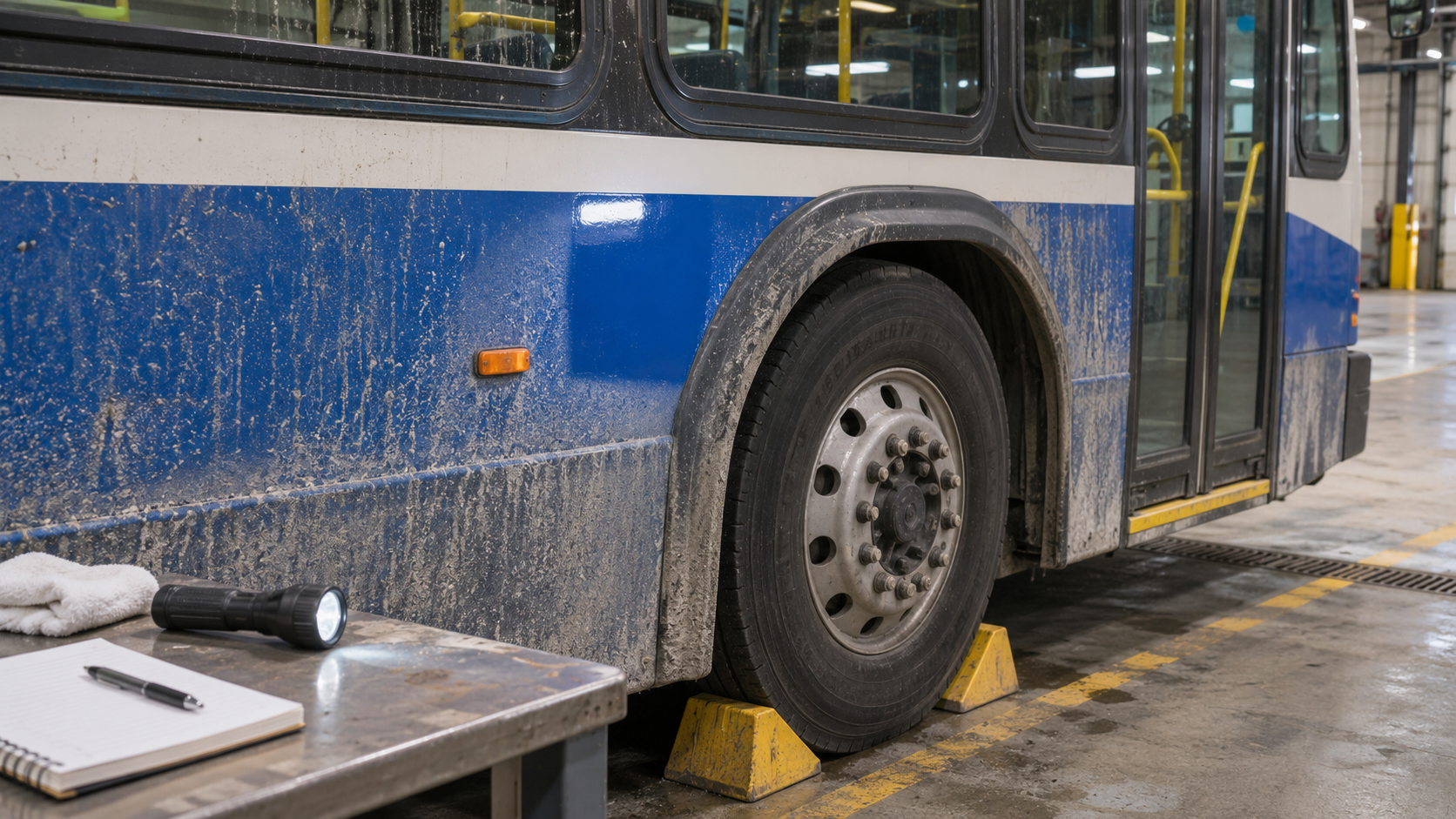
Document the before-and-after patch, any remaining deposits, coating changes, debris collected and the exact surfaces left untouched. The authorized inspector then applies the fleet’s corrosion and repair criteria, including any need for closer examination of seams, fasteners or structural members. Cleaning is only preparation; it cannot establish remaining metal thickness, integrity or safe service status.
For a procurement discussion, provide the bus model, arch material and coating, soil photographs, target inspection zone, available compressed air, ventilation and capture plan. The DryIceSys machine overview, air-requirements guide and site-readiness checklist can help frame a trial once those limits are known.