
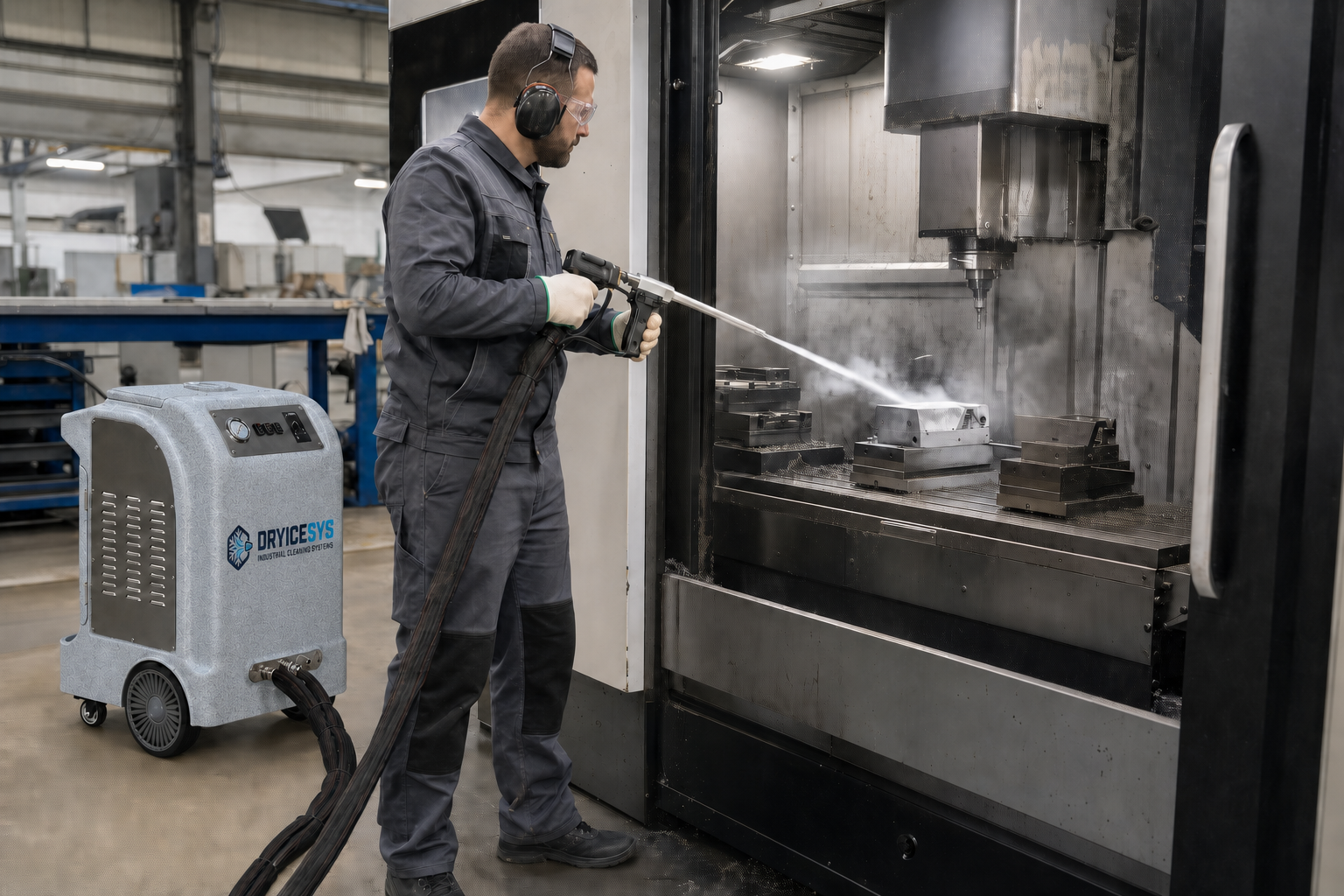
Dry ice blasting can remove some rust, but the useful answer is conditional. Dry-ice-only cleaning can dislodge loose surface oxidation and expose metal hidden by grease, dirt or failing coatings. It should not be assumed to remove deeply adherent corrosion, clean pits or produce the surface profile required by a coating specification.
That distinction explains why search results appear to disagree. Some pages describe dry ice alone. Others describe a process that adds an abrasive to the dry ice stream. Those are different processes with different hazards, residues and surface results.
The word rust hides four different jobs
Before choosing equipment, define what the surface must look like and what happens next.
Inspection cleaning
The first objective may be to remove oil, road dirt, salts, undercoating or flaky material so the actual corrosion can be inspected. Dry ice can be valuable here because cleaning and corrosion removal do not have to be the same step. A clean surface may reveal that the remaining rust is more severe than it first appeared.
Preservation cleaning
A restoration team may want to retain sound original paint, labels, plating or an aged finish while removing loose contamination. Hagerty’s restoration report makes this distinction: abrasive preparation suits a complete restoration, while dry ice cleaning can be considered when the original surface is meant to remain.
This is still a validation problem. A coating that looks sound can have weak edges or hidden underfilm corrosion. The preserved features and the rejection conditions must be written before testing.
Complete corrosion removal
Deeply bonded scale and corrosion inside pits are a different target. nexAir’s guidance draws a practical boundary: loosely adhered rust may be removed, while deeply adhered rust and oxidation may remain. If the required endpoint is complete removal, dry ice alone is not a safe assumption.
Preparation for recoating
Recoating adds two possible requirements: a defined degree of visual cleanliness and a defined surface profile. ISO 8501-1 provides rust grades and preparation grades using written descriptions and representative photographs. ASTM D4417 explains that surface profile affects coating performance and should be measured when the coating manufacturer or job specification requires it.
“Looks cleaner” cannot replace either requirement.
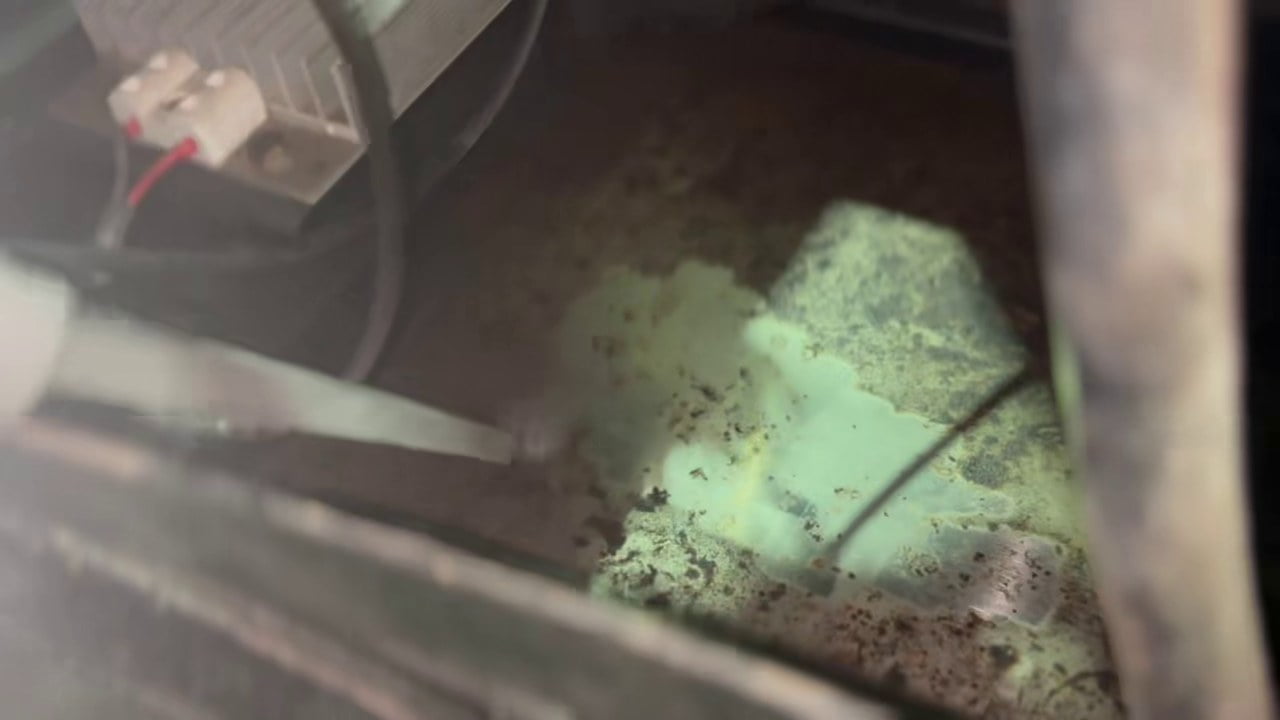
Dry-ice-only and abrasive-assisted blasting are different processes
The leading Cold Jet result illustrates the boundary. Its corrosion-removal page says the solution mixes dry ice blasting with an abrasive and later refers to a proprietary abrasive mix. The preparation grades and profile described on that page therefore belong to that combined process. They do not prove that dry ice pellets alone will produce the same surface.
This is not a minor equipment option. Adding an abrasive changes the removal mechanism, the material introduced to the work area, the debris stream, containment needs, exposure controls and the possible effect on the substrate. The combined process requires its own approved equipment, procedure and acceptance test.
The same rule applies to power tools, chemical treatment or a second blasting stage. If another process creates the required finish, record it as a separate process. Do not attribute its result to dry ice alone.
Let the coating specification define acceptance
For a part that will be recoated, start with the current coating manufacturer’s data sheet and the project specification. Extract the required substrate condition, preparation grade, profile range, soluble-contaminant limits if specified, and maximum time or environmental conditions before coating.
Then choose a preparation method capable of producing those conditions. ISO notes that blast cleaning, hand tools, power tools and other preparation methods rarely produce comparable results. A visual grade for one method is not automatically equivalent to a result produced by another.
If an anchor profile is required, measure it by the specified method. Dry-ice-only cleaning must be rejected as the sole preparation step when it leaves adherent corrosion outside the allowed visual grade or does not produce the required profile. Passing a cleanliness inspection does not prove profile compliance.
Run a trial with a rejection rule
Use a representative area or sacrificial part. Photograph and classify the initial rust, existing coating, pits, edges, welds and protected features. Record the machine, gun, nozzle, approved operating range, pellet condition, delivered air, feed setting, standoff, angle, pass method and treated area.
Start within the machine and nozzle instructions. Hold the setup constant long enough to observe a repeatable result. Do not increase pressure indefinitely to rescue a method that cannot reach the endpoint within its approved range.
After cleaning, separate three observations:
- contamination and loose material removed;
- corrosion still bonded to the surface or retained in pits;
- unintended change to paint, plating, seals, dimensions or adjacent components.
Apply the written acceptance method. Use the specified visual comparator for preparation grade. Measure profile when required. Record preserved-surface criteria for restoration work. Reject the setup when unacceptable rust remains, a protected finish changes, the required profile is absent, or the process cannot be repeated safely.
The trial should end with one of three decisions: dry ice alone meets the endpoint; dry ice is useful only as a cleaning stage before another process; or dry ice adds no useful step for this job.
Choose the process from the endpoint
Dry-ice-only cleaning is a reasonable candidate when the purpose is to expose a surface for inspection, remove loose oxidation and contamination, or preserve a sound finish that would be damaged by aggressive preparation. It can also reduce the amount of later work by revealing where adherent corrosion remains.
Choose another or additional process when the job requires complete removal of adherent scale, access into deep pitting, a specified abrasive-blast grade or a measurable anchor profile. That process may be abrasive-assisted blasting, conventional abrasive blasting, power-tool preparation or chemical treatment, depending on the substrate, geometry, coating system and site controls.
The machine purchase decision follows the same logic. Ask a supplier to demonstrate the exact endpoint on a representative part. Require the proposal to state whether the test uses dry ice alone or added abrasive, which equipment and consumables are included, and how the result will be measured. A video of a cleaner-looking surface is not an acceptance record.
The cleaning method does not remove the safety case
Dry ice creates a carbon-dioxide exposure and ventilation problem that must be assessed under the applicable workplace requirements and the current machine manual. Noise, hose reaction, cold contact, flying debris, isolation of the equipment being cleaned and exclusion-zone controls also remain.
The workpiece owns additional hazards. If an existing coating or contaminant may create occupational lead exposure, establish the applicable assessment, containment, respiratory protection, hygiene and waste controls before disturbing it. Selecting abrasive-assisted or conventional abrasive blasting introduces a separate ventilation and dust-control case.
Dry ice sublimates, but released rust, paint fragments, grease and hazardous contamination do not disappear. Collect and manage that material according to its actual composition and the site procedure.
The decision invariant is simple: define the required final surface, test the named process, and accept only the result that meets the specification. DryIceSys can help equipment buyers define the machine, air and application trial through the project enquiry form, but the governing coating specification and site safety assessment remain authoritative.
Sources and further reading
- Cold Jet: Dry Ice Blasting Rust, Corrosion, and Coating Removal
- nexAir: Using Dry Ice to Remove Rust
- ISO: ISO 8501-1:2007 Visual Assessment of Surface Cleanliness
- ASTM: D4417-21 Field Measurement of Surface Profile
- Hagerty Media: Dry Ice Cleaning for Rust, Grime, and Undercoating
- OSHA: Carbon Dioxide
- OSHA: Lead in Construction
- OSHA: Ventilation and Abrasive Blasting